

#Short Answer
Artificial Intelligence (AI) and cloud computing represent two of the most transformative technological paradigms of the 21st century. When integra...
#Infobox
#Overview
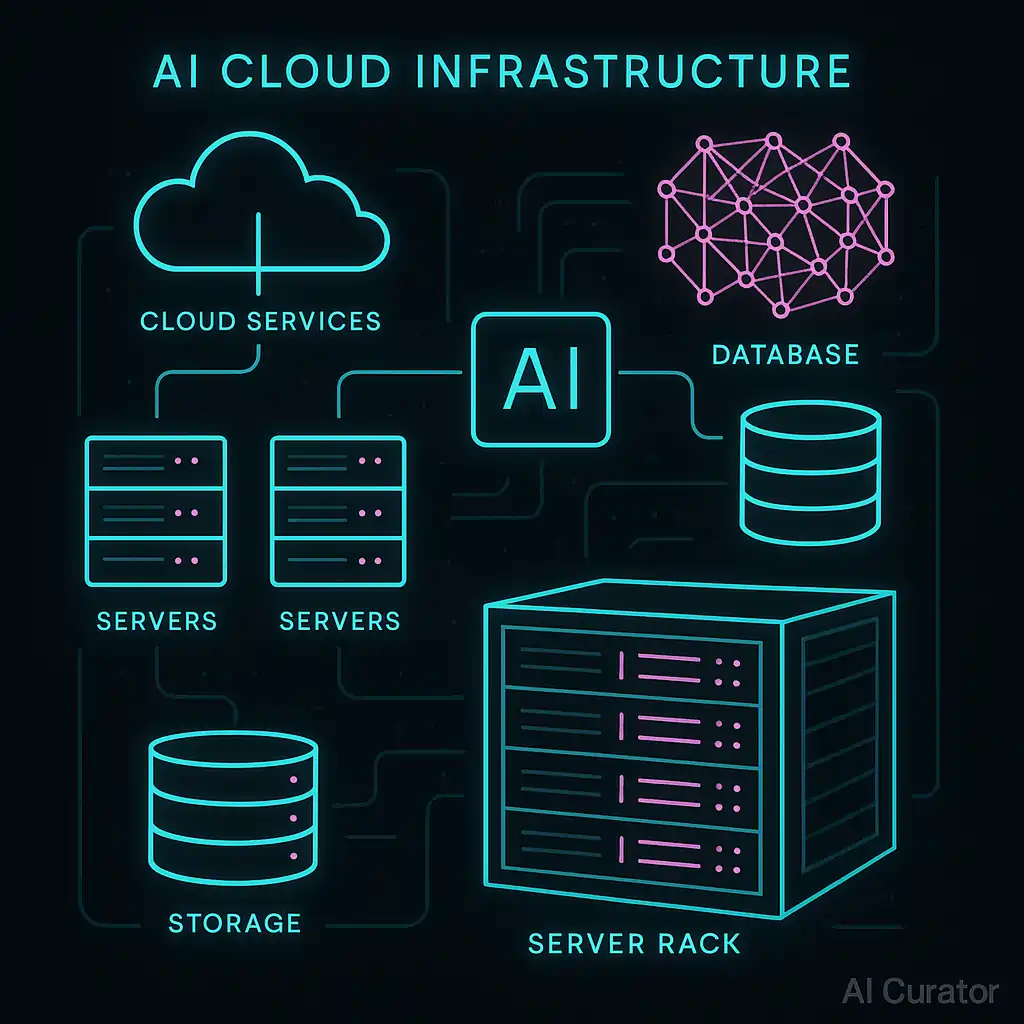
Artificial Intelligence (AI) and cloud computing represent two of the most transformative technological paradigms of the 21st century. When integrated, they form a powerful synergy that enables scalable, intelligent infrastructure capable of processing vast datasets in real time. AI leverages machine learning (ML) models to analyze patterns, predict outcomes, and automate complex tasks, while cloud computing provides the elastic, on-demand computational resources required to train, deploy, and scale these models efficiently.
This convergence has revolutionized industries by reducing operational costs, accelerating innovation, and enabling data-driven decision-making at unprecedented scales. From autonomous vehicles to personalized healthcare recommendations, AI-powered cloud systems are reshaping how businesses and governments operate in the digital age.
#History / Background
#Early Developments
The origins of AI trace back to the 1950s, with Alan Turing’s seminal work on machine intelligence and the Dartmouth Conference of 1956, which coined the term "artificial intelligence." Early AI systems were rule-based and limited by computational power. Meanwhile, cloud computing emerged in the 1960s with time-sharing systems like the Compatible Time-Sharing System (CTSS) and later evolved through concepts like utility computing in the 1990s.
#Convergence Era
The late 2000s and early 2010s marked a turning point with the rise of big data, advancements in deep learning, and the commercialization of cloud platforms. Companies like Google, Amazon, and Microsoft began offering AI-as-a-Service (AIaaS) and cloud-based ML tools, democratizing access to sophisticated algorithms. The introduction of frameworks such as TensorFlow (2015) and PyTorch (2016) further accelerated AI development by providing open-source tools for building neural networks.
#Modern Integration
Today, AI and cloud computing are inseparable. Cloud providers offer specialized AI services, including natural language processing (NLP), computer vision, and predictive analytics, while AI models increasingly rely on cloud infrastructure for training and inference. The shift toward edge AI—where processing occurs closer to data sources—has also emerged, reducing latency and improving real-time responsiveness.
#How It Works
#Cloud Infrastructure
Cloud computing delivers computational resources—such as storage, processing power, and networking—over the internet on a pay-as-you-go basis. Key models include:
- Infrastructure as a Service (IaaS): Provides virtualized computing resources (e.g., AWS EC2, Azure VMs).
- Platform as a Service (PaaS): Offers environments for developing, testing, and deploying applications (e.g., Google App Engine).
- Software as a Service (SaaS): Delivers ready-to-use software via the cloud (e.g., Salesforce, Microsoft 365).
#AI Integration
AI systems in the cloud typically follow these stages:
- Data Collection: Aggregating structured and unstructured data from sources like IoT devices, databases, and APIs.
- Preprocessing: Cleaning, normalizing, and transforming data for analysis (e.g., using Apache Spark or AWS Glue).
- Model Training: Using cloud-based GPUs/TPUs to train ML models (e.g., TensorFlow, Keras).
- Deployment: Hosting trained models on cloud platforms (e.g., AWS SageMaker, Azure ML) for inference.
- Monitoring & Optimization: Continuously evaluating model performance and retraining as needed (e.g., using MLflow).
#Key Technologies
- Machine Learning: Algorithms that improve automatically through experience (e.g., supervised, unsupervised, reinforcement learning).
- Deep Learning: Neural networks with multiple layers (e.g., CNNs for image recognition, RNNs for NLP).
- Serverless Computing: Event-driven execution (e.g., AWS Lambda) that scales automatically.
- Edge Computing: Processing data locally (e.g., on IoT devices) to reduce cloud dependency.
#Important Facts
- Scalability: Cloud AI systems can handle petabytes of data and millions of requests per second.
- Cost Efficiency: Pay-per-use models reduce upfront capital expenditure for businesses.
- Global Reach: Cloud providers operate data centers worldwide, ensuring low-latency access.
- Security: Cloud platforms offer built-in encryption, identity management, and compliance tools (e.g., GDPR, HIPAA).
- Ethical Considerations: Bias in AI models, data privacy, and job displacement are ongoing challenges.
#Timeline
- Extremely large datasets analyzed computationally to reveal patterns.
- Computing systems modeled after the human brain, used in deep learning.
- A decentralized approach to training AI models without sharing raw data.
- A next
generation computing paradigm leveraging quantum mechanics for faster calculations.
- A set of practices combining software development and IT operations to improve efficiency.
#Related Terms
#FAQ
What does AI And Cloud: Scalable Infrastructure cover?
Explores how artificial intelligence shapes cloud and scalable infrastructure, covering practical use cases, benefits, limitations, and risks.
Why is AI And Cloud: Scalable Infrastructure important?
It helps readers understand key concepts, compare practical use cases, and evaluate how Technology decisions affect outcomes, risks, and implementation choices.
What should readers verify before applying this topic?
Readers should compare the benefits, limitations, data requirements, and related themes such as Cloud, Scalable, Infrastructure before using the ideas in real projects.
#References
- AI And Cloud: Scalable Infrastructure terminology and background research
- AI And Cloud: Scalable Infrastructure use cases, implementation examples, and limitations
- Technology best practices, standards, and risk guidance
- Cloud case studies, benchmarks, and current industry analysis


Comments
No comments yet. Start the discussion with a useful note.