

#Short Answer
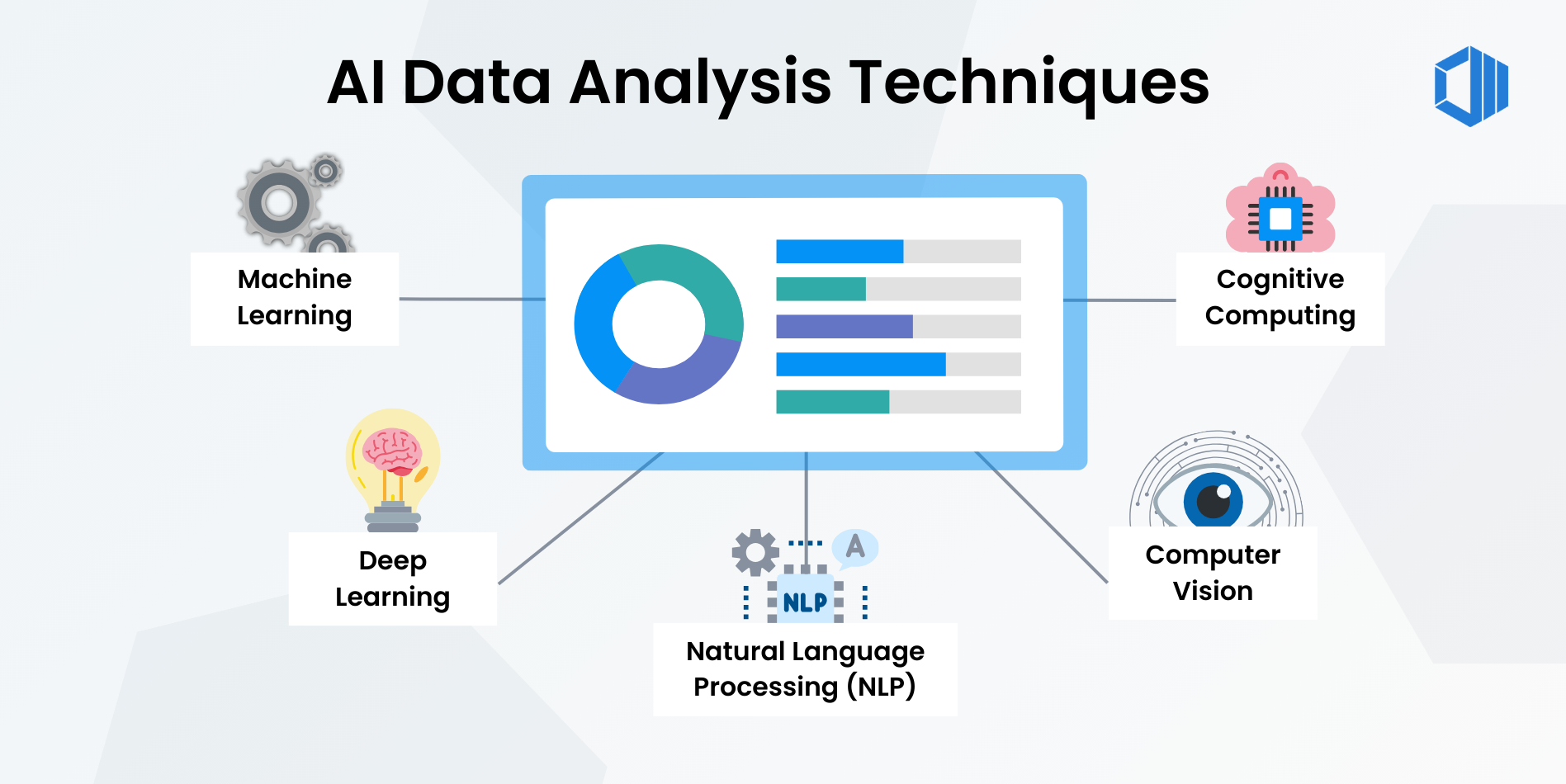
AI in data analytics refers to the integration of artificial intelligence techniques—such as machine learning, deep learning, and natural language processing—into traditional data analysis workflows. This fusion enables systems to process vast datasets, identify trends, and make data-driven predictions with minimal human intervention. Unlike conventional analytics, which relies heavily on manual interpretation and statistical models, AI-driven analytics leverages algorithms to learn from data, adapt over time, and deliver actionable insights in real time.
#Infobox
#Overview
AI in data analytics refers to the integration of artificial intelligence techniques—such as machine learning, deep learning, and natural language processing—into traditional data analysis workflows. This fusion enables systems to process vast datasets, identify trends, and make data-driven predictions with minimal human intervention. Unlike conventional analytics, which relies heavily on manual interpretation and statistical models, AI-driven analytics leverages algorithms to learn from data, adapt over time, and deliver actionable insights in real time.
The synergy between AI and analytics has revolutionized industries by transforming raw data into strategic assets. Businesses use AI-powered analytics to optimize operations, personalize customer experiences, and mitigate risks. In healthcare, AI models analyze medical records to predict disease outbreaks or recommend treatment plans. Financial institutions employ AI to detect fraudulent transactions by identifying anomalous patterns in transactional data. The scalability and efficiency of AI make it indispensable for modern data-driven decision-making.
#History / Background
The roots of AI in data analytics trace back to the mid-20th century, with foundational contributions from pioneers like Alan Turing, who proposed the concept of a universal machine capable of performing logical operations. In 1956, John McCarthy coined the term "artificial intelligence" at the Dartmouth Conference, marking the formal inception of the field. Early AI systems, such as expert systems in the 1970s and 1980s, laid the groundwork for rule-based decision-making in data analysis.
The 1990s saw the emergence of machine learning, a subset of AI focused on building systems that improve through experience. Techniques like decision trees and support vector machines enabled computers to classify data and make predictions without explicit programming. The advent of big data in the 2000s further accelerated AI adoption, as organizations sought tools to manage and analyze exponentially growing datasets. The proliferation of cloud computing and advanced hardware, such as GPUs, democratized access to AI tools, making them more accessible to businesses and researchers.
In recent years, deep learning—a branch of machine learning inspired by neural networks—has become a cornerstone of AI-driven analytics. Models like convolutional neural networks (CNNs) and recurrent neural networks (RNNs) excel in processing unstructured data, such as images, text, and audio, expanding the scope of analytics beyond traditional structured datasets.
#How It Works
#Data Preprocessing
AI-driven analytics begins with data preprocessing, a critical step that ensures datasets are clean, consistent, and suitable for analysis. This involves handling missing values, normalizing data, and encoding categorical variables. Techniques like feature scaling and dimensionality reduction (e.g., Principal Component Analysis) are applied to improve model performance and reduce computational overhead.
#Model Training
Once data is preprocessed, AI models are trained using labeled or unlabeled datasets. Supervised learning algorithms, such as linear regression or random forests, require labeled data to learn patterns and make predictions. In contrast, unsupervised learning techniques, like clustering (e.g., k-means) or association rule learning, identify hidden structures in data without prior labels. Reinforcement learning, another AI paradigm, trains models to make sequences of decisions by rewarding desired outcomes.
#Pattern Recognition and Prediction
AI models analyze datasets to detect patterns, anomalies, and correlations that may not be apparent through traditional statistical methods. For example, neural networks can identify subtle trends in time-series data, such as stock market fluctuations or weather patterns. Predictive analytics, a key application of AI in data analysis, uses historical data to forecast future events, such as customer churn, equipment failures, or market demand.
#Natural Language Processing
Natural Language Processing (NLP) enables AI systems to interpret and generate human language, facilitating the analysis of unstructured data like emails, social media posts, or customer reviews. Techniques such as sentiment analysis and topic modeling extract meaningful insights from text, helping businesses gauge public opinion or detect emerging trends.
#Automation and Real-Time Analytics
AI automates repetitive tasks in data analytics, such as data cleaning, report generation, and dashboard updates. Real-time analytics, powered by AI, processes streaming data (e.g., IoT sensor data or social media feeds) to provide instantaneous insights. This capability is crucial for applications like fraud detection, where timely responses are essential.
#Important Facts
- AI enhances accuracy: By reducing human bias and leveraging large-scale data, AI models often achieve higher predictive accuracy than traditional methods.
- Scalability: AI systems can process petabytes of data, making them ideal for big data applications in industries like genomics or climate science.
- Explainability challenges: Many AI models, particularly deep learning networks, operate as "black boxes," making it difficult to interpret their decision-making processes.
- Bias and fairness: AI models can perpetuate biases present in training data, leading to unfair outcomes in areas like hiring, lending, or law enforcement.
- Energy consumption: Training large AI models requires significant computational resources, contributing to high energy consumption and environmental concerns.
- Regulatory compliance: Organizations using AI in analytics must adhere to data privacy laws like GDPR or CCPA, ensuring ethical and legal use of data.
#Timeline
- Alan Turing publishes 'Comput
Alan Turing publishes 'Computing Machinery and Intelligence,' introducing the Turing Test.
- John McCarthy coins the
John McCarthy coins the term 'artificial intelligence' at the Dartmouth Conference.
- Frank Rosenblatt develops the
Frank Rosenblatt develops the perceptron, an early neural network model.
- Backpropagation algorithm popu
Backpropagation algorithm popularizes neural networks for machine learning.
- IBM's Deep Blue defeats
IBM's Deep Blue defeats world chess champion Garry Kasparov.
- IBM Watson wins *Jeopardy!*
IBM Watson wins *Jeopardy!*, showcasing AI's natural language processing capabilities.
- Google's deep learning system
Google's deep learning system achieves breakthrough performance in image recognition.
- AlphaGo, developed by DeepMind
AlphaGo, developed by DeepMind, defeats a world champion Go player.
- GDPR (General Data Protection
GDPR (General Data Protection Regulation) comes into effect, shaping AI ethics and data privacy.
- AI models like GPT-3
AI models like GPT-3 demonstrate advanced natural language generation capabilities.
#Related Terms
#FAQ
What does AI And Analytics: Understanding Data cover?
Explores how artificial intelligence shapes analytics and understanding data, covering practical use cases, benefits, limitations, and risks.
Why is AI And Analytics: Understanding Data important?
It helps readers understand key concepts, compare practical use cases, and evaluate how Artificial Intelligence decisions affect outcomes, risks, and implementation choices.
What should readers verify before applying this topic?
Readers should compare the benefits, limitations, data requirements, and related themes such as Analytic, Understanding, Data before using the ideas in real projects.
#References
- AI And Analytics: Understanding Data terminology and background research
- AI And Analytics: Understanding Data use cases, implementation examples, and limitations
- Artificial Intelligence best practices, standards, and risk guidance
- Analytic case studies, benchmarks, and current industry analysis


Comments
No comments yet. Start the discussion with a useful note.