

#Short Answer
Profiles Who Is the Ceo of NVIDIA, including background, AI-related work, influence, and important context.
#Infobox
#Overview
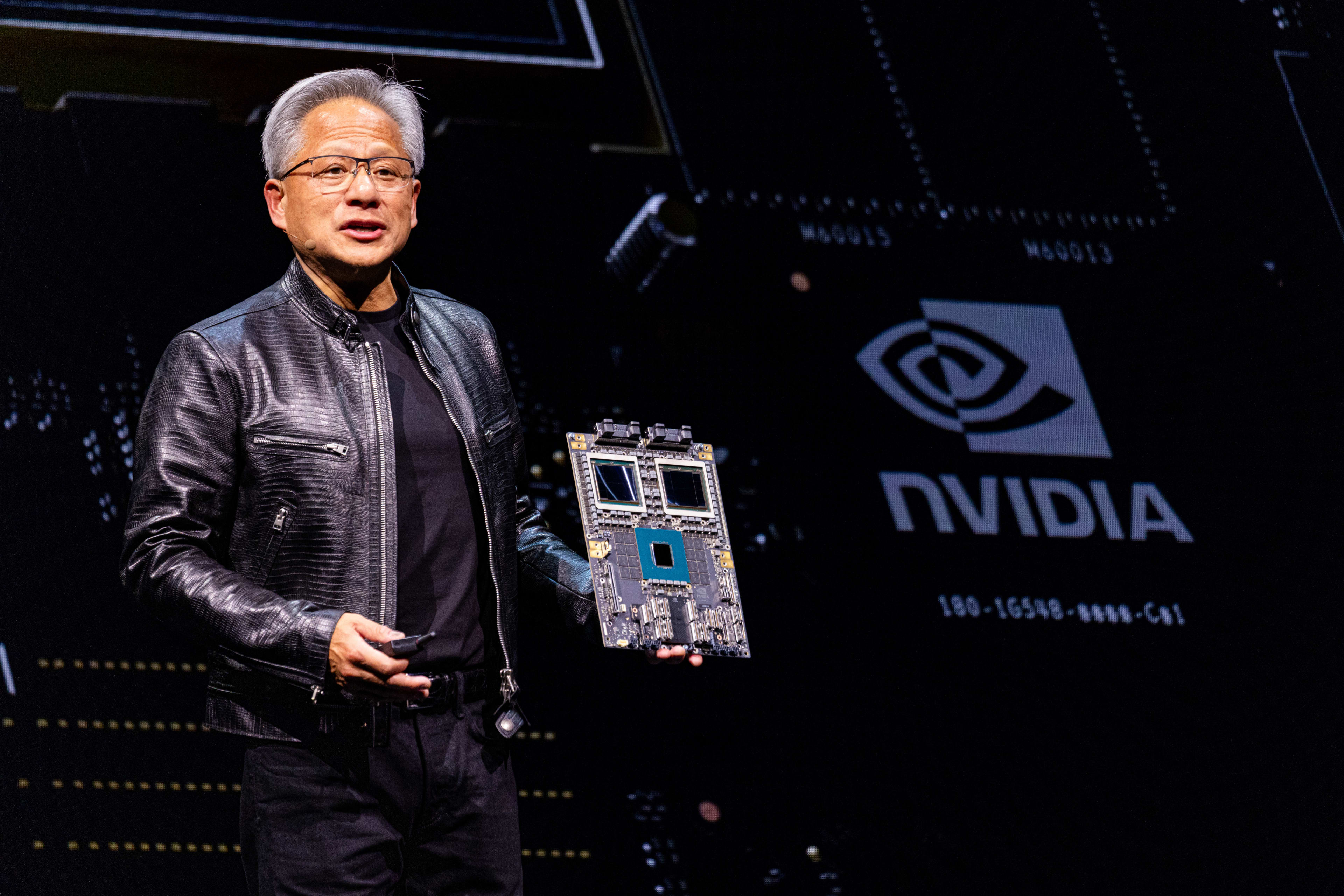
Jensen Huang is a Taiwanese-American entrepreneur and engineer widely regarded as one of the most influential figures in the technology and semiconductor industries. As the CEO of NVIDIA, he has overseen the company’s transformation from a graphics chip manufacturer into a dominant force in artificial intelligence, data center computing, and autonomous vehicles. Under his leadership, NVIDIA’s market capitalization has surged, making it one of the most valuable companies in the world. Huang’s vision has positioned NVIDIA at the forefront of several technological revolutions, including the rise of deep learning, generative AI, and real-time ray tracing in gaming. His strategic foresight and technical expertise have earned him accolades such as being named one of Time’s 100 most influential people and receiving the IEEE Medal of Honor.
#History / Background
#Early Life and Education Jensen Huang was born on February 17, 1963, in Tainan, Taiwan. His family emigrated to the United States when he was nine years old, settling in Oregon. Huang attended Albany High School, where he developed an early interest in electronics and engineering. He pursued his undergraduate studies at Oregon State University, earning a Bachelor of Science in Electrical Engineering in 1984. Following his graduation, he worked at Advanced Micro Devices (AMD) as a microprocessor designer. Huang later attended Stanford University, where he obtained a Master of Science in Electrical Engineering in 1992.
#Founding of NVIDIA In 1993, Huang co-founded NVIDIA alongside Chris Malachowsky and Curtis Priem, with the goal of advancing 3D graphics technology. The company’s first product, the NV1, was a 3D graphics processor released in 1995. Despite initial challenges, NVIDIA persevered and released the RIVA 128 in 1997, which became a commercial success and established the company as a leader in the graphics processing unit (GPU) market. Huang’s leadership was instrumental in NVIDIA’s pivot toward parallel computing and AI acceleration, which later became the cornerstone of the company’s growth.
#How It Works
#Role at NVIDIA As CEO, Huang oversees NVIDIA’s strategic direction, research and development, and global operations. His responsibilities include:
- Product Innovation: Leading the development of GPUs, AI platforms (e.g., CUDA, TensorRT), and data center solutions (e.g., DGX systems).
- Corporate Strategy: Expanding NVIDIA’s presence in AI, automotive (e.g., NVIDIA DRIVE), and robotics.
- Partnerships: Collaborating with major tech companies, cloud providers, and automakers to integrate NVIDIA’s technologies.
#Key Contributions
- GPU Revolution: Huang recognized the potential of GPUs for parallel processing, enabling breakthroughs in gaming, scientific computing, and AI.
- CUDA Platform: Launched in 2006, CUDA allowed developers to use GPUs for general-purpose computing, accelerating AI and deep learning.
- AI Leadership: Pioneered AI supercomputing with products like NVIDIA DGX and Omniverse, a platform for 3D simulation and collaboration.
- Autonomous Vehicles: Developed NVIDIA DRIVE, a platform for self-driving cars, used by companies like Tesla, Mercedes-Benz, and Volvo.
#Important Facts
- First GPU: NVIDIA’s GeForce 256 (1999) was the world’s first GPU, revolutionizing 3D graphics in gaming.
- AI Dominance: NVIDIA’s A100 GPU and H100 GPU are industry standards for AI training and inference.
- Market Value: NVIDIA became the first semiconductor company to surpass $1 trillion in market capitalization in 2023.
- Philanthropy: Huang and his wife, Lori, have donated millions to education and STEM initiatives, including a $30 million gift to Stanford University in 2020.
- Leadership Style: Known for his hands-on approach, Huang frequently engages with engineers and customers to drive innovation.
- Awards and Honors: - IEEE Medal of Honor (2022) - Robert N. Noyce Medal (2021) - Named to Forbes’ World’s Best CEOs list multiple times.
#Timeline
- Foundational ideas
Core concepts and early methods shape Who Is the Ceo of NVIDIA?.
- Practical use
Tools, examples, and real-world deployments make the topic easier to evaluate.
- Responsible implementation
Current work focuses on reliability, governance, performance, and measurable impact.
#Related Terms
#FAQ
What does Who Is the Ceo of NVIDIA? cover?
Profiles Who Is the Ceo of NVIDIA, including background, AI-related work, influence, and important context.
Why is Who Is the Ceo of NVIDIA? important?
It helps readers understand key concepts, compare practical use cases, and evaluate how Artificial Intelligence decisions affect outcomes, risks, and implementation choices.
What should readers verify before applying this topic?
Readers should compare benefits, limitations, data requirements, and related themes such as Ceo, NVIDIA, AI before using the ideas in real projects.
#References
- Who Is the Ceo of NVIDIA? terminology and background research
- Who Is the Ceo of NVIDIA? use cases, implementation examples, and limitations
- Artificial Intelligence best practices, standards, and risk guidance
- Ceo case studies, benchmarks, and current industry analysis


Comments
No comments yet. Start the discussion with a useful note.