

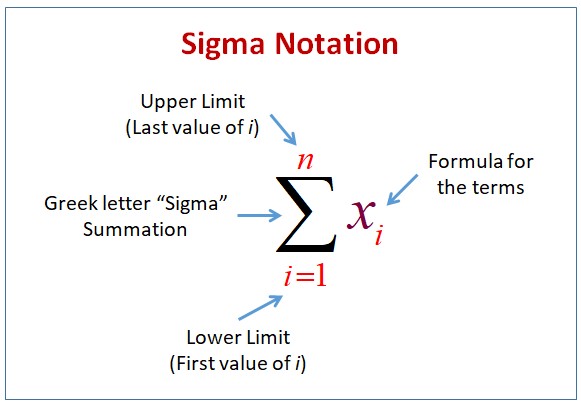
#Short Answer
Sigma, denoted by the lowercase Greek letter σ, plays a fundamental role in statistical theory and applied mathematics. It is most commonly associated with the concept of standard deviation, which quantifies how spread out the values in a dataset are from the mean (average). The term "sigma" is derived from the Greek word for "sum," reflecting its historical use in summation notation.
#Infobox
#Overview
Sigma, denoted by the lowercase Greek letter σ, plays a fundamental role in statistical theory and applied mathematics. It is most commonly associated with the concept of standard deviation, which quantifies how spread out the values in a dataset are from the mean (average). The term "sigma" is derived from the Greek word for "sum," reflecting its historical use in summation notation.
In the context of the normal distribution—a bell-shaped curve central to probability theory—sigma describes the spread of data. Approximately 68% of data falls within one standard deviation (1σ) of the mean, 95% within two standard deviations (2σ), and 99.7% within three standard deviations (3σ). This property makes sigma a critical tool in fields such as quality control, finance, engineering, and social sciences.
#Sigma Levels in Process Capability
In quality management, sigma levels are used to assess process performance. A Six Sigma process, for example, aims for a defect rate of fewer than 3.4 defects per million opportunities (DPMO), corresponding to a process operating at 6σ. This methodology, popularized by Motorola and later adopted by companies like General Electric, emphasizes reducing variability and improving efficiency.
#History / Background
The use of sigma in mathematics dates back to ancient Greece, where it was employed as a letter in the Greek alphabet. However, its application in statistics began in the 18th and 19th centuries with the development of probability theory and the normal distribution by mathematicians such as Abraham de Moivre, Pierre-Simon Laplace, and Carl Friedrich Gauss.
Gauss, in particular, contributed significantly to the understanding of the normal distribution, often referred to as the "Gaussian distribution," where sigma represents the standard deviation. The symbol σ was adopted to denote this measure due to its position in the Greek alphabet and its association with summation.
In the mid-20th century, sigma gained prominence in industrial settings through the introduction of statistical process control (SPC) by Walter A. Shewhart. Later, Bill Smith and Mikel Harry at Motorola formalized the Six Sigma methodology in the 1980s, integrating sigma levels into a structured framework for quality improvement.
#How It Works
The calculation of sigma involves several key steps, depending on whether it is applied to a sample or an entire population.
#Calculating Standard Deviation (σ)
- Compute the Mean (μ): Sum all the values in the dataset and divide by the number of values.
- Find the Deviations: Subtract the mean from each value to determine the deviation of each data point.
- Square the Deviations: Square each deviation to eliminate negative values and emphasize larger deviations.
- Calculate the Variance: Compute the average of these squared deviations. For a population, divide by the total number of data points (N). For a sample, divide by (N-1) to correct for bias.
- Take the Square Root: The standard deviation (σ) is the square root of the variance, returning the measure to the original units of the data.
Mathematically, the population standard deviation is expressed as:
#Sigma Levels and Defect Rates
Sigma levels are used to evaluate process performance by counting the number of standard deviations between the process mean and the nearest specification limit. The relationship between sigma level and defect rate is as follows:
- 1σ: 68.27% within limits, 31.73% defects
- 2σ: 95.45% within limits, 4.55% defects
- 3σ: 99.73% within limits, 0.27% defects
- 4σ: 99.9937% within limits, 0.0063% defects
- 5σ: 99.999943% within limits, 0.000057% defects
- 6σ: 99.9999998% within limits, 3.4 defects per million
Note that Six Sigma assumes a 1.5σ shift in the process mean over time, which adjusts the defect rate to 3.4 DPMO.
#Important Facts
- Sigma is not a unit: It is a dimensionless measure representing variability relative to the mean.
- Sigma is always non-negative: Standard deviation cannot be negative, as it is derived from squared deviations.
- Sigma in finance: Used to measure the volatility of investment returns (e.g., in the Sharpe ratio).
- Sigma in physics: Represents surface tension in fluid dynamics or electrical conductivity in some contexts.
- Sigma in engineering: Critical in reliability engineering to assess failure rates and system robustness.
- Sigma vs. Variance: Variance is the square of sigma (σ²), providing a measure in squared units.
#Timeline
- Greek alphabet introduced; sig
Greek alphabet introduced; sigma used as a letter
- Abraham de Moivre publishes
Abraham de Moivre publishes work on the normal distribution
- Carl Friedrich Gauss formalize
Carl Friedrich Gauss formalizes the normal distribution, linking it to sigma
- Walter A. Shewhart develops
Walter A. Shewhart develops statistical process control (SPC), incorporating sigma
- Motorola introduces Six Sigma
Motorola introduces Six Sigma methodology, popularizing sigma levels in industry
- Six Sigma and Lean
Six Sigma and Lean Six Sigma adopted globally across manufacturing, healthcare, and services
#Related Terms
#FAQ
What does What Does Sigma Mean? cover?
What does sigma mean covers practical examples, benefits, limitations, and important considerations for readers.
Why is What Does Sigma Mean? important?
It helps readers understand key concepts, compare practical use cases, and evaluate how Internet Culture decisions affect outcomes, risks, and implementation choices.
What should readers verify before applying this topic?
Readers should compare the benefits, limitations, data requirements, and related themes such as Explainer, Sigma, Meme Culture before using the ideas in real projects.
#References
- What Does Sigma Mean? terminology and background research
- What Does Sigma Mean? use cases, implementation examples, and limitations
- Internet Culture best practices, standards, and risk guidance
- Explainer case studies, benchmarks, and current industry analysis


Comments
No comments yet. Start the discussion with a useful note.