

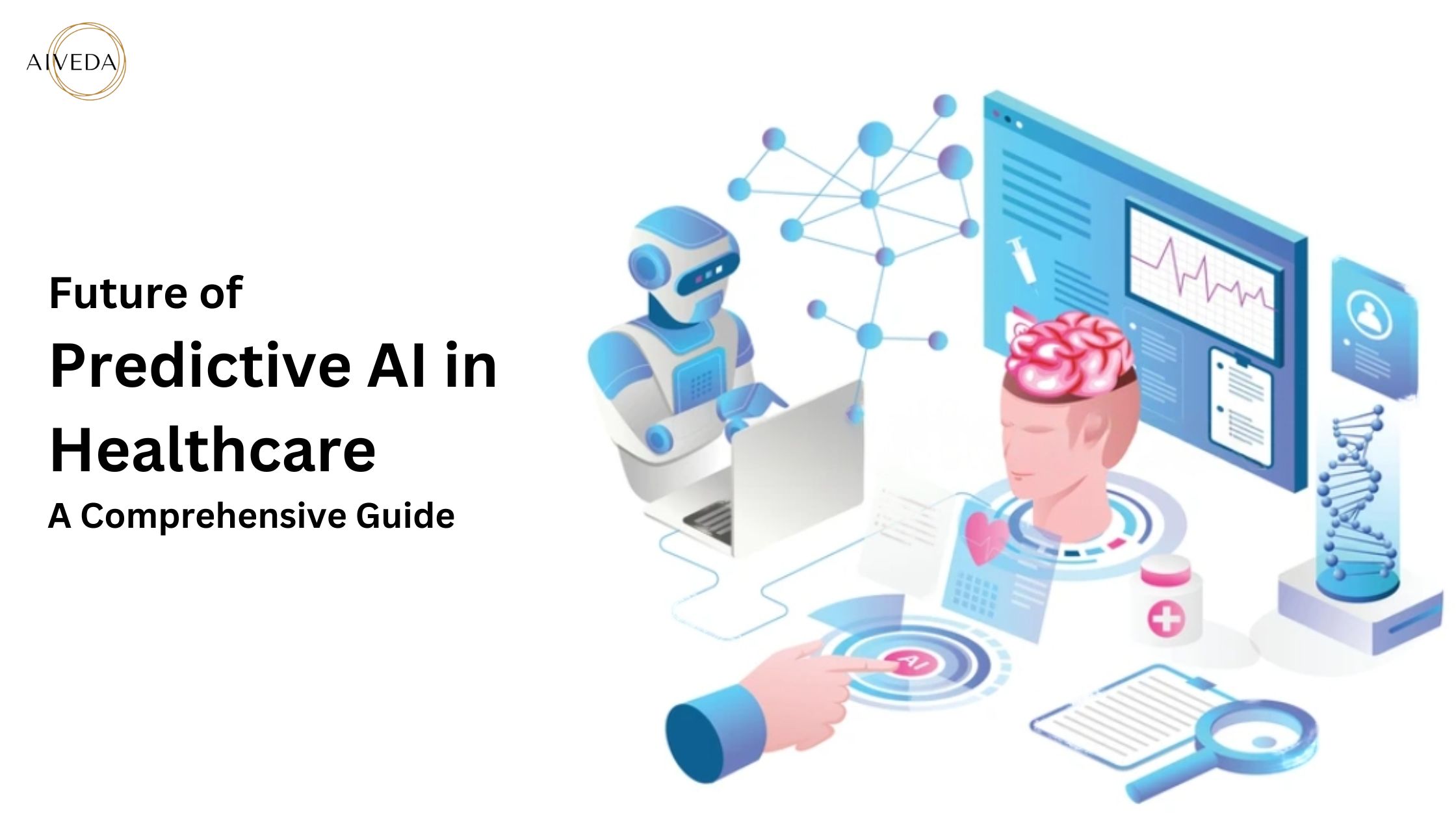
#Short Answer
Covers understanding ai in healthcare: a comprehensive guide, including core concepts, practical examples, benefits, limitations, and risks in AI in Healthcare.
#Infobox
#History / Background
Early Foundations (1960s–1990s) The concept of AI in healthcare dates back to the 1960s and 1970s, with early expert systems designed to mimic human decision-making. One of the first notable examples was MYCIN, developed at Stanford University in the early 1970s. MYCIN was an expert system capable of diagnosing bacterial infections and recommending antibiotics, achieving accuracy comparable to human specialists. However, its adoption was limited due to technological constraints and skepticism from the medical community. During this period, AI in healthcare was primarily confined to research labs, with limited real-world applications. The lack of computational power and digitized medical data restricted its growth. Nevertheless, these early efforts laid the groundwork for future advancements.
The Rise of Machine Learning (2000s–2010s) The 2000s marked a significant shift with the advent of machine learning (ML) and the increasing availability of digital health data. The proliferation of electronic health records (EHRs) and advancements in computing power enabled AI systems to analyze large datasets more effectively. Researchers began developing algorithms capable of predicting patient outcomes, identifying high-risk individuals, and assisting in diagnostic imaging. Key milestones during this era included:
- IBM Watson Health (2011): IBM’s AI platform was designed to process and analyze unstructured medical data, including research papers and patient records, to assist in clinical decision-making. Watson gained prominence for its ability to compete on the quiz show Jeopardy! and later transitioned into healthcare applications.
- DeepMind Health (2014): Acquired by Google, DeepMind developed AI models capable of analyzing retinal scans to detect diabetic retinopathy and predicting patient deterioration in hospitals.
Modern Era (2010s–Present) The 2010s witnessed exponential growth in AI applications within healthcare, fueled by breakthroughs in deep learning and the availability of big data. Regulatory bodies, such as the U.S. Food and Drug Administration (FDA), began approving AI-driven medical devices, signaling a shift toward mainstream adoption. Notable developments include:
- FDA Approvals: In 2018, the FDA approved the first AI-based diagnostic tool, IDx-DR, for detecting diabetic retinopathy. Since then, numerous AI tools have received regulatory clearance for applications ranging from stroke detection to breast cancer screening.
- Predictive Analytics: AI models are now used to predict patient readmissions, identify sepsis early, and optimize treatment plans for chronic diseases like diabetes and heart disease.
- Robotics and Automation: AI-powered robotic systems, such as da Vinci Surgical System, assist surgeons in performing minimally invasive procedures with greater precision.
- Natural Language Processing (NLP): NLP is used to extract insights from unstructured clinical notes, enabling more comprehensive patient assessments and reducing documentation burdens on healthcare providers.
#How It Works
Core Technologies AI in healthcare relies on several foundational technologies, each serving distinct purposes:
- Machine Learning (ML):
- Supervised Learning: Algorithms are trained on labeled datasets to make predictions or classifications. For example, an ML model can be trained on thousands of X-ray images to identify signs of pneumonia.
- Unsupervised Learning: Identifies patterns in unlabeled data. Clustering algorithms, for instance, can group patients with similar symptoms or genetic profiles.
- Reinforcement Learning: Used in robotic surgery and treatment planning, where AI systems learn optimal actions through trial and error.
- Deep Learning: - A subset of ML that uses neural networks with multiple layers (deep neural networks) to model complex patterns. Deep learning excels in tasks like image recognition and natural language processing.
- Convolutional Neural Networks (CNNs): Primarily used for analyzing medical images (e.g., detecting tumors in MRI scans).
- Recurrent Neural Networks (RNNs): Suitable for sequential data, such as predicting patient deterioration based on time-series data from ICU monitors.
- Natural Language Processing (NLP): - Enables AI systems to understand and generate human language. NLP is used to extract insights from clinical notes, transcribe physician-patient conversations, and automate medical coding.
- Example: NLP models can analyze a patient’s medical history to identify risk factors for heart disease.
- Computer Vision: - AI systems analyze visual data from sources like X-rays, MRIs, and CT scans to detect abnormalities. Computer vision models can identify fractures, tumors, or signs of neurological disorders with high accuracy.
- Robotics: - AI-powered robots assist in surgeries, rehabilitation, and patient care. For example, robotic exoskeletons help stroke patients regain mobility, while surgical robots enhance precision in operations.
Data Sources AI in healthcare depends on diverse data sources, including:
- Electronic Health Records (EHRs): Contain patient histories, lab results, and treatment plans.
- Medical Imaging: X-rays, MRIs, CT scans, and ultrasounds provide visual data for diagnostic AI.
- Genomic Data: DNA sequencing data helps in personalized medicine and identifying genetic predispositions to diseases.
- Wearable Devices: Fitness trackers and smartwatches monitor vital signs, activity levels, and sleep patterns.
- Clinical Trials: Data from research studies inform AI models about drug efficacy and safety.
- Public Health Data: Epidemiological data helps predict disease outbreaks and trends.
Workflow of AI in Healthcare The typical workflow for an AI system in healthcare involves:
- Data Collection: Gathering relevant data from various sources.
- Data Preprocessing: Cleaning, normalizing, and structuring data to remove noise and inconsistencies.
- Model Training: Using ML algorithms to train models on labeled datasets.
- Validation and Testing: Evaluating model performance on unseen data to ensure accuracy and reliability.
- Deployment: Integrating the AI system into clinical workflows, such as diagnostic tools or decision support systems.
- Monitoring and Feedback: Continuously updating the model based on new data and feedback to improve performance.
#Important Facts
- Accuracy and Efficiency: - AI systems can analyze medical images with accuracy rates exceeding 90% in some cases, rivaling or surpassing human experts. - AI reduces the time required for tasks like radiology image analysis from hours to minutes.
- Cost Reduction: - AI-driven predictive analytics can reduce hospital readmission rates by up to 30%, saving billions in healthcare costs annually. - Automation of administrative tasks, such as billing and scheduling, can cut operational costs by 20–30%.
- Personalized Medicine: - AI enables tailored treatment plans by analyzing a patient’s genetic profile, lifestyle, and medical history. - Example: AI models can predict which cancer patients will respond best to specific therapies.
- Early Detection: - AI can detect diseases like cancer, Alzheimer’s, and cardiovascular conditions years before symptoms appear. - Example: Google’s DeepMind AI can predict eye diseases from retinal scans with 94% accuracy.
- Challenges and Limitations:
- Bias in Algorithms: AI models trained on non-diverse datasets may produce biased results, leading to disparities in care.
- Data Privacy: Handling sensitive patient data raises concerns about security and compliance with regulations like HIPAA.
- Regulatory Hurdles: The approval process for AI medical devices can be lengthy and complex.
- Integration Issues: AI systems must seamlessly integrate with existing healthcare infrastructure, which can be challenging.
- Global Impact: - Countries like the U.S., China, and the UK are investing heavily in AI healthcare initiatives. - AI is being used in low-resource settings to address healthcare disparities, such as AI-powered ultrasound devices in rural areas.
#Timeline
- Foundational ideas
Core concepts and early methods shape Understanding AI in Healthcare: a Comprehensive Guide.
- Practical use
Tools, examples, and real-world deployments make the topic easier to evaluate.
- Responsible implementation
Current work focuses on reliability, governance, performance, and measurable impact.
#Related Terms
#FAQ
What does Understanding AI in Healthcare: a Comprehensive Guide cover?
Covers understanding ai in healthcare: a comprehensive guide, including core concepts, practical examples, benefits, limitations, and risks in AI in Healthcare.
Why is Understanding AI in Healthcare: a Comprehensive Guide important?
It helps readers understand key concepts, compare practical use cases, and evaluate how AI in Healthcare decisions affect outcomes, risks, and implementation choices.
What should readers verify before applying this topic?
Readers should compare benefits, limitations, data requirements, and related themes such as Understanding, AI, Healthcare before using the ideas in real projects.
#References
- Understanding AI in Healthcare: a Comprehensive Guide terminology and background research
- Understanding AI in Healthcare: a Comprehensive Guide use cases, implementation examples, and limitations
- AI in Healthcare best practices, standards, and risk guidance
- Understanding case studies, benchmarks, and current industry analysis


Comments
No comments yet. Start the discussion with a useful note.