

#Short Answer
Covers understanding ai ethics: a comprehensive guide, including core concepts, practical examples, benefits, limitations, and risks in AI Ethics.
#Infobox
#Overview
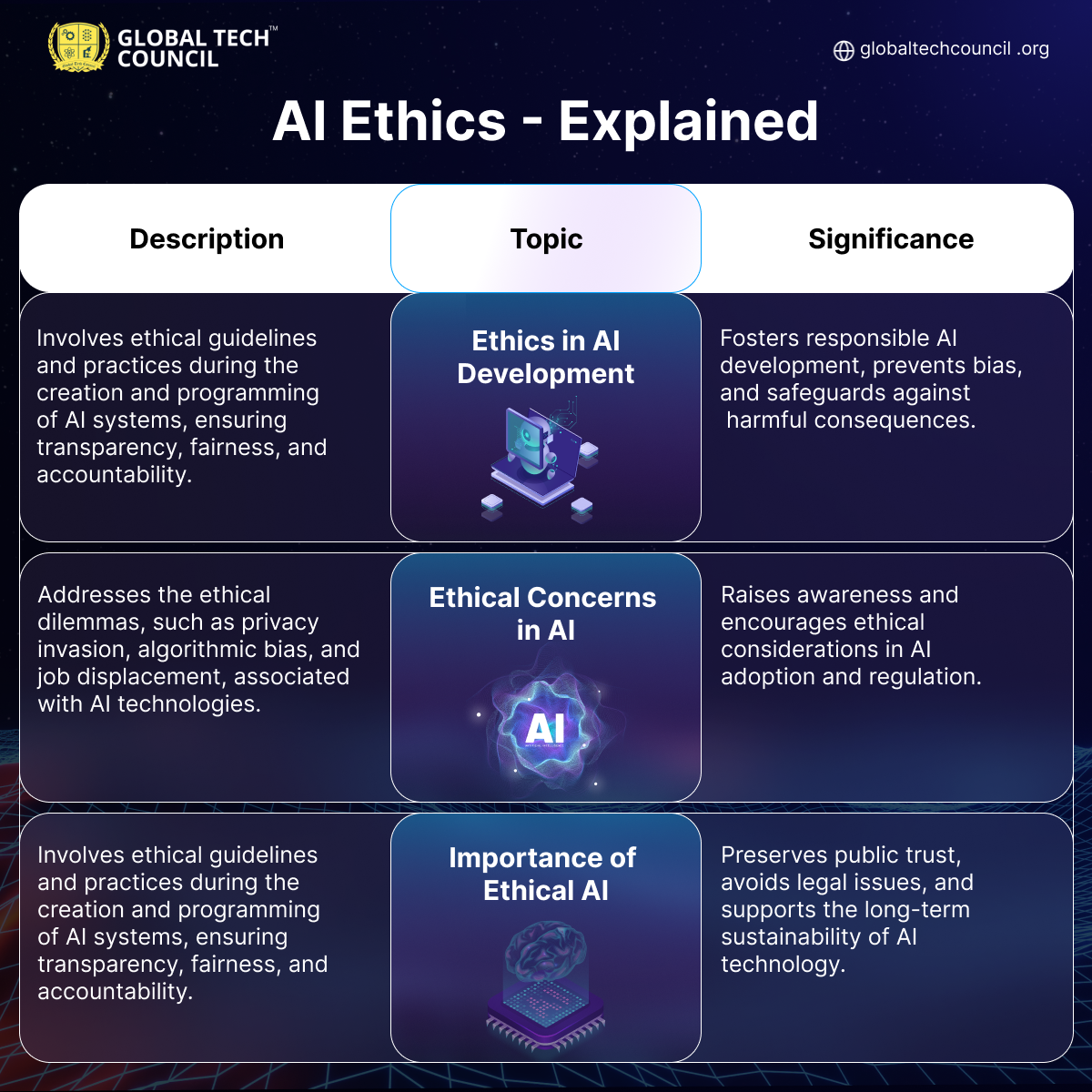
Understanding AI Ethics is a multidisciplinary field that examines the moral, social, and legal implications of artificial intelligence technologies. As AI systems become increasingly integrated into critical sectors such as healthcare, finance, law enforcement, and education, the need for ethical frameworks has grown exponentially. AI ethics seeks to address concerns related to algorithmic bias, data privacy, accountability, and the potential for autonomous systems to act in ways that conflict with human values. At its core, AI ethics advocates for the development of responsible AI, which ensures that AI technologies are designed and deployed in ways that are transparent, fair, and aligned with societal norms. This involves not only technical safeguards but also robust governance structures, public engagement, and continuous monitoring to mitigate risks. The field intersects with computer science, philosophy, law, sociology, and policy-making, reflecting its inherently interdisciplinary nature. The importance of AI ethics has been underscored by high-profile incidents, such as biased hiring algorithms, discriminatory facial recognition systems, and autonomous vehicles making ethically fraught decisions. These cases highlight the urgent need for ethical guidelines that can guide developers, policymakers, and stakeholders in creating AI systems that serve the public good rather than exacerbate existing inequalities.
#History / Background
The concept of AI ethics has evolved alongside the development of artificial intelligence itself, with its roots tracing back to early debates about machine autonomy and human-machine interaction.
#Early Foundations (1950s–1990s)
The origins of AI ethics can be linked to the foundational work of pioneers like Alan Turing, who in 1950 posed the question, "Can machines think?" in his seminal paper "Computing Machinery and Intelligence." Turing’s work implicitly raised ethical questions about the nature of intelligence and the responsibilities of creators of intelligent machines. In the 1960s and 1970s, scholars such as Joseph Weizenbaum (creator of ELIZA) and Hubert Dreyfus critiqued the overestimation of AI capabilities, warning against the uncritical acceptance of machine decision-making. Weizenbaum’s 1976 book "Computer Power and Human Reason" argued that AI systems should not replace human judgment in morally significant domains.
#The Rise of Ethical Frameworks (2000s–2010s)
The 2000s saw the emergence of formal ethical frameworks for AI, driven by growing concerns about data privacy and algorithmic bias. In 2001, the IEEE Global Initiative on Ethics of Autonomous Systems was launched, aiming to establish ethical guidelines for AI and robotics. This initiative later evolved into the IEEE Standards Association’s Ethically Aligned Design (EAD) document, published in 2019, which provided a comprehensive framework for ethical AI development. The 2010s marked a turning point, with several high-profile incidents bringing AI ethics into the public spotlight:
- 2016: ProPublica’s investigation into COMPAS, a risk-assessment algorithm used in the U.S. criminal justice system, revealed racial biases in its predictions.
- 2017: A Tay chatbot developed by Microsoft was hijacked by users to spread hate speech, demonstrating the risks of unmoderated AI systems.
- 2018: The EU’s General Data Protection Regulation (GDPR) introduced the "right to explanation," requiring organizations to provide transparency in automated decision-making.
#Modern Developments (2020s–Present)
The 2020s have been characterized by a surge in regulatory and institutional responses to AI ethics:
- 2021: The European Commission proposed the Artificial Intelligence Act (AI Act), the first comprehensive legal framework for AI regulation, classifying AI systems by risk levels and imposing strict requirements for high-risk applications.
- 2022: The White House released the Blueprint for an AI Bill of Rights, outlining five principles for ethical AI: safe and effective systems, algorithmic discrimination protections, data privacy, notice and explanation, and human alternatives and fallback.
- 2023: The G7 Hiroshima AI Process and UNESCO’s Recommendation on the Ethics of AI further globalized the conversation, emphasizing international cooperation and shared ethical standards. Today, AI ethics is a rapidly evolving field, with ongoing debates about the balance between innovation and regulation, the role of corporate self-governance versus government oversight, and the need for inclusive, participatory approaches to ethical AI development.
#How It Works
AI ethics operates through a combination of technical safeguards, governance frameworks, and societal engagement to ensure that AI systems are developed and deployed responsibly. Below are the key components of how AI ethics functions in practice:
#
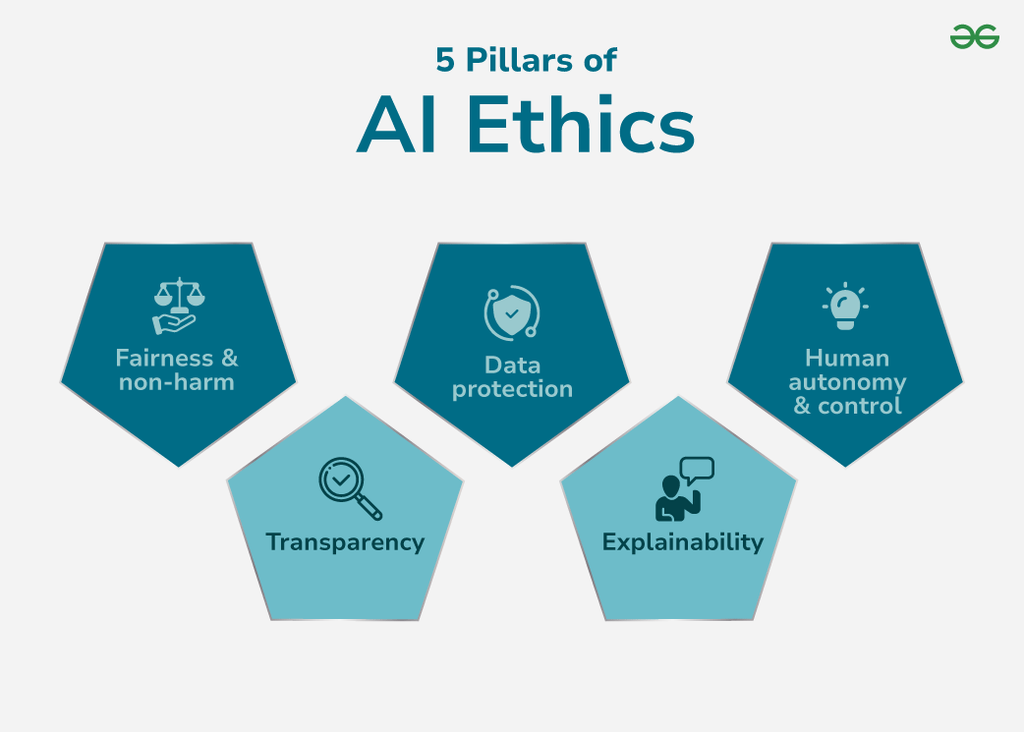
- Bias Mitigation and Fairness AI systems can inadvertently perpetuate or amplify biases present in training data, leading to discriminatory outcomes. Ethical AI development involves:
- Data Auditing: Scrutinizing datasets for biases related to race, gender, age, or socioeconomic status.
- Fairness-Aware Algorithms: Using techniques such as pre-processing (e.g., reweighting or resampling data), in-processing (e.g., adversarial debiasing), and post-processing (e.g., adjusting decision thresholds) to reduce bias.
- Diverse Representation: Ensuring that development teams include diverse perspectives to identify and address potential biases.
#
- Transparency and Explainability AI systems, particularly those using black-box models like deep neural networks, often lack interpretability. Ethical AI emphasizes:
- Explainable AI (XAI): Techniques such as LIME (Local Interpretable Model-agnostic Explanations) and SHAP (SHapley Additive exPlanations) help users understand how AI models make decisions.
- Model Documentation: Providing clear documentation of AI systems, including their intended use, limitations, and potential risks.
- Open-Source Initiatives: Promoting transparency through open-source tools and frameworks (e.g., TensorFlow, PyTorch) that allow for scrutiny and collaboration.
#
- Privacy and Data Protection AI systems often rely on vast amounts of personal data, raising concerns about surveillance and misuse. Ethical AI addresses this through:
- Data Minimization: Collecting only the data necessary for the AI’s intended purpose.
- Differential Privacy: Adding noise to datasets to prevent the identification of individuals.
- Federated Learning: Training AI models on decentralized data without centralizing sensitive information.
- Compliance with Regulations: Adhering to laws like GDPR, CCPA, and HIPAA, which mandate data protection and user consent.
#
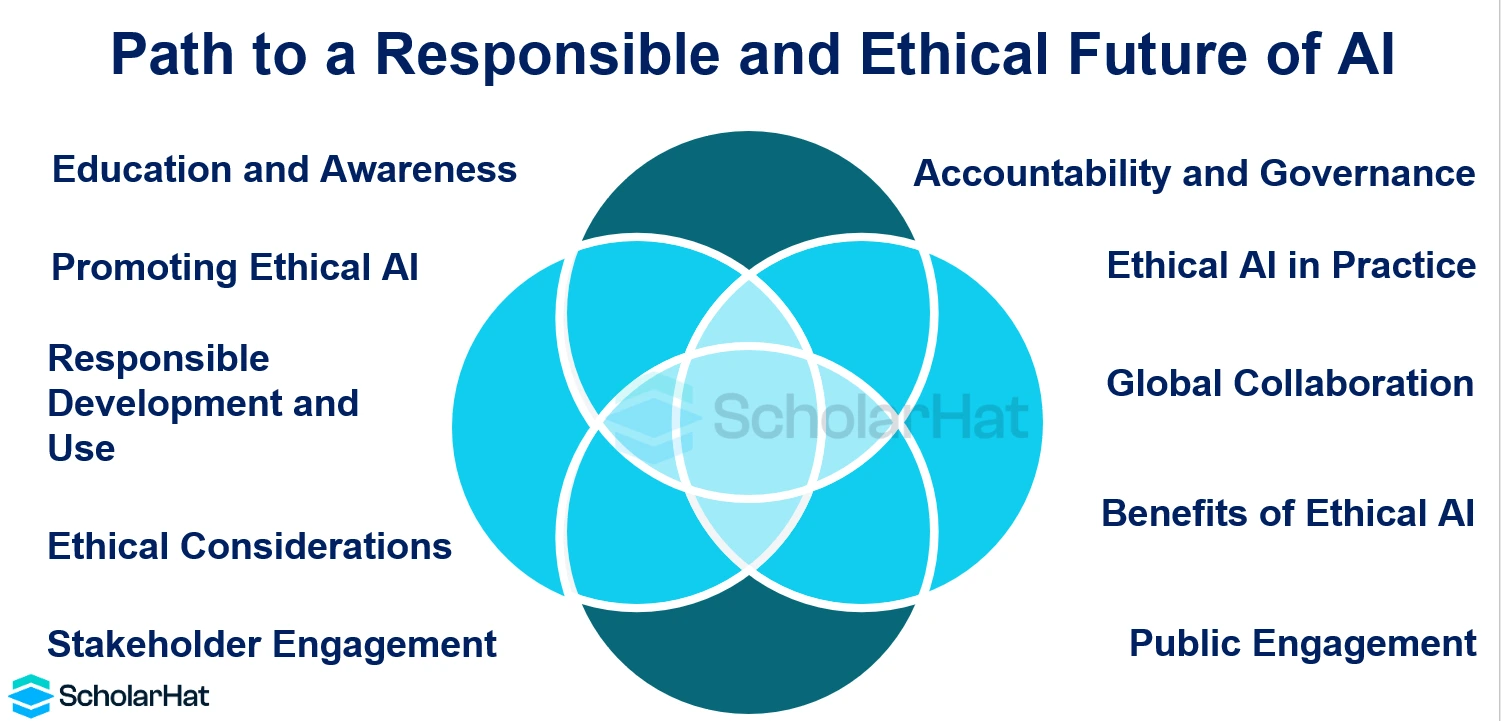
- Accountability and Governance Ensuring that AI systems are accountable for their actions requires:
- Human Oversight: Implementing human-in-the-loop (HITL) systems where critical decisions are reviewed by humans.
- Audit Trails: Maintaining logs of AI decision-making processes for review and accountability.
- Ethics Review Boards: Establishing internal or external committees to assess the ethical implications of AI projects.
- Liability Frameworks: Defining legal responsibilities for harm caused by AI systems, particularly in high-stakes domains like healthcare and autonomous vehicles.
#
- Human-Centric Design Ethical AI prioritizes human values and well-being by:
- Participatory Design: Involving affected communities (e.g., marginalized groups) in the development process to ensure their needs and concerns are addressed.
- Value Alignment: Ensuring that AI systems are designed to align with human values, such as fairness, autonomy, and dignity.
- Impact Assessments: Conducting ethical impact assessments to evaluate the potential societal consequences of AI deployment.
#
- Safety and Robustness AI systems must be designed to operate safely, even in unpredictable environments. This involves:
- Robust Testing: Rigorously testing AI systems under various scenarios, including edge cases and adversarial attacks.
- Fail-Safe Mechanisms: Implementing safeguards to prevent harmful outcomes (e.g., emergency shutdowns for autonomous systems).
- Continuous Monitoring: Using real-time monitoring to detect and address issues post-deployment.
#Important Facts
- AI Bias is Pervasive: Studies have shown that facial recognition systems have higher error rates for women and people of color, highlighting systemic biases in AI.
- Explainability is a Challenge: A 2020 survey by PwC found that 78% of executives believe AI systems lack transparency, making it difficult to trust their decisions.
- Regulation is Evolving: As of 2024, over 60 countries have introduced or are developing AI-specific regulations, with the EU AI Act being the most comprehensive.
- Ethical AI Can Drive Innovation: Companies that prioritize ethical AI (e.g., Google, Microsoft, IBM) have reported improved customer trust and reduced legal risks.
- Public Trust is Low: A 2023 Edelman Trust Barometer survey revealed that only 37% of people trust companies to use AI ethically.
- AI in Healthcare Raises Ethical Dilemmas: For example, an AI system trained primarily on data from one ethnic group may not perform well for others, leading to disparities in medical diagnoses.
- Autonomous Weapons are a Major Concern: The Campaign to Stop Killer Robots advocates for a ban on fully autonomous weapons, citing ethical and humanitarian risks.
- AI Ethics is Interdisciplinary: Successful ethical AI requires collaboration between technologists, ethicists, policymakers, and the public.
#Timeline
- Foundational ideas
Core concepts and early methods shape Understanding AI Ethics: a Comprehensive Guide.
- Practical use
Tools, examples, and real-world deployments make the topic easier to evaluate.
- Responsible implementation
Current work focuses on reliability, governance, performance, and measurable impact.
#Related Terms
#FAQ
What does Understanding AI Ethics: a Comprehensive Guide cover?
Covers understanding ai ethics: a comprehensive guide, including core concepts, practical examples, benefits, limitations, and risks in AI Ethics.
Why is Understanding AI Ethics: a Comprehensive Guide important?
It helps readers understand key concepts, compare practical use cases, and evaluate how AI Ethics decisions affect outcomes, risks, and implementation choices.
What should readers verify before applying this topic?
Readers should compare benefits, limitations, data requirements, and related themes such as Understanding, AI, Ethics before using the ideas in real projects.
#References
- Understanding AI Ethics: a Comprehensive Guide terminology and background research
- Understanding AI Ethics: a Comprehensive Guide use cases, implementation examples, and limitations
- AI Ethics best practices, standards, and risk guidance
- Understanding case studies, benchmarks, and current industry analysis


Comments
No comments yet. Start the discussion with a useful note.