

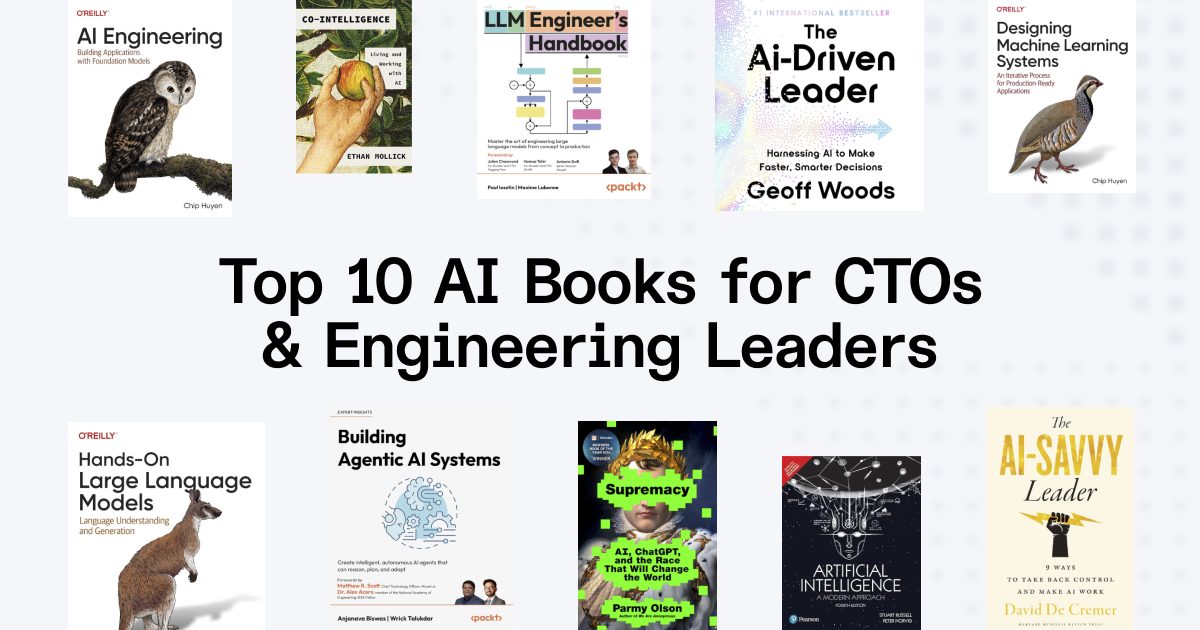
#Short Answer
Reviews top 10 ai books in 2026, covering notable options, strengths, limitations, and practical selection factors.
#Infobox
#Overview
Artificial Intelligence (AI) continues to reshape industries, economies, and daily life in 2026, making it essential for professionals and enthusiasts to stay updated with the latest knowledge. The Top 10 Must-Read Books on AI in 2026 curates essential literature that addresses cutting-edge developments, ethical challenges, and practical applications. These books are selected based on their relevance, impact, and accessibility, ensuring they provide value to both beginners and experts. The selection spans foundational texts on machine learning, advanced topics like generative AI, and critical discussions on AI governance and societal impact. Whether exploring the technical intricacies of neural networks or the philosophical implications of AI consciousness, these books offer a comprehensive understanding of the field’s evolution.
#History / Background
The evolution of AI literature reflects the field’s rapid progress. Early AI books, such as Artificial Intelligence: A Modern Approach (1995), laid the groundwork for understanding algorithms and problem-solving. By the 2010s, as deep learning gained prominence, publications like Deep Learning (2016) by Ian Goodfellow became indispensable. In 2026, AI books address emerging trends such as:
- Generative AI: Models like LLMs (Large Language Models) and diffusion networks.
- AI Ethics: Frameworks for responsible AI deployment.
- AI in Healthcare: Applications in diagnostics and personalized medicine.
- AI Governance: Policies for regulation and transparency. The shift from theoretical discussions to practical, real-world implementations marks a significant milestone in AI literature.
#How It Works
The Top 10 Must-Read Books on AI in 2026 is structured to cater to diverse learning needs:
- Foundational Knowledge: Books like AI 2026: The Next Decade provide overviews of core AI concepts, including supervised/unsupervised learning, reinforcement learning, and neural architectures.
- Advanced Topics: Titles such as Neural Networks and Deep Learning: The 2026 Edition delve into transformer models, attention mechanisms, and scaling laws in AI.
- Ethical and Societal Impact: Works like Ethical AI: Building a Responsible Future explore bias mitigation, explainable AI (XAI), and AI’s role in democracy.
- Industry-Specific Applications: Books on AI in finance, healthcare, and robotics highlight sector-specific innovations.
- Future Trends: Publications on AGI (Artificial General Intelligence) and post-singularity scenarios discuss long-term implications. Each book is curated to ensure a balance between technical depth and readability, making complex topics accessible.
#Important Facts
- AI Adoption: By 2026, over 70% of enterprises are expected to integrate AI into their operations, driving demand for specialized knowledge.
- Ethical Concerns: AI systems are projected to face stricter regulations, with books on governance becoming critical for compliance.
- Generative AI Growth: The generative AI market is estimated to reach $1.3 trillion by 2030, necessitating a workforce skilled in prompt engineering and model fine-tuning.
- AI in Education: Personalized learning platforms powered by AI are transforming education, with books on AI-driven pedagogy gaining traction.
- Bias and Fairness: Studies show that 60% of AI models exhibit bias, underscoring the need for books on ethical AI development.
#Timeline
- Foundational ideas
Core concepts and early methods shape Top 10 AI Books in 2026.
- Practical use
Tools, examples, and real-world deployments make the topic easier to evaluate.
- Responsible implementation
Current work focuses on reliability, governance, performance, and measurable impact.
#Related Terms
#FAQ
What does Top 10 AI Books in 2026 cover?
Reviews top 10 ai books in 2026, covering notable options, strengths, limitations, and practical selection factors.
Why is Top 10 AI Books in 2026 important?
It helps readers understand key concepts, compare practical use cases, and evaluate how Artificial Intelligence decisions affect outcomes, risks, and implementation choices.
What should readers verify before applying this topic?
Readers should compare benefits, limitations, data requirements, and related themes such as Top, 10, AI before using the ideas in real projects.
#References
- Top 10 AI Books in 2026 terminology and background research
- Top 10 AI Books in 2026 use cases, implementation examples, and limitations
- Artificial Intelligence best practices, standards, and risk guidance
- Top case studies, benchmarks, and current industry analysis



Comments
No comments yet. Start the discussion with a useful note.