

#Short Answer
Explains how to get started with ai ethics, including the main process, tools, examples, risks, and practical implementation steps.
#Infobox
#Overview
Artificial Intelligence (AI) has transformed industries, economies, and daily life, offering unprecedented opportunities for innovation and efficiency. However, its rapid advancement has also raised significant ethical concerns, including algorithmic bias, privacy violations, and unintended societal consequences. AI ethics provides a structured approach to addressing these challenges by establishing principles and frameworks that guide the responsible development and deployment of AI systems. At its core, AI ethics seeks to ensure that AI technologies align with human values and societal norms. This involves not only technical considerations—such as data quality and model interpretability—but also broader questions about the impact of AI on employment, democracy, and global inequality. As AI systems become more autonomous and influential, the need for robust ethical frameworks becomes increasingly urgent.
#History / Background
#Early Foundations The concept of AI ethics emerged alongside the development of artificial intelligence itself. In the 1950s and 1960s, early AI pioneers like Alan Turing and Joseph Weizenbaum began exploring the philosophical implications of intelligent machines. Turing’s 1950 paper "Computing Machinery and Intelligence" posed fundamental questions about whether machines could think, laying the groundwork for discussions on AI’s moral responsibilities. By the 1970s, concerns about AI’s potential misuse led to the formation of the Asilomar AI Principles in 2017, a landmark document outlining guidelines for the safe and ethical development of AI. This was followed by initiatives from governments, corporations, and academic institutions to formalize ethical standards.
#Key Milestones
- 2016: The Partnership on AI was established by major tech companies (e.g., Google, Amazon, Facebook) to promote responsible AI development.
- 2018: The EU High-Level Expert Group on AI published Ethics Guidelines for Trustworthy AI, emphasizing human-centric values.
- 2020: The OECD Principles on AI were adopted by 42 countries, providing a global framework for ethical AI.
- 2021: The Algorithmic Accountability Act (proposed in the U.S.) aimed to regulate AI systems for bias and discrimination.
- 2023: The UNESCO Recommendation on the Ethics of AI was adopted, setting global standards for AI governance.
#Evolution of Ethical Frameworks Early ethical discussions focused on Asimov’s Three Laws of Robotics, which proposed rules to prevent AI from harming humans. However, modern frameworks have evolved to address more complex issues, such as:
- Algorithmic Bias: Ensuring AI systems do not perpetuate discrimination based on race, gender, or socioeconomic status.
- Explainability: Making AI decisions transparent and understandable to users and stakeholders.
- Privacy: Protecting personal data used in AI training and deployment.
- Autonomy: Ensuring AI systems do not undermine human decision-making.
#How It Works
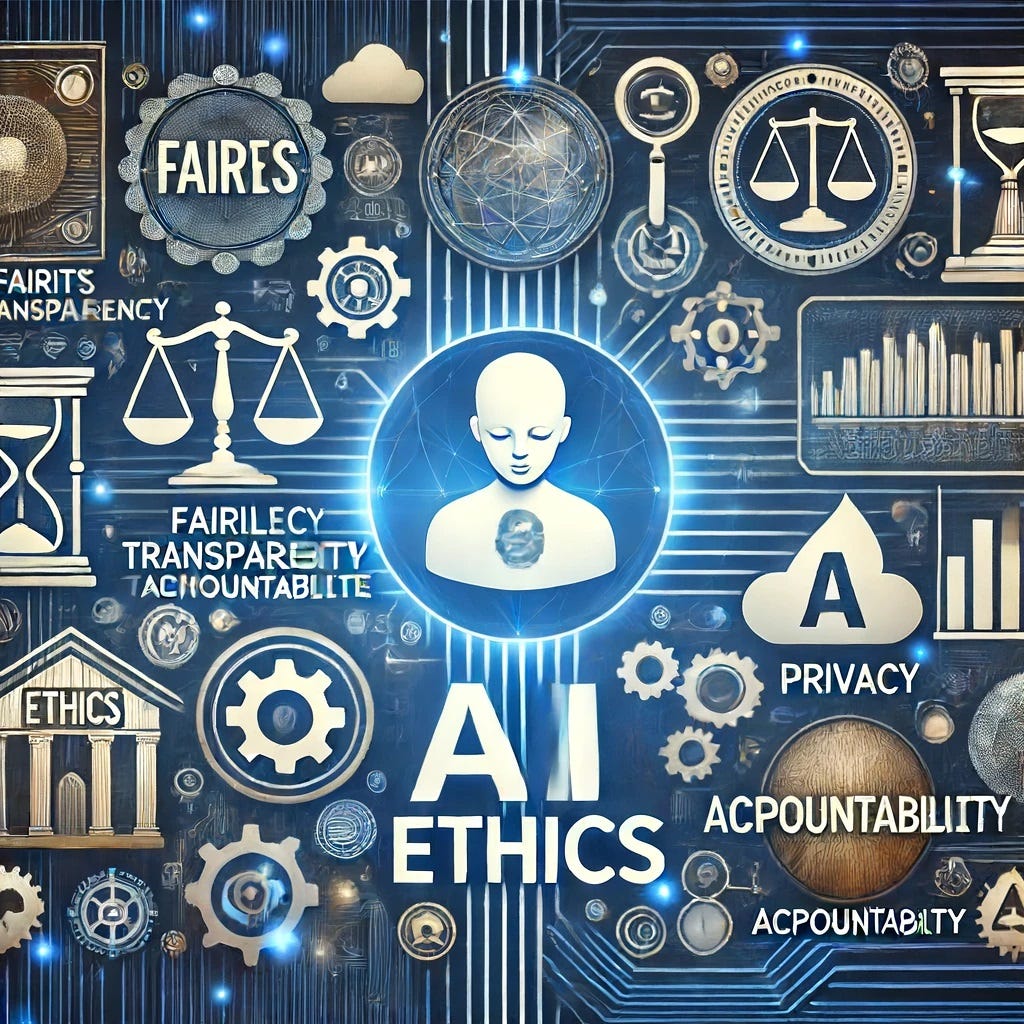
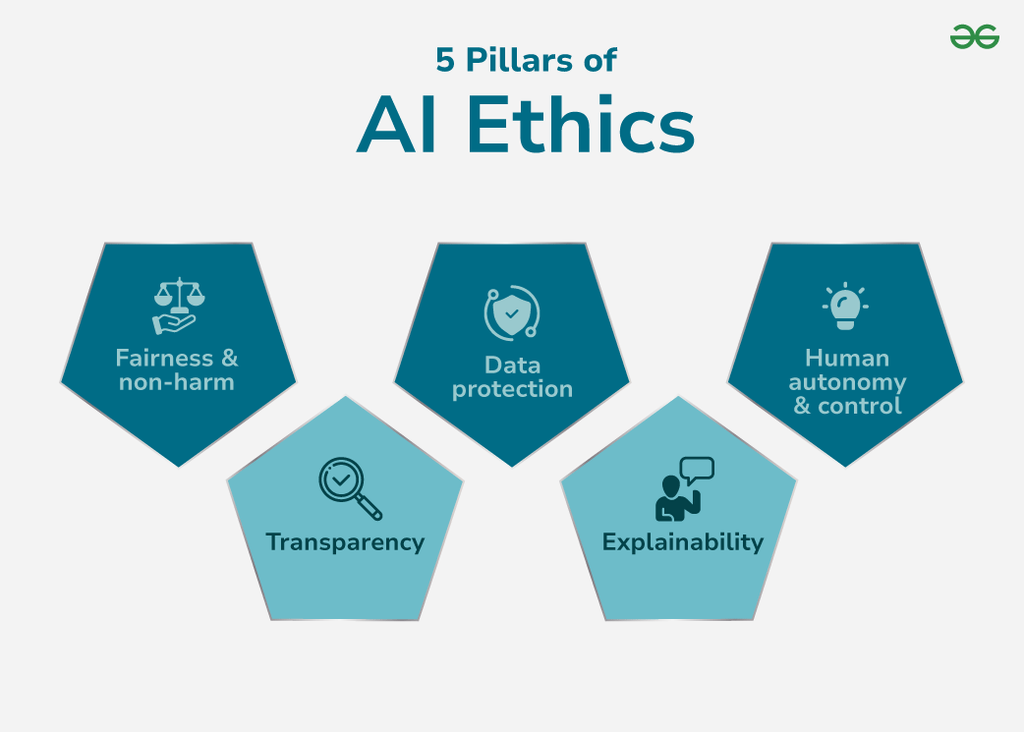
#Core Principles of AI Ethics
- Fairness and Non-Discrimination AI systems must be designed to avoid bias and ensure equitable outcomes. This involves:
- Data Audits: Identifying and mitigating biases in training datasets.
- Fairness Metrics: Using tools like disparate impact analysis to measure bias.
- Diverse Teams: Including multidisciplinary perspectives in AI development.
- Transparency and Explainability Users should understand how AI systems make decisions. Techniques include:
- Explainable AI (XAI): Models like LIME (Local Interpretable Model-agnostic Explanations) and SHAP (SHapley Additive exPlanations) help interpret AI outputs.
- Documentation: Maintaining records of AI model development, data sources, and decision-making processes.
- Accountability Clear lines of responsibility must be established for AI systems. This includes:
- Audits: Regular reviews of AI systems for compliance with ethical standards.
- Human Oversight: Ensuring humans retain control over critical decisions.
- Privacy and Security AI systems must protect user data and prevent misuse. Strategies include:
- Differential Privacy: Adding noise to datasets to prevent re-identification.
- Federated Learning: Training models on decentralized data to enhance privacy.
- Safety and Robustness AI systems should operate reliably and safely. Approaches include:
- Red Teaming: Testing AI systems for vulnerabilities and unintended behaviors.
- Fail-Safe Mechanisms: Designing systems to degrade gracefully in case of failure.
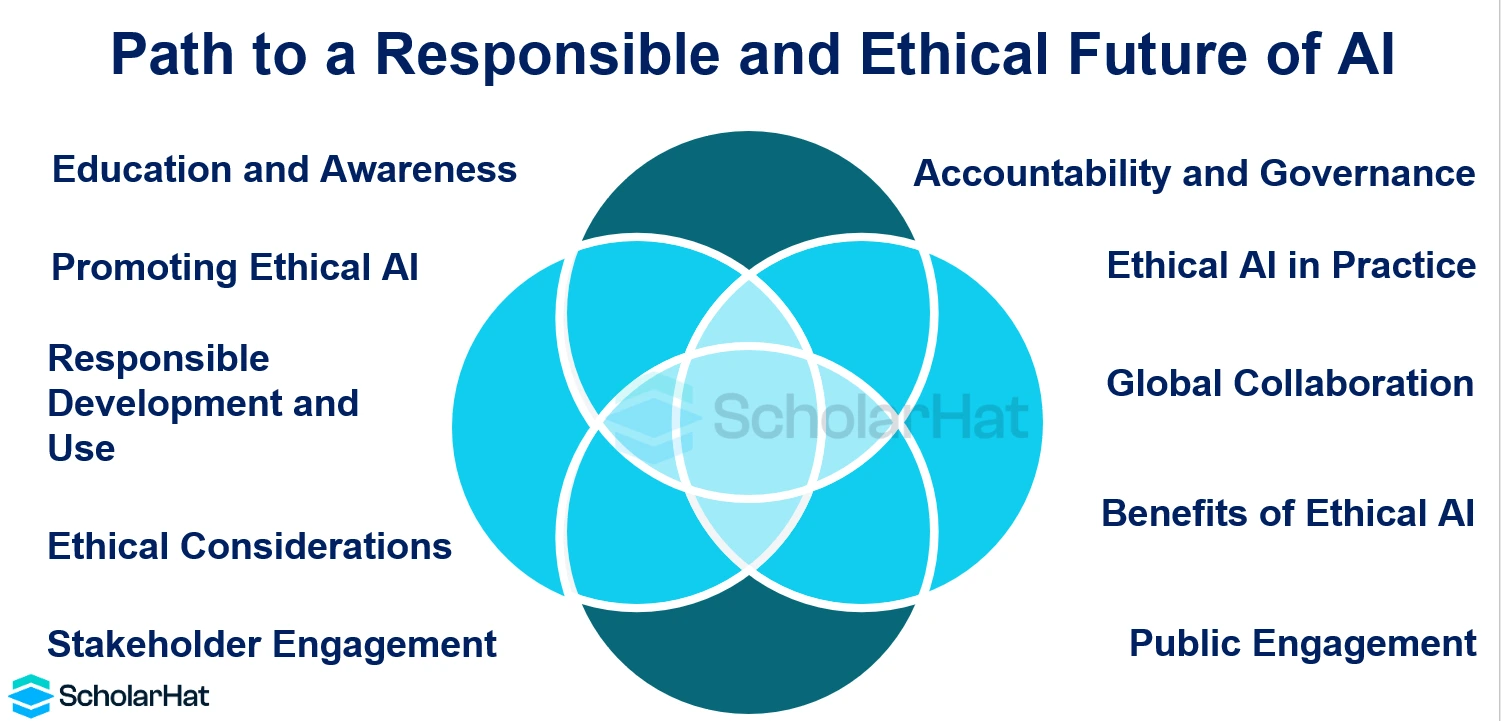
#Practical Steps to Implement AI Ethics
- Assess Ethical Risks - Identify potential harms (e.g., bias, privacy violations). - Conduct ethical impact assessments for AI projects.
- Adopt Ethical Frameworks - Use established guidelines like the EU Trustworthy AI Framework or IEEE Ethically Aligned Design.
- Develop Responsible AI Policies - Establish internal policies for data collection, model training, and deployment. - Train employees on ethical AI practices.
- Engage Stakeholders - Involve diverse groups (e.g., ethicists, policymakers, affected communities) in AI development.
- Monitor and Iterate - Continuously evaluate AI systems for ethical compliance. - Update models and policies as new risks emerge.
#Important Facts
- Algorithmic Bias: Studies show that AI systems can reflect and amplify societal biases. For example, facial recognition systems have higher error rates for darker-skinned individuals.
- Explainability Gap: Many AI models (e.g., deep neural networks) operate as "black boxes," making it difficult to understand their decisions.
- Regulatory Landscape: The EU’s AI Act (2024) is the first comprehensive AI regulation, classifying AI systems by risk level.
- Public Trust: Surveys indicate that 68% of consumers are concerned about AI ethics, with transparency being a key factor in trust.
- Economic Impact: Ethical AI can enhance brand reputation and customer loyalty, while unethical AI risks legal penalties and reputational damage.
#Timeline
- Foundational ideas
Core concepts and early methods shape How to Get Started with AI Ethics.
- Practical use
Tools, examples, and real-world deployments make the topic easier to evaluate.
- Responsible implementation
Current work focuses on reliability, governance, performance, and measurable impact.
#Related Terms
#FAQ
What does How to Get Started with AI Ethics cover?
Explains how to get started with ai ethics, including the main process, tools, examples, risks, and practical implementation steps.
Why is How to Get Started with AI Ethics important?
It helps readers understand key concepts, compare practical use cases, and evaluate how AI Ethics decisions affect outcomes, risks, and implementation choices.
What should readers verify before applying this topic?
Readers should compare benefits, limitations, data requirements, and related themes such as Get, Started, AI before using the ideas in real projects.
#References
- How to Get Started with AI Ethics terminology and background research
- How to Get Started with AI Ethics use cases, implementation examples, and limitations
- AI Ethics best practices, standards, and risk guidance
- Get case studies, benchmarks, and current industry analysis


Comments
No comments yet. Start the discussion with a useful note.