

#Short Answer
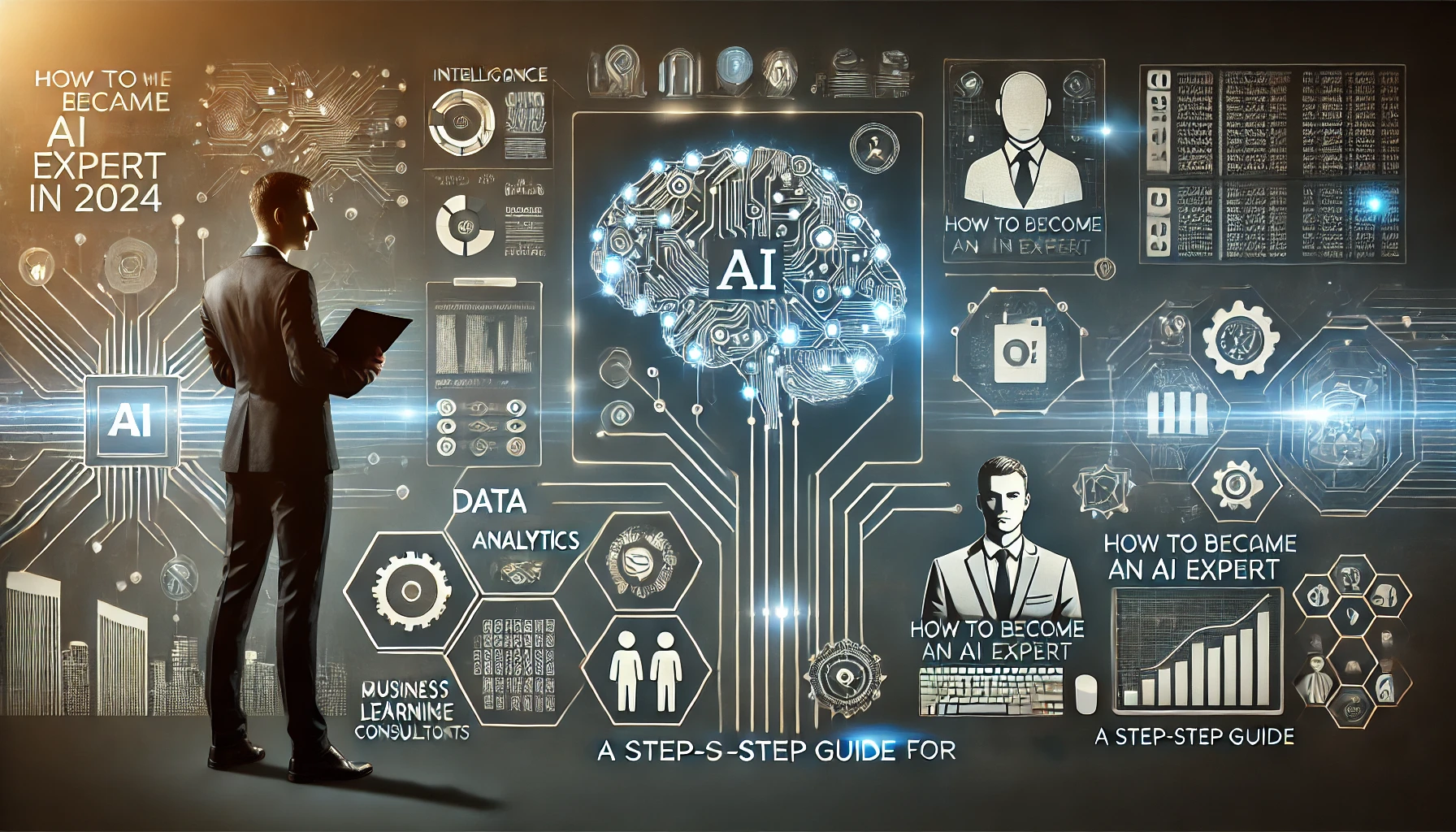
Introduces AI in business for new readers, covering essential concepts, common examples, practical uses, and next steps for learning.
#Infobox
AI in Business refers to the integration of artificial intelligence technologies into corporate operations to enhance efficiency, decision-making, and customer experiences. It encompasses machine learning, natural language processing, and automation tools that streamline workflows, analyze data, and predict trends, enabling businesses to gain competitive advantages.
AI in Business Overview Category Business Technology Primary Use Cases Automation, Data Analysis, Customer Insights, Predictive Maintenance Key Technologies Machine Learning, NLP, Computer Vision, Robotic Process Automation (RPA) Adoption Rate ~35% of businesses globally (as of 2023) ROI Metrics Cost reduction (20-30%), Revenue growth (10-15%), Efficiency gains (40%)
#Overview
Artificial Intelligence (AI) in business involves deploying intelligent systems to perform tasks traditionally requiring human cognition. These systems leverage algorithms, big data, and computational power to automate processes, extract insights from unstructured data, and optimize operations. From chatbots handling customer queries to AI-driven supply chain management, businesses across sectors—retail, healthcare, finance, and manufacturing—are adopting AI to reduce costs, improve accuracy, and drive innovation.
AI adoption is no longer confined to tech giants; small and medium enterprises (SMEs) are also integrating AI tools through cloud-based platforms like Google Vertex AI, Microsoft Azure AI, and IBM Watson. The global AI in business market is projected to reach $300 billion by 2026, reflecting its transformative potential.
#History / Background
#Early Foundations (1950s–1980s)
The concept of AI dates back to 1956 when John McCarthy coined the term at the Dartmouth Conference. Early AI systems, like ELIZA (1966), demonstrated basic natural language processing (NLP) capabilities. However, limited computational power and data constrained practical applications. The 1980s saw the rise of expert systems—rule-based AI programs designed to mimic human decision-making in niche domains like medical diagnosis.
#Commercialization (1990s–2000s)
AI began transitioning from academia to business with the advent of machine learning (ML) algorithms. Companies like IBM and Google started using ML for tasks such as fraud detection and search engine optimization. The 2000s introduced big data analytics, enabling businesses to harness vast datasets for predictive modeling. Amazon’s recommendation engine (2001) and Netflix’s personalized suggestions (2006) became iconic examples of AI-driven customer engagement.
#Modern Era (2010s–Present)
The proliferation of cloud computing, GPUs, and deep learning revolutionized AI in business. Breakthroughs in neural networks—particularly convolutional neural networks (CNNs) and transformers—enabled advancements in computer vision (e.g., facial recognition) and NLP (e.g., chatbots). The launch of OpenAI’s GPT-3 (2020) and Google’s BERT further democratized AI, allowing businesses to deploy sophisticated models without extensive in-house expertise. Today, AI is embedded in workflows via tools like Salesforce Einstein for CRM and SAP Leonardo for enterprise resource planning (ERP).
#How It Works
#Core Technologies
- Machine Learning (ML): Algorithms that learn patterns from data to make predictions or decisions without explicit programming. Supervised learning (e.g., classification) and unsupervised learning (e.g., clustering) are common techniques.
- Natural Language Processing (NLP): Enables machines to understand, interpret, and generate human language. Used in sentiment analysis, translation, and chatbots.
- Computer Vision: AI systems that analyze visual data (e.g., images, videos) for tasks like object detection, quality control, and autonomous vehicles.
- Robotic Process Automation (RPA): Software robots that mimic human actions to automate repetitive tasks (e.g., data entry, invoice processing).
#Implementation Steps
- Problem Identification: Define business challenges (e.g., high customer churn, inefficient inventory management).
- Data Collection: Gather structured (e.g., transaction records) and unstructured (e.g., social media posts) data from sources like CRM systems, IoT devices, and APIs.
- Data Preprocessing: Clean, normalize, and label data to remove noise and biases.
- Model Selection: Choose an appropriate AI model (e.g., decision trees for interpretability, neural networks for complex patterns).
- Training & Validation: Train the model on historical data and validate its performance using metrics like accuracy, precision, and recall.
- Deployment: Integrate the AI model into business systems (e.g., via APIs, cloud platforms) and monitor its real-world performance.
- Scaling & Optimization: Refine the model based on feedback and scale it across departments or regions.
#Important Facts
- Cost Savings: Businesses using AI for automation report 20–30% cost reductions in operational expenses (McKinsey, 2022).
- Customer Experience: AI-powered chatbots improve response times by 30–50% and reduce customer service costs by up to 30% (Gartner).
- Data Utilization: Only 20% of enterprise data is currently used for decision-making; AI helps unlock insights from the remaining 80% (IDC).
- Fraud Detection: Financial institutions using AI reduce fraud losses by 50% compared to traditional methods (Accenture).
- Talent Gap: By 2025, 97 million new AI-related jobs are expected, but 54% of employees lack the necessary skills (World Economic Forum).
- Ethical Concerns: 68% of consumers are wary of AI’s impact on privacy, and 72% of businesses cite ethical AI as a priority (PwC).
#Timeline
Year Milestone 1956 John McCarthy coins the term "Artificial Intelligence" at Dartmouth Conference. 1966 ELIZA, the first chatbot, is developed at MIT. 1980s Expert systems gain traction in industries like healthcare and finance. 1997 IBM’s Deep Blue defeats world chess champion Garry Kasparov. 2001 Amazon launches its recommendation engine, pioneering AI in e-commerce. 2006 Netflix introduces personalized movie recommendations using AI. 2011 IBM Watson wins Jeopardy!, showcasing AI’s potential in natural language understanding. 2016 Google’s AlphaGo defeats a world champion Go player, demonstrating deep learning’s power. 2020 OpenAI releases GPT-3, enabling advanced text generation and automation. 2022 Generative AI tools like DALL·E and Stable Diffusion gain mainstream adoption. 2023 Global AI in business market exceeds $100 billion.
#Related Terms
#FAQ
What does Beginner Guide To AI In Business cover?
Introduces AI in business for new readers, covering essential concepts, common examples, practical uses, and next steps for learning.
Why is Beginner Guide To AI In Business important?
It helps readers understand key concepts, compare practical use cases, and evaluate how Business & Marketing decisions affect outcomes, risks, and implementation choices.
What should readers verify before applying this topic?
Readers should compare the benefits, limitations, data requirements, and related themes such as Beginner Friendly, Busines, Business Strategy before using the ideas in real projects.
#References
- Beginner Guide To AI In Business terminology and background research
- Beginner Guide To AI In Business use cases, implementation examples, and limitations
- Business & Marketing best practices, standards, and risk guidance
- Beginner Friendly case studies, benchmarks, and current industry analysis


Comments
No comments yet. Start the discussion with a useful note.