

#Short Answer
Joining an AI startup involves identifying relevant roles, acquiring necessary skills, networking within the industry, and aligning with a company's mission. Key steps include understanding AI technologies, tailoring applications to specific needs, and leveraging platforms like LinkedIn, AngelList, and specialized job boards. Many startups prioritize candidates with expertise in machine learning, natural language processing, or data science, though roles in marketing, operations, and product development are also critical.
#Infobox
#Overview
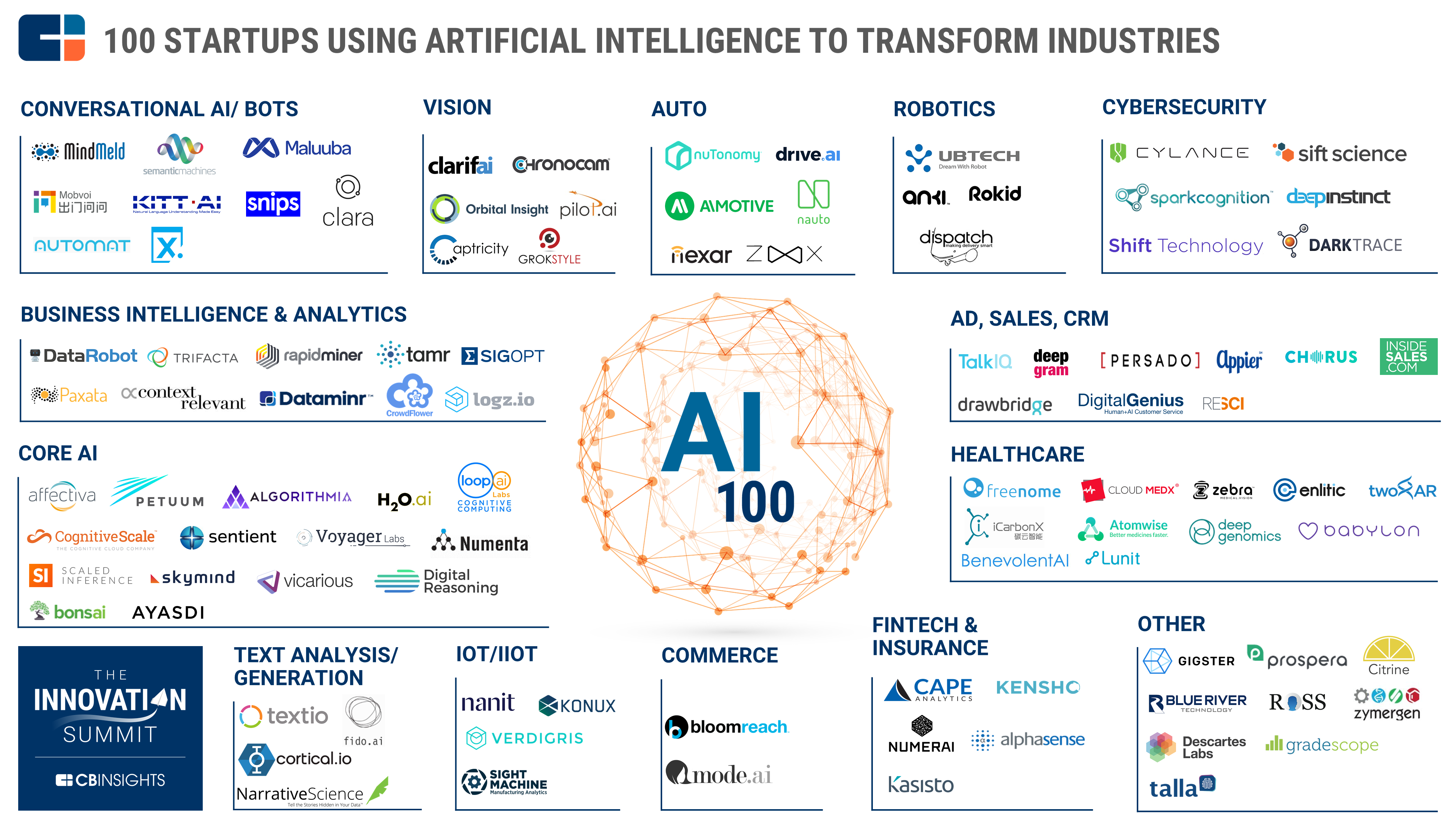
Artificial Intelligence (AI) startups are companies that leverage AI technologies to develop innovative products, services, or solutions aimed at solving complex problems across various industries. These startups typically focus on areas such as machine learning (ML), natural language processing (NLP), computer vision, robotics, and automation. The AI startup ecosystem has grown significantly over the past decade, driven by advancements in computing power, the availability of large datasets, and increased investment from venture capitalists and corporations.
AI startups often operate in niche markets, addressing specific challenges such as healthcare diagnostics, financial fraud detection, personalized marketing, or autonomous vehicle navigation. Many of these companies are founded by researchers, engineers, or entrepreneurs with deep expertise in AI and related fields. The success of an AI startup often hinges on its ability to develop scalable, efficient, and ethical AI models that deliver tangible value to customers and stakeholders.
#History / Background
The origins of AI startups can be traced back to the mid-20th century, with the development of foundational AI concepts by pioneers such as Alan Turing, John McCarthy, and Marvin Minsky. However, the modern AI startup ecosystem began to take shape in the late 1990s and early 2000s, as advancements in computing power and the internet enabled the collection and processing of vast amounts of data.
One of the earliest notable AI startups was DeepMind, founded in 2010 by Demis Hassabis, Shane Legg, and Mustafa Suleyman. DeepMind gained global recognition in 2016 when its AI system, AlphaGo, defeated the world champion Go player, Lee Sedol. This milestone demonstrated the potential of AI to surpass human capabilities in complex strategic games and sparked widespread interest in AI research and commercial applications.
The proliferation of AI startups accelerated in the 2010s, fueled by the rise of deep learning, the availability of cloud computing resources, and the democratization of AI tools through open-source frameworks like TensorFlow and PyTorch. Major technology companies such as Google, Microsoft, and Amazon also began investing heavily in AI startups, either through acquisitions or venture capital funding.
Today, the AI startup landscape is highly dynamic, with new companies emerging regularly across diverse sectors. The COVID-19 pandemic further accelerated the adoption of AI technologies, as businesses sought to automate processes, enhance customer experiences, and optimize supply chains in response to disruptions.
#How It Works
AI startups operate by developing and deploying AI models and systems that can perform tasks typically requiring human intelligence. The process generally involves several key stages:
#1. Problem Identification and Research
AI startups begin by identifying a specific problem or opportunity that can be addressed using AI technologies. This involves conducting market research, analyzing industry trends, and assessing the feasibility of developing an AI solution. Founders often leverage their expertise in AI, data science, or domain-specific fields to pinpoint areas where AI can deliver significant value.
#2. Data Collection and Preparation
AI models require large datasets to train and improve their performance. Startups gather data from various sources, including public datasets, proprietary databases, or partnerships with organizations. The data is then cleaned, labeled, and preprocessed to ensure it is suitable for training AI models. This stage is critical, as the quality and relevance of the data directly impact the model's accuracy and effectiveness.
#3. Model Development and Training
Once the data is prepared, AI startups develop and train machine learning models using frameworks such as TensorFlow, PyTorch, or scikit-learn. The choice of model depends on the specific problem being addressed. For example, convolutional neural networks (CNNs) are commonly used for image recognition tasks, while recurrent neural networks (RNNs) or transformers are employed for natural language processing (NLP) applications.
Training involves feeding the model with labeled data and adjusting its parameters to minimize errors. This process can be computationally intensive and may require specialized hardware, such as graphics processing units (GPUs) or tensor processing units (TPUs). Many startups leverage cloud-based AI platforms, such as Google Cloud AI, Amazon SageMaker, or Microsoft Azure AI, to accelerate the training process.
#4. Testing and Validation
After training, the AI model is tested using validation datasets to evaluate its performance. Metrics such as accuracy, precision, recall, and F1 score are used to assess the model's effectiveness. Startups also conduct real-world testing to ensure the model performs as expected in practical scenarios. This stage may involve collaborations with industry partners or pilot programs to gather feedback and refine the model.
#5. Deployment and Integration
Once the model is validated, it is deployed into production environments where it can be integrated into applications, platforms, or services. AI startups often develop APIs (Application Programming Interfaces) to enable seamless integration with existing systems. Deployment may involve cloud-based solutions, edge computing, or on-premise infrastructure, depending on the startup's target market and use case.
#6. Monitoring and Optimization
AI models require continuous monitoring to ensure they remain accurate and effective over time. Startups implement feedback loops, where user interactions and performance data are used to retrain and improve the model. This iterative process helps the AI system adapt to changing conditions and maintain high levels of performance.
#Important Facts
- Market Growth: The global AI market size was valued at $136.6 billion in 2023 and is projected to grow at a compound annual growth rate (CAGR) of 37.3% from 2024 to 2030.
- Investment Trends: Venture capital funding for AI startups reached $102.7 billion in 2022, with significant investments in generative AI, computer vision, and autonomous systems.
- Key Technologies: Machine learning, deep learning, natural language processing (NLP), computer vision, and reinforcement learning are among the most widely used AI technologies in startups.
- Industry Adoption: The healthcare, finance, retail, and manufacturing sectors are the leading adopters of AI technologies, with applications ranging from diagnostics and fraud detection to personalized marketing and supply chain optimization.
- Ethical Considerations: AI startups face increasing scrutiny over issues such as data privacy, algorithmic bias, and the ethical implications of AI deployment. Many companies are adopting frameworks for responsible AI development to address these concerns.
- Talent Demand: There is a significant shortage of skilled AI professionals, with roles such as machine learning engineers, data scientists, and AI researchers being among the most in-demand in the tech industry.
- Regulatory Landscape: Governments worldwide are implementing regulations to govern AI development and deployment, such as the EU's Artificial Intelligence Act and the U.S. National AI Initiative Act.
#Timeline
- The term 'Artificial Intellig
The term 'Artificial Intelligence' is coined at the Dartmouth Conference, marking the birth of AI as a field of study.
- IBM's Deep Blue defeats
IBM's Deep Blue defeats world chess champion Garry Kasparov, demonstrating the potential of AI in strategic decision-making.
- DeepMind is founded, later
DeepMind is founded, later gaining fame for its AlphaGo system that defeats a world champion Go player in 2016.
- Google acquires DeepMind, sign
Google acquires DeepMind, signaling increased corporate interest in AI startups.
- OpenAI is founded, focusing
OpenAI is founded, focusing on developing safe and beneficial AI technologies.
- The EU introduces the
The EU introduces the General Data Protection Regulation (GDPR), influencing AI development practices worldwide.
- The COVID-19 pandemic accelera
The COVID-19 pandemic accelerates the adoption of AI technologies in healthcare, remote work, and automation.
- Generative AI gains mainstream
Generative AI gains mainstream attention with the release of models like DALL-E and Stable Diffusion.
- AI startups receive record
AI startups receive record levels of venture capital funding, with a focus on generative AI and ethical AI development.
#Related Terms
#FAQ
What does AI Startups: How To Join One cover?
AI startups: how to join one covers practical examples, benefits, limitations, and important considerations for readers.
Why is AI Startups: How To Join One important?
It helps readers understand key concepts, compare practical use cases, and evaluate how Business & Marketing decisions affect outcomes, risks, and implementation choices.
What should readers verify before applying this topic?
Readers should compare the benefits, limitations, data requirements, and related themes such as Tutorial, Startup, Content Generation before using the ideas in real projects.
#References
- AI Startups: How To Join One terminology and background research
- AI Startups: How To Join One use cases, implementation examples, and limitations
- Business & Marketing best practices, standards, and risk guidance
- Tutorial case studies, benchmarks, and current industry analysis
.jpg)

Comments
No comments yet. Start the discussion with a useful note.