

#Short Answer
Reviews AI in business in 2026 trends and predictions, focusing on emerging tools, adoption patterns, opportunities, and risks.
#Infobox
Artificial Intelligence in Business (2026) Field Business, Technology Focus AI-driven business transformation, automation, and decision-making Key Trends Hyper-automation, predictive analytics, generative AI, AI governance Major Players Microsoft, Google, IBM, Amazon, OpenAI Adoption Rate ~75% of enterprises integrating AI in core operations (2026)
#Overview
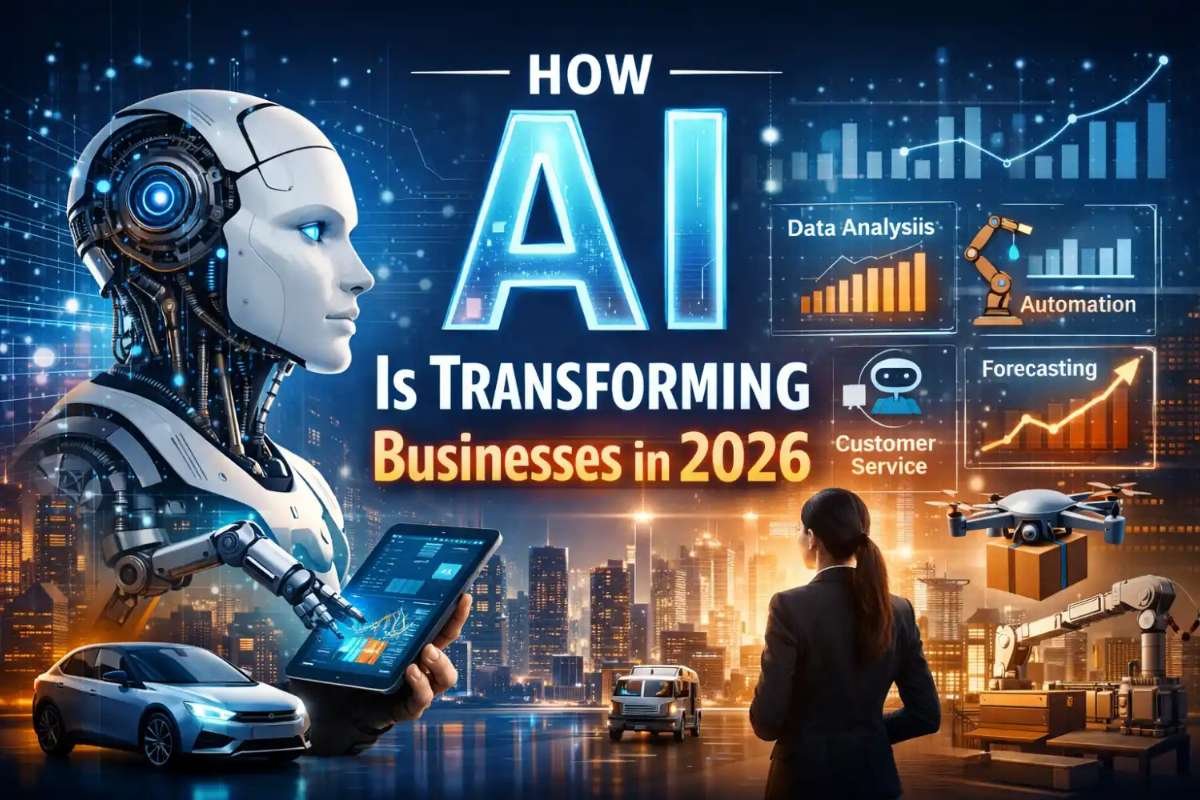
In 2026, AI in business transcends traditional automation, embedding itself into strategic planning, operational efficiency, and customer engagement. The integration of AI-driven tools has led to a paradigm shift in how businesses operate, with a focus on data-driven decision-making and real-time adaptability. Companies are increasingly adopting AI-first strategies, where AI models are embedded into core business processes, from marketing to logistics.
Key areas of AI application include:
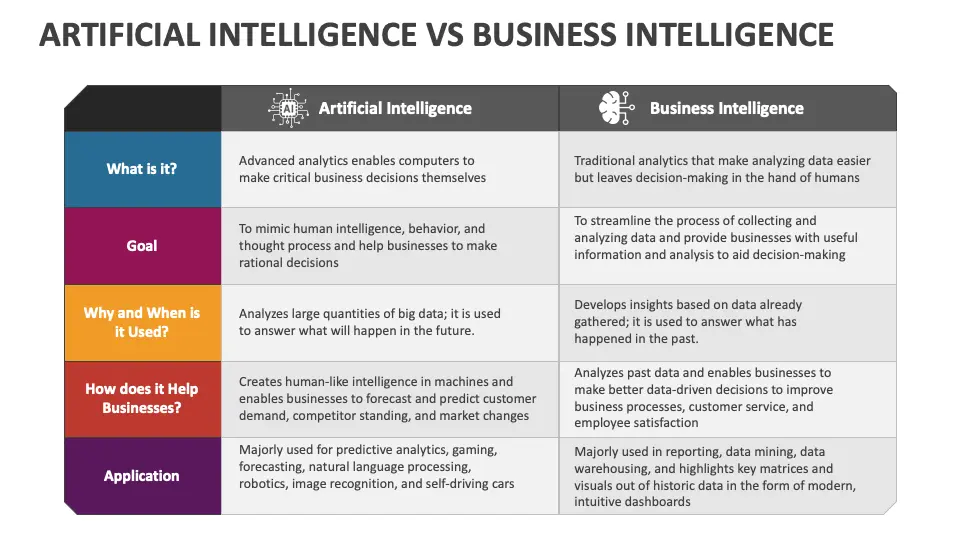
- Predictive Analytics: Forecasting market trends, customer behavior, and operational risks.
- Hyper-Automation: Combining AI, robotic process automation (RPA), and low-code platforms to automate end-to-end business processes.
- Generative AI: Creating synthetic data, content, and design prototypes to accelerate innovation.
- AI Governance: Ensuring compliance with ethical AI standards and regulatory requirements.
#History / Background
The evolution of AI in business can be traced back to the 1950s, when early AI research focused on symbolic reasoning and expert systems. However, the modern AI revolution began in the 2010s with breakthroughs in machine learning (ML) and deep learning, fueled by advancements in computing power and big data.
Milestones include:
- 2011: IBM Watson defeats human champions in Jeopardy!, demonstrating AI’s potential in natural language processing (NLP).
- 2016: AlphaGo defeats a world champion Go player, showcasing AI’s ability to handle complex decision-making.
- 2018: Gartner predicts that by 2022, 85% of AI projects will fail due to poor data quality or lack of business alignment—a challenge that persists but is gradually being addressed.
- 2020: The COVID-19 pandemic accelerates AI adoption in remote work, supply chain resilience, and healthcare diagnostics.
- 2023-2024: Generative AI tools like ChatGPT and DALL-E become mainstream, enabling businesses to automate content creation and design.
- 2025: The EU’s Artificial Intelligence Act comes into effect, setting global standards for AI ethics and compliance.
- 2026: AI integration reaches near-ubiquity in enterprise software, with AI copilots becoming standard in productivity suites like Microsoft 365 and Google Workspace.
#How It Works
AI in business operates through a combination of algorithms, data, and computational power. The process typically involves:
- Data Collection & Preprocessing: Businesses gather structured and unstructured data from sources like CRM systems, IoT devices, and social media. This data is cleaned, normalized, and labeled for training AI models.
- Model Training: Machine learning models—such as neural networks, decision trees, or transformers—are trained on historical data to identify patterns, predict outcomes, or generate content.
- Deployment & Integration: Trained models are deployed into business applications via APIs, cloud platforms, or embedded systems. For example, an AI chatbot integrates with a company’s website to handle customer queries.
- Monitoring & Optimization: AI systems are continuously monitored for performance, bias, and drift. Feedback loops improve accuracy, while human oversight ensures ethical compliance.
Key AI techniques used in business include:
- Supervised Learning: Used for classification (e.g., spam detection) and regression (e.g., sales forecasting).
- Unsupervised Learning: Identifies hidden patterns (e.g., customer segmentation) without labeled data.
- Reinforcement Learning: Optimizes decision-making in dynamic environments (e.g., supply chain logistics).
- Natural Language Processing (NLP): Powers chatbots, sentiment analysis, and document automation.
- Computer Vision: Enables image recognition for quality control, inventory management, and autonomous vehicles.
#Important Facts
- Economic Impact: AI is projected to contribute $15.7 trillion to the global economy by 2030 (PwC).
- Job Transformation: By 2026, 60% of jobs will have at least 30% of tasks augmented by AI (World Economic Forum).
- Adoption Barriers: Data silos and legacy systems remain the top challenges for AI integration.
- Ethical Concerns: Bias in AI (e.g., hiring algorithms favoring certain demographics) has led to increased scrutiny and regulatory oversight.
- Energy Consumption: Training large AI models consumes significant energy, prompting a shift toward green AI and energy-efficient algorithms.
- Small Businesses: Cloud-based AI tools (e.g., Microsoft Copilot) have democratized AI, enabling SMEs to compete with larger enterprises.
#Timeline
Year Event 1956 John McCarthy coins the term "artificial intelligence" at Dartmouth Conference. 1997 IBM’s Deep Blue defeats world chess champion Garry Kasparov. 2011 IBM Watson wins Jeopardy!, demonstrating AI’s potential in business applications. 2016 AlphaGo defeats a Go world champion, showcasing AI’s strategic decision-making. 2018 Gartner reports that 85% of AI projects fail due to poor data quality. 2020 AI adoption surges during the COVID-19 pandemic, particularly in healthcare and remote work. 2022 Generative AI tools like DALL-E and Stable Diffusion gain mainstream attention. 2023 ChatGPT reaches 100 million users, accelerating AI adoption in business. 2024 EU’s Artificial Intelligence Act comes into effect, setting global AI governance standards. 2025 AI copilots become standard in enterprise software (e.g., Microsoft 365, Google Workspace). 2026 ~75% of enterprises integrate AI into core operations; generative AI dominates content creation.
#Related Terms
#FAQ
What does AI In Business In 2026: Trends And Predictions cover?
Reviews AI in business in 2026 trends and predictions, focusing on emerging tools, adoption patterns, opportunities, and risks.
Why is AI In Business In 2026: Trends And Predictions important?
It helps readers understand key concepts, compare practical use cases, and evaluate how Business & Marketing decisions affect outcomes, risks, and implementation choices.
What should readers verify before applying this topic?
Readers should compare the benefits, limitations, data requirements, and related themes such as 2026 Trends, Busines, 2026 before using the ideas in real projects.
#References
- AI In Business In 2026: Trends And Predictions terminology and background research
- AI In Business In 2026: Trends And Predictions use cases, implementation examples, and limitations
- Business & Marketing best practices, standards, and risk guidance
- 2026 Trends case studies, benchmarks, and current industry analysis
.jpg)


Comments
No comments yet. Start the discussion with a useful note.