

#Short Answer
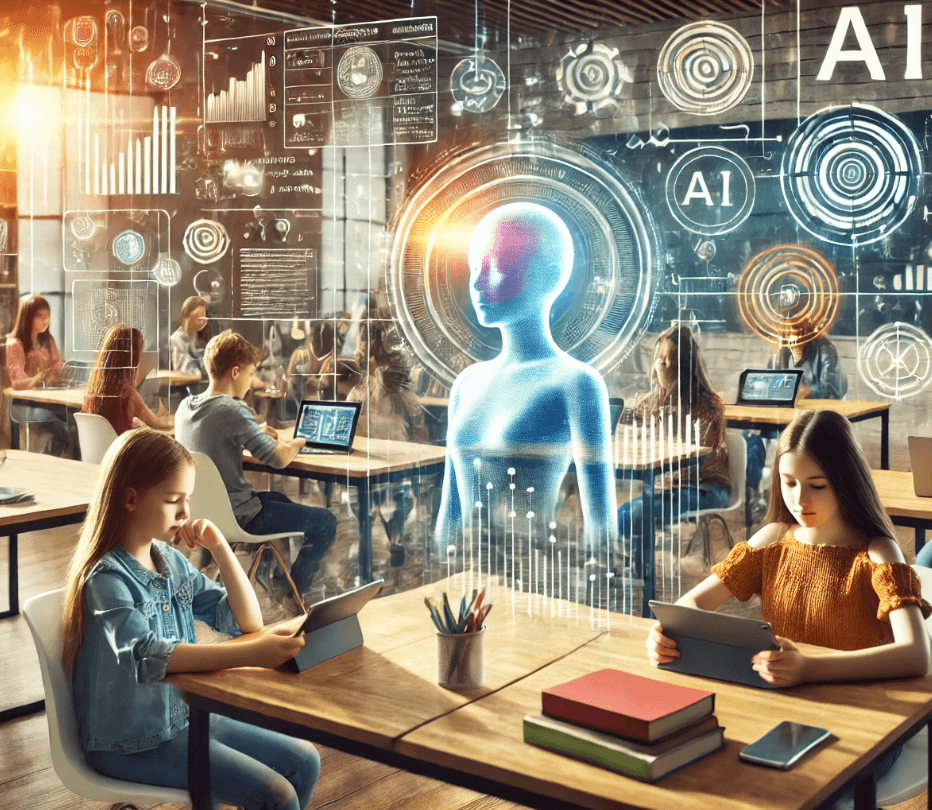
Shows how AI can support students through personalized learning, including tools, examples, benefits, and responsible-use tips.
#Infobox
AI in Education Field Education Focus Personalized Learning Key Technologies Machine Learning, Natural Language Processing, Adaptive Algorithms Primary Beneficiaries Students, Educators, Institutions Implementation Digital Platforms, Learning Management Systems (LMS), AI Tutors
Artificial Intelligence (AI) for personalized learning in students refers to the application of AI technologies to tailor educational experiences to individual learner needs, preferences, and performance levels. This approach leverages data-driven insights to customize content delivery, pacing, and assessment methods, aiming to enhance engagement, comprehension, and academic outcomes. AI-driven personalized learning systems adapt in real-time, offering targeted interventions and resources that align with each student’s unique cognitive and emotional profile.
#Overview
Personalized learning powered by AI represents a paradigm shift from traditional, one-size-fits-all education models. By analyzing vast datasets—including student interactions, performance metrics, and behavioral patterns—AI systems generate individualized learning pathways. These systems identify strengths, weaknesses, and preferred learning modalities (e.g., visual, auditory, kinesthetic) to deliver tailored content, exercises, and feedback. The goal is to optimize learning efficiency, reduce cognitive load, and foster intrinsic motivation by aligning instruction with each student’s pace and interests.
Key components of AI-driven personalized learning include:
- Adaptive Learning Platforms: Systems like Knewton and DreamBox Learning dynamically adjust difficulty levels based on real-time performance data.
- Intelligent Tutoring Systems (ITS): Tools such as Carnegie Learning provide step-by-step guidance, mimicking human tutors by offering hints and explanations.
- Natural Language Processing (NLP): Enables AI to understand and generate human-like text, facilitating interactive chatbots and automated essay grading.
- Predictive Analytics: Forecasts student outcomes by identifying at-risk learners early, allowing for proactive interventions.
#History / Background
The concept of personalized learning predates AI, with roots in early 20th-century educational theories such as Montessori education and Individualized Education Programs (IEPs). However, the integration of AI began in the late 1960s with the development of early intelligent tutoring systems like SCHOLAR, which used rule-based algorithms to simulate human tutoring.
Significant milestones include:
- 1980s–1990s: The rise of Cognitive Tutor systems, which applied cognitive science principles to adapt instruction in mathematics.
- 2000s: Expansion of Learning Management Systems (LMS) like Blackboard and Moodle, incorporating basic AI features for content recommendation.
- 2010s: Breakthroughs in machine learning and big data enabled more sophisticated personalization, exemplified by platforms like Duolingo and ScootPad.
- 2020s: The COVID-19 pandemic accelerated adoption of AI tools as remote learning became widespread. Modern systems now integrate generative AI for creating dynamic content and emotion recognition to gauge student engagement.
#How It Works
AI-driven personalized learning operates through a multi-stage process that combines data collection, analysis, and adaptive delivery:
#Data Collection
Systems gather diverse data sources to build a comprehensive learner profile:
- Behavioral Data: Time spent on tasks, navigation patterns, and interaction frequency.
- Performance Data: Quiz scores, assignment completion rates, and error patterns.
- Biometric Data: (Optional) Eye-tracking, facial expressions, or voice tone to assess engagement or frustration.
- Demographic Data: Age, grade level, and prior knowledge (e.g., prerequisite skills).
#Data Analysis
Advanced algorithms process collected data to identify trends and insights:
- Clustering: Groups students with similar learning profiles (e.g., "visual learners" or "slow processors").
- Predictive Modeling: Uses historical data to forecast future performance or dropout risks.
- Natural Language Processing (NLP): Analyzes open-ended responses to detect misconceptions or knowledge gaps.
#Adaptive Delivery
The system dynamically adjusts content and pacing based on analysis:
- Content Recommendation: Suggests resources aligned with the student’s level (e.g., simpler explanations for struggling learners).
- Pacing Control: Slows down or accelerates material delivery to match the learner’s absorption rate.
- Feedback Mechanisms: Provides immediate, context-specific feedback (e.g., hints for incorrect answers).
- Gamification: Incorporates rewards, badges, or leaderboards to sustain motivation.
#Important Facts
- Efficiency Gains: Studies show AI-driven personalization can improve learning outcomes by up to 30% compared to traditional methods (RAND Corporation, 2021).
- Accessibility: AI tools can support students with disabilities by providing text-to-speech, speech-to-text, or Braille conversions.
- Teacher Augmentation: Rather than replacing educators, AI handles routine tasks (e.g., grading multiple-choice questions), freeing teachers to focus on mentorship and complex instruction.
- Ethical Concerns: Risks include data privacy breaches, algorithmic bias (e.g., favoring certain demographics), and over-reliance on technology.
- Global Adoption: Countries like Finland and Singapore have integrated AI tools into national curricula, while others lag due to infrastructure or policy barriers.
#Timeline
Year Event 1960s Development of early intelligent tutoring systems (e.g., SCHOLAR). 1984 Launch of Cognitive Tutor, one of the first AI-based tutoring systems. 2000 Introduction of Blackboard LMS, incorporating basic AI features. 2011 Duolingo releases its AI-powered language learning platform. 2016 Google Classroom integrates AI for assignment recommendations. 2020 COVID-19 pandemic accelerates adoption of AI tools in remote learning. 2023 Generative AI tools like Khanmigo emerge for interactive tutoring.
#Related Terms
#FAQ
What does AI For Students: Personalized Learning cover?
Shows how AI can support students through personalized learning, including tools, examples, benefits, and responsible-use tips.
Why is AI For Students: Personalized Learning important?
It helps readers understand key concepts, compare practical use cases, and evaluate how Education & Careers decisions affect outcomes, risks, and implementation choices.
What should readers verify before applying this topic?
Readers should compare the benefits, limitations, data requirements, and related themes such as Student, Personalized, Learning before using the ideas in real projects.
#References
- AI For Students: Personalized Learning terminology and background research
- AI For Students: Personalized Learning use cases, implementation examples, and limitations
- Education & Careers best practices, standards, and risk guidance
- Student case studies, benchmarks, and current industry analysis




Comments
No comments yet. Start the discussion with a useful note.