


#Short Answer
Explores how artificial intelligence shapes sustainability and green AI initiatives, covering practical use cases, benefits, limitations, and risks.
#Infobox
Explore the intersection of artificial intelligence and sustainability, highlighting green AI initiatives, key technologies, and their impact on environmental and business practices.
Artificial Intelligence and Sustainability Field Artificial intelligence, Sustainability Key Concepts Green AI, Energy efficiency, Carbon footprint, Climate change Applications Energy optimization, waste reduction, smart grids, predictive maintenance, circular economy Notable Figures Andrew Ng, Fei-Fei Li, Yann LeCun Major Organizations Google, Microsoft, IBM, DeepMind First Introduced Early 2010s (formalized as Green AI around 2019)
#Main article: Artificial intelligenceOverview
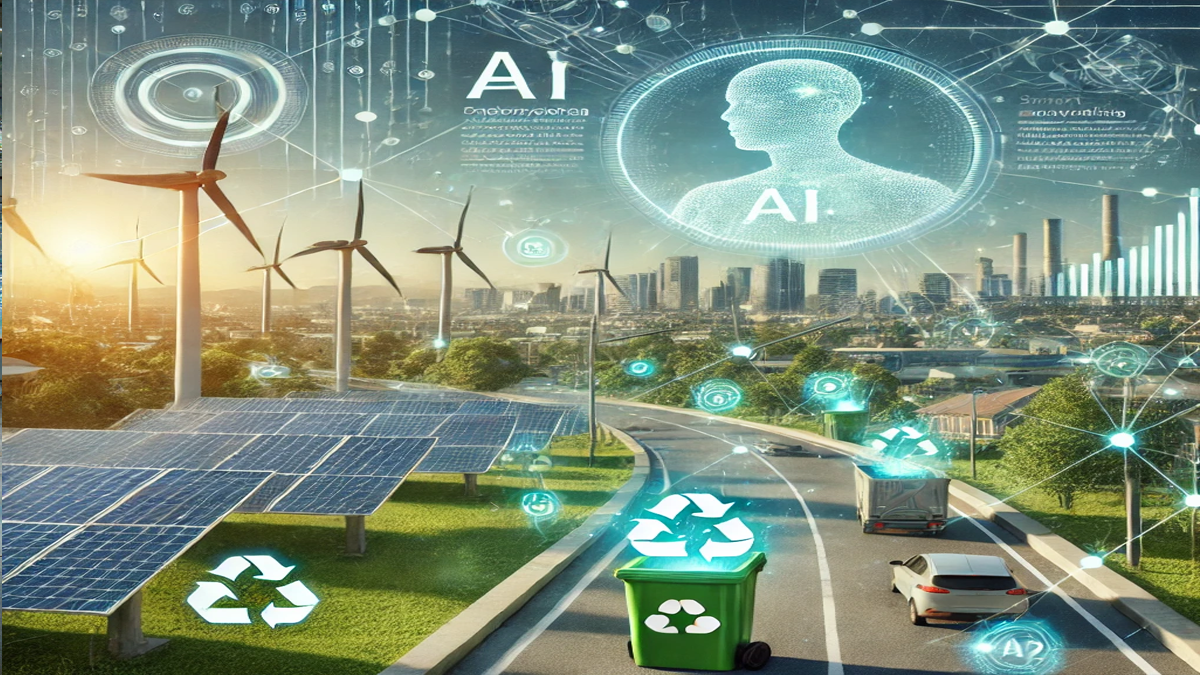
Artificial intelligence (AI) and sustainability represent a rapidly evolving interdisciplinary field that leverages machine learning, data analytics, and automation to address environmental challenges while promoting economic growth. The integration of AI into sustainability initiatives aims to optimize resource use, reduce carbon emissions, enhance energy efficiency, and foster circular economies. This synergy is often referred to as Green AI, a subset of AI research focused on developing models and systems that minimize environmental impact while maximizing computational efficiency.
AI-driven sustainability spans multiple sectors, including energy, agriculture, transportation, manufacturing, and urban planning. By analyzing vast datasets, AI systems can predict energy demand, optimize supply chains, detect inefficiencies in industrial processes, and enable smarter infrastructure management. For instance, AI-powered smart grids can balance energy distribution in real time, reducing waste and integrating renewable energy sources more effectively. Similarly, precision agriculture uses AI to monitor crop health, optimize water usage, and reduce pesticide application, thereby lowering environmental footprints.
#History / Background
The concept of using technology to enhance sustainability dates back to the industrial revolution, but the formal intersection of AI and sustainability emerged in the late 20th and early 21st centuries. Early AI applications in environmental science focused on data modeling and simulation, such as predicting climate patterns or assessing biodiversity. However, the computational demands of these models often led to high energy consumption, raising concerns about their sustainability.
The term Green AI gained prominence in the late 2010s, popularized by researchers like Emma Strubell and Victor Green, who highlighted the environmental costs of training large AI models. Studies revealed that training a single large language model could emit as much carbon as five cars over their lifetimes, prompting a shift toward more energy-efficient AI methodologies. This led to the development of energy-efficient AI, which emphasizes model optimization, hardware advancements, and algorithmic innovations to reduce computational overhead.
Governments and corporations began adopting AI for sustainability in the 2010s, with initiatives such as Google’s DeepMind optimizing data center cooling, Microsoft’s AI for Earth program funding environmental projects, and IBM’s Watson being used to analyze climate data. The United Nations Sustainable Development Goals (SDGs) further catalyzed AI’s role in sustainability by identifying AI as a key enabler for achieving targets related to clean energy, responsible consumption, and climate action.
#How It Works
AI contributes to sustainability through several core mechanisms, each tailored to specific environmental and operational challenges:
#Data-Driven Decision Making
AI systems rely on vast datasets to identify patterns, predict outcomes, and recommend actions. In sustainability, this translates to:
- Energy Optimization: AI analyzes energy consumption patterns to recommend adjustments in real time, reducing waste in buildings, factories, and grids.
- Predictive Maintenance: Machine learning models predict equipment failures in industrial settings, preventing unplanned downtime and reducing resource waste.
- Climate Modeling: AI enhances climate prediction models by processing satellite data, ocean temperatures, and atmospheric conditions to forecast extreme weather events and long-term climate trends.
#Automation and Optimization
AI automates complex processes to improve efficiency and reduce human error:
- Smart Grids: AI manages electricity distribution by balancing supply and demand, integrating renewable sources, and detecting outages faster than traditional systems.
- Autonomous Vehicles: Self-driving cars and trucks optimize routes to reduce fuel consumption and emissions, while AI-powered traffic systems minimize congestion.
- Waste Management: AI-powered sorting robots and computer vision systems improve recycling rates by accurately identifying and separating recyclable materials.
#Circular Economy Enablers
AI supports the transition to a circular economy by:
- Product Lifecycle Tracking: Blockchain and AI enable transparent tracking of materials from production to disposal, facilitating reuse and recycling.
- Demand Forecasting: Retailers use AI to predict demand, reducing overproduction and excess inventory that contribute to waste.
- Material Innovation: AI accelerates the discovery of sustainable materials by simulating molecular structures and testing properties virtually.
#Carbon Tracking and Reporting
AI tools help organizations measure, report, and reduce their carbon footprints by:
- Scope 3 Emissions Monitoring: AI analyzes supply chain data to identify hidden emissions sources, enabling targeted reduction strategies.
- Carbon Accounting: Platforms like SAP Sustainability and Salesforce Sustainability Cloud use AI to automate carbon footprint calculations.
- Offset Optimization: AI matches carbon offset projects with organizational needs, ensuring maximum environmental impact per dollar spent.
#Important Facts
- Energy Consumption: Training a single large AI model can consume as much electricity as a small town. For example, training GPT-3 reportedly used 1,287 MWh of electricity, equivalent to the annual consumption of 120 U.S. households.
- Carbon Footprint: The ICT sector accounts for approximately 2% of global carbon emissions, comparable to the aviation industry.
- Efficiency Gains: AI can reduce energy consumption in data centers by up to 40% through predictive cooling and workload optimization.
- Renewable Integration: AI improves the efficiency of solar and wind farms by predicting weather patterns and adjusting panel orientations or turbine speeds in real time.
- Policy Impact: The European Union’s Green Deal includes AI as a key tool for achieving carbon neutrality by 2050.
- Economic Benefits: AI-driven sustainability initiatives can generate $1 trillion in annual economic benefits by 2030, according to PwC.
#Timeline
Year Event 1956 John McCarthy coins the term "artificial intelligence" at the Dartmouth Conference, laying the groundwork for future AI research. 1972 First climate models using early computational techniques are developed, marking the beginning of AI’s role in environmental science. 2006 Google DeepMind is founded, later pioneering AI applications in energy optimization and smart grids. 2012 Breakthrough in deep learning (e.g., AlexNet) accelerates AI adoption across industries, including sustainability. 2015 Microsoft launches AI for Earth, a $50 million program to fund AI solutions for environmental challenges. 2018 Google’s DeepMind reduces energy use in its data centers by 40% using AI-driven cooling optimization. 2019 The term "Green AI" is popularized by researchers highlighting the environmental costs of AI training. 2020 IBM’s Watson is used to analyze climate data and predict extreme weather events with higher accuracy. 2021 The United Nations launches the AI for Good initiative, promoting AI’s role in achieving SDGs. 2023 Meta and Microsoft announce partnerships to develop energy-efficient AI models, reducing training emissions by up to 90%.
#Related Terms
#FAQ
What does AI And Sustainability: Green AI Initiatives cover?
Explores how artificial intelligence shapes sustainability and green AI initiatives, covering practical use cases, benefits, limitations, and risks.
Why is AI And Sustainability: Green AI Initiatives important?
It helps readers understand key concepts, compare practical use cases, and evaluate how Climate & Society decisions affect outcomes, risks, and implementation choices.
What should readers verify before applying this topic?
Readers should compare the benefits, limitations, data requirements, and related themes such as Sustainability, Green, Initiative before using the ideas in real projects.
#References
- AI And Sustainability: Green AI Initiatives terminology and background research
- AI And Sustainability: Green AI Initiatives use cases, implementation examples, and limitations
- Climate & Society best practices, standards, and risk guidance
- Sustainability case studies, benchmarks, and current industry analysis


Comments
No comments yet. Start the discussion with a useful note.