

#Short Answer
Explores how artificial intelligence shapes reflection and learning from experience, covering practical use cases, benefits, limitations, and risks.
#Infobox
AI and Reflection: Learning from Experience refers to the integration of artificial intelligence (AI) systems that analyze past interactions, decisions, or outcomes to improve future performance. These systems leverage machine learning, natural language processing, and cognitive computing to simulate reflective thinking, enabling continuous learning and adaptation.
AI and Reflection: Learning from Experience Field: Artificial Intelligence, Machine Learning, Cognitive Computing Key Concepts: Reflective Learning, Experience-Based Learning, Adaptive AI Applications: Autonomous Systems, Healthcare Diagnostics, Educational AI, Customer Support Notable Researchers: Donald Schön, John Dewey, Herbert Simon First Introduced: 1980s (early AI research on reflective systems) Modern Developments: Reinforcement Learning, Explainable AI (XAI), Meta-Learning
#Overview
AI and Reflection: Learning from Experience is an advanced paradigm in artificial intelligence that emphasizes the ability of systems to learn from past interactions, errors, and successes. Unlike traditional AI models that rely solely on static datasets, reflective AI systems dynamically adjust their behavior by analyzing outcomes and refining strategies over time. This approach draws inspiration from human cognitive processes, particularly the concept of reflective practice, where individuals review past experiences to inform future actions.
The integration of reflection into AI enhances adaptability, enabling systems to operate in unpredictable environments where predefined rules or datasets may be insufficient. For instance, autonomous vehicles use reflective learning to improve navigation after encountering unexpected road conditions, while medical AI systems refine diagnostic accuracy by analyzing past cases with similar symptoms.
Key to this framework is the concept of experience replay, a technique where AI agents store and revisit past interactions to identify patterns and optimize decision-making. This method is particularly prominent in reinforcement learning, where agents learn through trial and error, adjusting their policies based on feedback from the environment.
#History / Background
#Early Foundations (1950s–1980s)
The theoretical underpinnings of reflective AI trace back to early cybernetics and cognitive science research. In the 1950s and 1960s, pioneers like Norbert Wiener and Alan Turing explored the idea of machines that could learn from feedback loops, laying the groundwork for adaptive systems. However, the explicit concept of "reflection" in AI was not formalized until the 1980s, when researchers began investigating how machines could simulate human-like introspection.
Donald Schön, a philosopher and educator, introduced the concept of "reflective practice" in the 1980s, arguing that professionals learn most effectively by reflecting on their experiences. His work influenced AI researchers to explore how machines could mimic this process. Concurrently, Herbert Simon and Allen Newell developed theories on problem-solving and learning in AI, emphasizing the importance of revisiting past decisions to improve future outcomes.
#Development of Reflective Systems (1990s–2010s)
During the 1990s, AI researchers began developing systems capable of meta-cognition—thinking about their own thinking. Projects like SOAR (State, Operator, and Result) by John Laird and colleagues introduced architectures where AI agents could store and analyze their own problem-solving processes. This period also saw the rise of case-based reasoning (CBR), a methodology where AI systems solve new problems by referencing past similar cases.
The 2000s witnessed the integration of reflection into machine learning frameworks, particularly through reinforcement learning. Algorithms like Q-learning and Deep Q-Networks (DQN) enabled AI agents to learn from cumulative experiences, adjusting their strategies based on rewards and penalties. The advent of big data and cloud computing further accelerated the development of reflective AI by providing vast repositories of past interactions for analysis.
#Modern Advancements (2010s–Present)
The 2010s marked a turning point with the rise of deep learning and neural networks, which allowed AI systems to process and interpret complex reflective data. Techniques like experience replay in DeepMind's DQN demonstrated how AI could learn from past experiences to master complex tasks, such as playing Atari games or navigating virtual environments.
Recent advancements have focused on explainable AI (XAI) and meta-learning, where systems not only reflect on past actions but also generate human-interpretable explanations for their decisions. This has led to applications in healthcare, where AI systems analyze patient histories to refine diagnostic models, and in robotics, where autonomous agents adapt their behaviors based on environmental feedback.
#How It Works
#Core Mechanisms
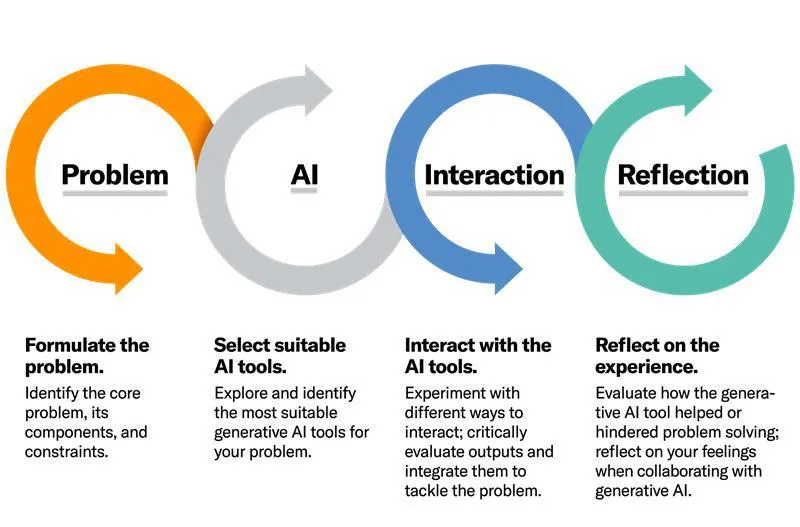
Reflective AI systems operate through a combination of memory storage, pattern recognition, and adaptive learning. The process typically involves the following steps:
- Data Collection: The AI system gathers data from interactions, decisions, or outcomes. This data may include user inputs, environmental changes, or performance metrics.
- Memory Storage: Past experiences are stored in a structured format, such as a database or a neural network's latent space. This allows the system to retrieve and analyze historical data efficiently.
- Pattern Recognition: Using machine learning algorithms, the system identifies patterns, trends, or anomalies in the stored data. Techniques like clustering, regression, and neural networks are commonly employed for this purpose.
- Reflection and Analysis: The system evaluates past decisions by comparing outcomes with expected results. This step often involves calculating metrics such as accuracy, efficiency, or user satisfaction.
- Adaptive Learning: Based on the analysis, the system updates its models or policies to improve future performance. This may involve retraining neural networks, adjusting decision thresholds, or refining rule-based systems.
- Feedback Integration: The system incorporates new data and feedback from the environment or users, ensuring that the reflective process remains dynamic and up-to-date.
#Key Techniques
- Experience Replay: A technique used in reinforcement learning where the AI agent stores past experiences in a replay buffer and randomly samples them during training to break correlations and improve learning stability.
- Case-Based Reasoning (CBR): A problem-solving approach where the AI system solves new problems by retrieving and adapting solutions from past similar cases.
- Meta-Learning: Also known as "learning to learn," this involves training AI models to quickly adapt to new tasks by leveraging knowledge from past experiences.
- Explainable AI (XAI): Techniques that enable AI systems to generate interpretable explanations for their decisions, making the reflective process more transparent and trustworthy.
- Neural Architecture Search (NAS): An automated method for designing optimal neural network architectures based on past performance data.
#Example Workflow
Consider an AI-powered customer support chatbot that uses reflection to improve its responses over time:
- The chatbot logs interactions between users and support agents, storing questions, responses, and outcomes (e.g., whether the issue was resolved).
- Using natural language processing (NLP), the system analyzes past interactions to identify common patterns, such as frequently asked questions or recurring issues.
- The chatbot reflects on its own performance by comparing its responses with those of human agents or with user feedback (e.g., ratings or follow-up questions).
- Based on this analysis, the system updates its response templates or decision-making rules to better address future queries.
- The updated model is deployed, and the cycle continues as new interactions are logged and analyzed.
#Important Facts
- Reflective AI is not limited to supervised learning: While traditional AI relies on labeled datasets, reflective systems can learn from unstructured or unlabeled data by analyzing outcomes and feedback.
- It enhances robustness: By learning from past failures, reflective AI systems can better handle edge cases and unexpected scenarios.
- Ethical considerations are critical: The use of reflective AI raises concerns about data privacy, bias in historical data, and the accountability of AI-driven decisions.
- It is closely tied to lifelong learning: Reflective AI systems are designed to continuously update their knowledge, making them suitable for environments where conditions change over time.
- Applications span multiple industries: From autonomous vehicles and financial trading to personalized education and healthcare diagnostics, reflective AI is transforming diverse sectors.
- Explainability is a growing focus: As reflective AI becomes more complex, researchers are developing methods to make its decision-making processes more interpretable to humans.
- It relies on high-quality data: The effectiveness of reflective AI depends on the quality and relevance of past experiences. Poor or biased data can lead to suboptimal learning.
#Timeline
Year Event 1950s Early cybernetics research by Norbert Wiener explores feedback loops in machines. 1960s Alan Turing and others discuss the potential for machines to learn from experience. 1980s Donald Schön introduces the concept of reflective practice; AI researchers begin exploring meta-cognition in machines. 1990s Development of SOAR architecture by John Laird; rise of case-based reasoning (CBR). 2000s Reinforcement learning techniques like Q-learning are refined; experience replay is introduced. 2010s Deep learning and neural networks enable complex reflective AI systems; DeepMind's DQN demonstrates experience replay in action. 2015–2020 Explainable AI (XAI) and meta-learning gain prominence; reflective AI is applied in healthcare, finance, and robotics. 2020s Advancements in large language models (LLMs) incorporate reflective learning for improved contextual understanding and decision-making.
#Related Terms
#FAQ
What does AI And Reflection: Learning From Experience cover?
Explores how artificial intelligence shapes reflection and learning from experience, covering practical use cases, benefits, limitations, and risks.
Why is AI And Reflection: Learning From Experience important?
It helps readers understand key concepts, compare practical use cases, and evaluate how Education & Careers decisions affect outcomes, risks, and implementation choices.
What should readers verify before applying this topic?
Readers should compare the benefits, limitations, data requirements, and related themes such as Reflection, Learning, Experience before using the ideas in real projects.
#References
- AI And Reflection: Learning From Experience terminology and background research
- AI And Reflection: Learning From Experience use cases, implementation examples, and limitations
- Education & Careers best practices, standards, and risk guidance
- Reflection case studies, benchmarks, and current industry analysis




Comments
No comments yet. Start the discussion with a useful note.