

#Short Answer
Explores how artificial intelligence shapes pandemic response and lessons from COVID-19, covering practical use cases, benefits, limitations, and risks.
#Infobox
Exploration of artificial intelligence's role in managing global health crises, with a focus on the COVID-19 pandemic response.
Artificial Intelligence in Pandemic Response Field Artificial intelligence Focus Pandemic response and management Key Applications Disease surveillance, diagnostics, vaccine development, misinformation detection Major Events COVID-19 pandemic (2019–2023) Notable Figures Computer scientists, epidemiologists, public health officials Institutions WHO, CDC, academic institutions, tech companies Impact Enhanced early detection, accelerated research, improved public communication
#This article is about the application of artificial intelligence in pandemic response. For general information on AI, see Artificial intelligence.Overview
Artificial intelligence (AI) played a transformative role in the global response to the COVID-19 pandemic, demonstrating its potential to enhance public health interventions through data-driven decision-making. AI technologies were deployed across multiple domains, including disease surveillance, diagnostic imaging, drug discovery, and public communication. The integration of AI into pandemic response strategies helped mitigate the spread of SARS-CoV-2 by enabling faster detection, more accurate predictions, and optimized resource allocation. This article examines the key applications of AI during the pandemic, evaluates its effectiveness, and outlines lessons learned for future health crises.
#History / Background
The concept of using AI in public health is not new, but its application during the COVID-19 pandemic marked a significant acceleration in adoption. Early experiments with AI in epidemiology date back to the 2000s, with machine learning models being used to predict disease outbreaks based on environmental and social data. However, the scale and urgency of the COVID-19 crisis necessitated rapid deployment of AI tools across various sectors.
The pandemic highlighted the limitations of traditional public health systems in handling a global crisis, prompting governments and organizations to turn to AI for solutions. By early 2020, AI-driven platforms were being used to track virus mutations, predict infection hotspots, and analyze social media trends to gauge public sentiment. The World Health Organization (WHO) and other health agencies began incorporating AI into their response frameworks, recognizing its potential to complement human expertise.
#How It Works
#Disease Surveillance
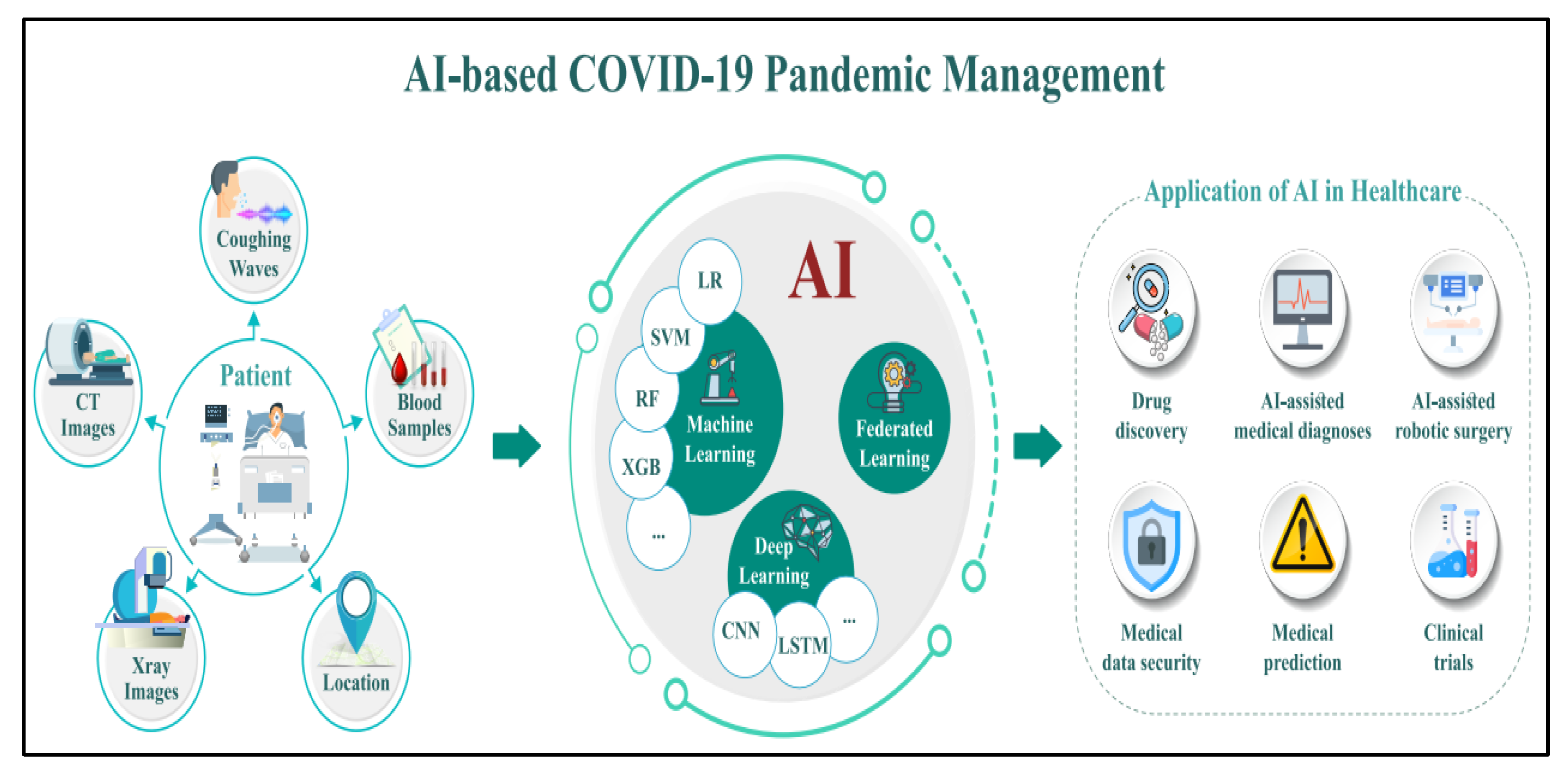
AI-powered surveillance systems utilized natural language processing (NLP) and machine learning to monitor global health data in real time. Platforms such as HealthMap and BlueDot analyzed news reports, social media, and travel data to detect early signs of outbreaks. These systems could identify unusual patterns in disease spread, enabling health authorities to respond proactively. For example, BlueDot's AI model correctly predicted the emergence of COVID-19 in Wuhan weeks before official announcements.
#Diagnostics and Imaging
AI significantly improved the accuracy and speed of COVID-19 diagnostics. Deep learning algorithms were trained on large datasets of chest X-rays and CT scans to identify patterns indicative of SARS-CoV-2 infection. Tools like COVID-Net achieved high sensitivity and specificity in detecting COVID-19 from medical images, reducing the burden on radiologists and accelerating diagnosis. Additionally, AI-assisted PCR testing helped optimize sample processing and reduce false negatives.
#Drug Discovery and Vaccine Development
The rapid development of COVID-19 vaccines was partly enabled by AI-driven drug discovery. Machine learning models analyzed vast datasets of molecular structures to identify potential therapeutic targets and predict drug interactions. Companies like Pfizer and Moderna utilized AI to streamline the design and testing phases of their vaccines, reducing the typical development timeline from years to months. AI also played a role in repurposing existing drugs for COVID-19 treatment, such as dexamethasone and remdesivir.
#Public Communication and Misinformation Detection
AI tools were deployed to combat misinformation and improve public communication during the pandemic. NLP algorithms analyzed social media platforms to identify and flag false claims about COVID-19, including conspiracy theories and unverified treatments. Chatbots powered by AI provided accurate, real-time information to the public, reducing anxiety and improving compliance with health guidelines. For instance, the WHO's Health Alert service on WhatsApp used AI to deliver verified updates to millions of users.
#Important Facts
- AI-powered disease surveillance systems detected COVID-19 outbreaks weeks before official reports.
- Machine learning models achieved over 90% accuracy in diagnosing COVID-19 from chest X-rays.
- AI accelerated the drug discovery process, enabling the development of vaccines in under a year.
- NLP algorithms processed millions of social media posts daily to identify and correct misinformation.
- AI-driven contact tracing apps, such as COVIDSafe and TraceTogether, helped track and contain virus transmission.
- The global AI in healthcare market was valued at $10.4 billion in 2021 and is projected to grow significantly post-pandemic.
#Timeline
Year Event December 2019 Initial outbreak of COVID-19 in Wuhan, China. January 2020 BlueDot's AI system identifies unusual pneumonia cases in Wuhan. February 2020 WHO launches the COVID-19 Dashboard, incorporating AI for data analysis. March 2020 First AI-powered diagnostic tools for COVID-19 receive emergency use authorization. April 2020 AI chatbots deployed by governments to provide public health information. May 2020 Moderna announces the first AI-designed COVID-19 vaccine candidate. December 2020 First COVID-19 vaccines approved for emergency use, with AI playing a key role in development. 2021–2022 Global rollout of AI-driven contact tracing and vaccine passport systems. 2023 Post-pandemic evaluation of AI's impact on public health systems and future preparedness.
#Related Terms
#FAQ
What does AI And Pandemic Response: Lessons From COVID-19 cover?
Explores how artificial intelligence shapes pandemic response and lessons from COVID-19, covering practical use cases, benefits, limitations, and risks.
Why is AI And Pandemic Response: Lessons From COVID-19 important?
It helps readers understand key concepts, compare practical use cases, and evaluate how Healthcare AI decisions affect outcomes, risks, and implementation choices.
What should readers verify before applying this topic?
Readers should compare the benefits, limitations, data requirements, and related themes such as Pandemic, Response, Lesson before using the ideas in real projects.
#References
- AI And Pandemic Response: Lessons From COVID-19 terminology and background research
- AI And Pandemic Response: Lessons From COVID-19 use cases, implementation examples, and limitations
- Healthcare AI best practices, standards, and risk guidance
- Pandemic case studies, benchmarks, and current industry analysis

Comments
No comments yet. Start the discussion with a useful note.