

#Short Answer
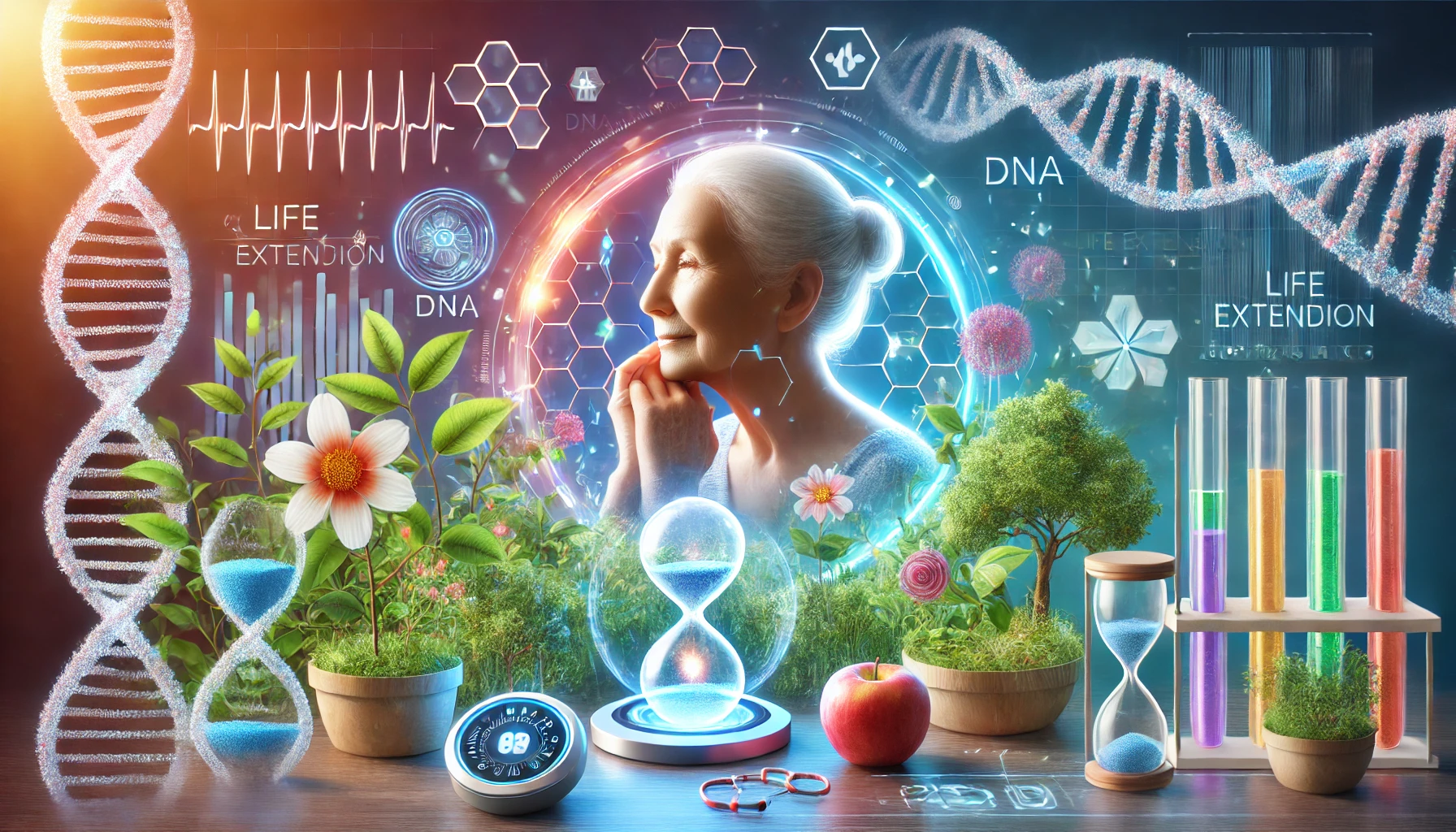
Explores how artificial intelligence shapes longevity and extending life, covering practical use cases, benefits, limitations, and risks.
#Infobox
#Overview
AI and longevity represent a rapidly evolving interdisciplinary field that combines artificial intelligence with biogerontology—the study of aging—to develop innovative strategies for extending human lifespan and improving healthspan. This convergence leverages advanced computational techniques to decode the biological mechanisms of aging, identify therapeutic targets, and accelerate the development of longevity interventions.
At its core, AI-driven longevity research focuses on three primary objectives: understanding the molecular and cellular processes that drive aging, predicting individual aging trajectories, and designing personalized interventions that can slow or reverse age-related decline. By analyzing vast datasets from genomics, proteomics, metabolomics, and clinical records, AI models can uncover patterns and correlations that are imperceptible to human researchers, thereby enabling more precise and effective interventions.
The integration of AI into longevity science has been catalyzed by breakthroughs in deep learning, particularly in areas such as protein folding prediction (e.g., AlphaFold), generative AI for molecular design, and reinforcement learning for optimizing treatment regimens. These technologies are not only accelerating the pace of discovery but also reducing the cost and time associated with traditional drug development pipelines.
#History / Background
#Early concepts
The idea of using computational methods to understand and combat aging dates back to the mid-20th century, with early efforts focused on mathematical modeling of biological systems. In the 1960s and 1970s, researchers began exploring the use of statistical models to analyze aging-related data, laying the groundwork for more sophisticated computational approaches.
One of the earliest notable contributions came from demographers and biostatisticians who developed models to predict life expectancy based on age-specific mortality rates. These models, while rudimentary by today's standards, provided a foundation for understanding the dynamics of aging populations.
#Emergence of biogerontology
The field of biogerontology gained significant traction in the 1980s and 1990s, with researchers identifying key hallmarks of aging, such as telomere shortening, mitochondrial dysfunction, and cellular senescence. During this period, computational tools began to play a more prominent role in analyzing biological data, particularly with the advent of high-throughput sequencing technologies.
In the late 1990s and early 2000s, the Human Genome Project provided a massive dataset that required advanced computational methods for analysis. This period also saw the rise of bioinformatics, a discipline that combines biology, computer science, and mathematics to analyze and interpret complex biological data.
#AI integration
The integration of AI into longevity research began in earnest in the 2010s, driven by advancements in machine learning and the availability of large-scale biological datasets. Companies like Insilico Medicine and academic institutions began using AI to identify novel drug targets and design molecules with desired properties.
A pivotal moment occurred in 2020 with the release of AlphaFold by DeepMind, which demonstrated the power of deep learning in predicting protein structures. This breakthrough had immediate implications for longevity research, as many aging-related processes are governed by protein interactions and misfolding.
#How it works
#Data collection and preprocessing
AI-driven longevity research begins with the collection and preprocessing of diverse datasets, including genomic sequences, proteomic profiles, metabolomic data, clinical records, and lifestyle information. These datasets are often heterogeneous and require standardization and normalization to ensure compatibility with AI models.
Advanced techniques such as natural language processing (NLP) are used to extract relevant information from scientific literature, while computer vision aids in analyzing medical imaging data, such as MRI scans or histological images. Data augmentation techniques are also employed to increase the robustness of models by generating synthetic data points.
#Model training and inference
Once the data is preprocessed, AI models are trained to identify patterns and correlations that are indicative of aging processes. Supervised learning techniques are commonly used when labeled data is available, such as in the case of predicting chronological age from biological markers. Unsupervised learning, on the other hand, is employed to discover novel aging biomarkers or subgroups within populations.
Deep learning architectures, such as convolutional neural networks (CNNs) and recurrent neural networks (RNNs), are particularly effective in analyzing complex biological data. For example, CNNs can process high-dimensional imaging data to identify cellular senescence, while RNNs can model temporal changes in biomarkers over time.
Generative AI models, such as variational autoencoders (VAEs) and generative adversarial networks (GANs), are used to simulate biological processes or generate novel molecular structures with desired properties. These models enable researchers to explore hypothetical scenarios and test interventions in silico before moving to in vitro or in vivo experiments.
#Applications in longevity research
Drug discovery: AI accelerates the drug discovery process by identifying novel targets for aging interventions and designing molecules with specific properties. For example, AI models can predict the binding affinity of potential drug candidates to target proteins, reducing the need for costly and time-consuming experimental screening.
Aging biomarkers: AI is used to develop composite biomarkers that more accurately reflect biological age compared to chronological age. These biomarkers can be used to monitor the efficacy of interventions and personalize treatment regimens.
Personalized medicine: By analyzing an individual's genetic, proteomic, and clinical data, AI models can predict their response to specific interventions and recommend tailored longevity strategies. This approach maximizes the effectiveness of interventions while minimizing side effects.
Clinical trial optimization: AI can optimize the design of clinical trials by identifying suitable participants, predicting outcomes, and reducing the time and cost associated with trials. For example, AI models can stratify participants based on their biological age or predicted response to treatment, improving the statistical power of trials.
#Important facts
- AI can predict biological age: Machine learning models trained on omics data can estimate an individual's biological age, which may differ significantly from their chronological age. This capability is crucial for assessing the efficacy of longevity interventions.
- AlphaFold revolutionized protein structure prediction: The release of AlphaFold2 in 2020 enabled the accurate prediction of protein structures, which is essential for understanding the molecular mechanisms of aging and designing targeted therapies.
- AI-designed drugs are entering clinical trials: Companies like Insilico Medicine have used AI to design novel senolytics—drugs that target senescent cells—which are now being tested in clinical trials for their safety and efficacy.
- Digital twins enable personalized longevity strategies: AI-powered digital twins simulate an individual's biological processes, allowing researchers to test the effects of interventions in a virtual environment before applying them in real life.
- Longevity is not just about lifespan extension: The goal of AI-driven longevity research is not merely to extend lifespan but to improve healthspan—the period of life free from age-related diseases and disabilities.
#Timeline
YearMilestoneSignificance1960s–1970sEarly mathematical models of agingFoundational work in computational demography and biostatistics1990Human Genome Project launchedProvided vast genomic datasets for computational analysis2003Completion of Human Genome ProjectEnabled large-scale bioinformatics and computational biology2010sRise of bioinformatics and machine learning in aging researchAI begins to play a role in analyzing biological data2014DeepMind foundedLater releases AlphaFold, revolutionizing protein structure prediction2016Insilico Medicine begins using AI for drug discoveryFirst AI-designed molecules enter preclinical development2020AlphaFold2 releasedEnables accurate prediction of protein structures, accelerating drug discovery2021First AI-designed senolytic enters clinical trialsMarks a significant milestone in AI-driven longevity interventions2023AI identifies novel aging targets in human tissuesDemonstrates the potential of AI to uncover new biological mechanisms of aging
#Related Terms
#FAQ
What does AI And Longevity: Extending Life cover?
Explores how artificial intelligence shapes longevity and extending life, covering practical use cases, benefits, limitations, and risks.
Why is AI And Longevity: Extending Life important?
It helps readers understand key concepts, compare practical use cases, and evaluate how Healthcare AI decisions affect outcomes, risks, and implementation choices.
What should readers verify before applying this topic?
Readers should compare the benefits, limitations, data requirements, and related themes such as Longevity, Extending, Life before using the ideas in real projects.
#References
- AI And Longevity: Extending Life terminology and background research
- AI And Longevity: Extending Life use cases, implementation examples, and limitations
- Healthcare AI best practices, standards, and risk guidance
- Longevity case studies, benchmarks, and current industry analysis

Comments
No comments yet. Start the discussion with a useful note.