

#Short Answer
Explores how artificial intelligence shapes insights and data-driven knowledge, covering practical use cases, benefits, limitations, and risks.
#Infobox
Artificial Intelligence and Data-Driven Insights Field Artificial intelligence Subfields Machine learning, deep learning, predictive analytics, natural language processing Key Technologies Neural networks, big data, cloud computing, IoT, data mining Applications Education, healthcare, finance, marketing, cybersecurity Notable Figures Alan Turing, John McCarthy, Geoffrey Hinton, Andrew Ng First Developed 1950s Current Status Rapidly evolving with advancements in generative AI
#Overview
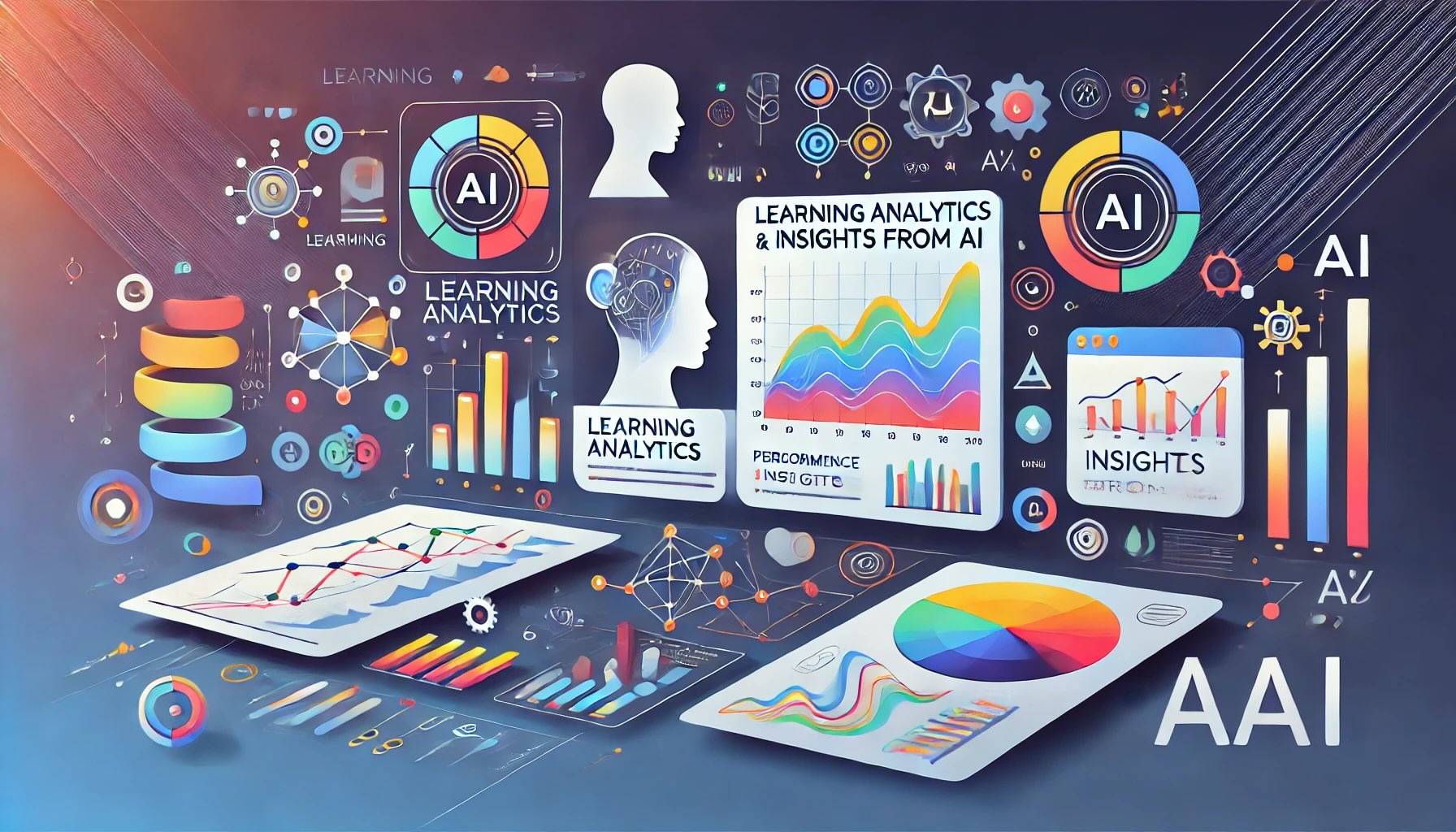
Artificial intelligence and data-driven insights represent a transformative convergence of computational intelligence and analytical methodologies designed to interpret complex datasets, uncover patterns, and generate predictive models. This synergy facilitates informed decision-making by transforming raw data into strategic knowledge. In the context of learning analytics, AI algorithms process educational data—such as student performance, engagement metrics, and behavioral patterns—to deliver personalized learning experiences and improve educational outcomes.
At its core, this field leverages advanced technologies including machine learning, deep learning, natural language processing (NLP), and big data analytics. These tools enable systems to not only analyze historical data but also forecast future trends, detect anomalies, and automate insights generation. From optimizing supply chains in logistics to personalizing content recommendations in digital platforms, AI-driven insights have become indispensable across sectors such as healthcare, finance, education, and marketing.
#History / Background
The foundations of AI and data-driven insights trace back to the mid-20th century. The concept of artificial intelligence was formally introduced in 1956 at the Dartmouth Conference, where pioneers like John McCarthy and Marvin Minsky envisioned machines capable of simulating human intelligence. Early AI systems focused on symbolic reasoning and rule-based logic, but limitations in computational power and data availability constrained progress.
The advent of the internet and the exponential growth of digital data in the 1990s and 2000s catalyzed a paradigm shift. The rise of machine learning—particularly supervised and unsupervised learning algorithms—enabled systems to learn from data without explicit programming. The introduction of deep learning in the 2010s, powered by neural networks with multiple layers, revolutionized the ability to process unstructured data such as images, text, and speech.
In parallel, the field of learning analytics emerged within education technology, driven by the need to understand learner behavior through digital traces. Institutions began using AI to analyze student interactions with learning management systems (LMS), identify at-risk students, and tailor interventions. Today, AI-powered analytics underpin adaptive learning platforms, intelligent tutoring systems, and automated assessment tools, reshaping how knowledge is delivered and assessed.
#How It Works
AI-driven data insights operate through a multi-stage pipeline that begins with data collection and culminates in actionable intelligence. The process typically includes:
- Data Acquisition: Gathering structured and unstructured data from various sources such as databases, sensors, user interactions, and transaction logs. In educational contexts, this may include student grades, attendance records, and online activity logs.
- Data Preprocessing: Cleaning, normalizing, and transforming raw data to remove noise, handle missing values, and ensure consistency. Techniques such as feature scaling, encoding, and dimensionality reduction are commonly applied.
- Model Training: Using machine learning algorithms—such as decision trees, support vector machines, or neural networks—to identify patterns and relationships within the data. In supervised learning, models are trained on labeled datasets, while unsupervised learning discovers inherent structures without predefined labels.
- Insight Generation: Applying trained models to new data to generate predictions, classifications, or clustering results. For example, predicting student dropout risk or recommending personalized learning paths based on past performance.
- Visualization and Interpretation: Presenting insights through dashboards, charts, and reports using tools like Tableau, Power BI, or custom web interfaces. Visualization enhances comprehension and supports data-driven decision-making.
- Feedback Loop: Continuously refining models using real-time data and user feedback to improve accuracy and relevance over time.
In learning analytics specifically, AI models analyze temporal patterns in student engagement, assess content mastery through quiz responses, and detect cognitive load indicators from interaction data. These insights enable educators to intervene proactively, optimize curriculum design, and enhance learning experiences.
#Important Facts
- Predictive Accuracy: AI models can achieve over 90% accuracy in predicting student performance when trained on comprehensive datasets.
- Personalization at Scale: AI enables individualized learning experiences for millions of users simultaneously, a feat impossible with traditional teaching methods.
- Ethical Considerations: The use of student data raises privacy concerns, necessitating compliance with regulations such as GDPR and FERPA.
- Bias Mitigation: AI systems can inadvertently perpetuate biases present in training data; ongoing audits and diverse datasets are essential to ensure fairness.
- Real-Time Processing: Modern AI systems process and analyze data in real time, enabling immediate feedback and adaptive responses.
- Cost Efficiency: Automating insight generation reduces operational costs by minimizing manual analysis and improving resource allocation.
- Interdisciplinary Impact: AI-driven insights are applied not only in education but also in healthcare for patient outcome prediction, in finance for fraud detection, and in manufacturing for predictive maintenance.
#Timeline
Year Event 1950 Alan Turing proposes the Turing Test as a criterion for machine intelligence. 1956 John McCarthy coins the term "Artificial Intelligence" at the Dartmouth Conference. 1966 ELIZA, an early natural language processing program, simulates conversation. 1980s Expert systems gain prominence in business and healthcare. 1997 IBM's Deep Blue defeats world chess champion Garry Kasparov. 2011 IBM Watson wins Jeopardy!, demonstrating advanced natural language understanding. 2012 Google's AI system achieves human-level performance in image recognition. 2016 AlphaGo defeats Lee Sedol in the board game Go, showcasing deep reinforcement learning. 2018 GDPR comes into effect, setting global standards for data privacy. 2020 AI-driven learning analytics platforms become mainstream in higher education. 2022 Generative AI models like DALL-E and ChatGPT gain widespread adoption.
#Related Terms
#FAQ
What does AI And Insights: Data-Driven Knowledge cover?
Explores how artificial intelligence shapes insights and data-driven knowledge, covering practical use cases, benefits, limitations, and risks.
Why is AI And Insights: Data-Driven Knowledge important?
It helps readers understand key concepts, compare practical use cases, and evaluate how Technology decisions affect outcomes, risks, and implementation choices.
What should readers verify before applying this topic?
Readers should compare the benefits, limitations, data requirements, and related themes such as Insight, Datadriven, Knowledge before using the ideas in real projects.
#References
- AI And Insights: Data-Driven Knowledge terminology and background research
- AI And Insights: Data-Driven Knowledge use cases, implementation examples, and limitations
- Technology best practices, standards, and risk guidance
- Insight case studies, benchmarks, and current industry analysis



Comments
No comments yet. Start the discussion with a useful note.