

#Short Answer
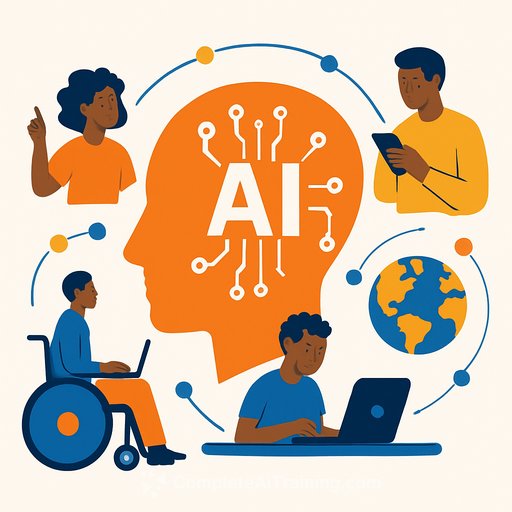
Explores how artificial intelligence shapes inclusion and access for all, covering practical use cases, benefits, limitations, and risks.
#Infobox
Artificial Intelligence and Digital Inclusion Field Artificial intelligence Focus Digital inclusion and accessibility Key People Pioneers in AI ethics, accessibility advocates Notable Organizations UN, WEF, UNESCO First Introduced Early 2010s (formalized discussions) Current Status Ongoing development and policy integration
Artificial Intelligence and Digital Inclusion: Access for All is an interdisciplinary approach aimed at leveraging artificial intelligence (AI) to bridge digital divides, promote equitable access to technology, and address systemic inequalities in the digital age. This field emphasizes the ethical deployment of AI systems to ensure that advancements in automation, machine learning, and data-driven decision-making do not exacerbate existing disparities but instead foster inclusive growth across socioeconomic, geographic, and demographic lines.
#Overview
Digital inclusion refers to the efforts to ensure that all individuals and communities, regardless of socioeconomic status, geographic location, age, ability, or other factors, have access to affordable, reliable, and high-quality internet connectivity, as well as the digital literacy skills necessary to participate fully in society. Artificial intelligence plays a pivotal role in this ecosystem by enabling tools that personalize learning, automate accessibility adaptations, and optimize infrastructure deployment in underserved regions.
AI-driven solutions such as natural language processing (NLP), computer vision, and predictive analytics are being used to develop intelligent systems that adapt to diverse user needs. These systems help in creating inclusive digital environments by providing real-time translation, automated captioning, voice interfaces for people with disabilities, and intelligent routing for internet connectivity in remote areas.
#Core Principles
- Equity: Ensuring fair access to AI technologies and digital resources.
- Accessibility: Designing AI systems that are usable by people with diverse abilities.
- Transparency: Making AI decision-making processes understandable and accountable.
- Participation: Involving marginalized communities in the development and deployment of AI tools.
- Sustainability: Ensuring that AI infrastructure supports long-term digital inclusion goals.
#History / Background
The concept of using technology to promote social equity is not new, but the formal integration of AI into digital inclusion strategies emerged prominently in the early 2010s. The rapid advancement of AI capabilities, coupled with the global expansion of internet access, highlighted both the potential and the pitfalls of AI in shaping digital futures.
In 2016, the United Nations Sustainable Development Goals (SDGs), particularly SDG 9 and SDG 10, began explicitly calling for the use of technology to reduce inequalities. This marked a turning point where AI was recognized as a tool for achieving broader social justice objectives.
By 2018, organizations like the World Economic Forum and UNESCO launched initiatives focused on AI ethics and inclusion, emphasizing the need for regulatory frameworks that prevent algorithmic bias and ensure equitable access. The COVID-19 pandemic (2020–2022) further accelerated the adoption of AI in education, healthcare, and public services, exposing gaps in digital readiness and reinforcing the urgency of inclusive AI deployment.
#How It Works
AI contributes to digital inclusion through multiple mechanisms, spanning infrastructure, services, and user experience design. The following are key functional areas:
#Infrastructure Optimization
AI models analyze geographic, demographic, and socioeconomic data to identify underserved areas and optimize the deployment of internet infrastructure such as fiber-optic cables, mobile towers, and satellite networks. For example, machine learning algorithms can predict demand in rural regions and recommend cost-effective expansion strategies.
#Accessibility Tools
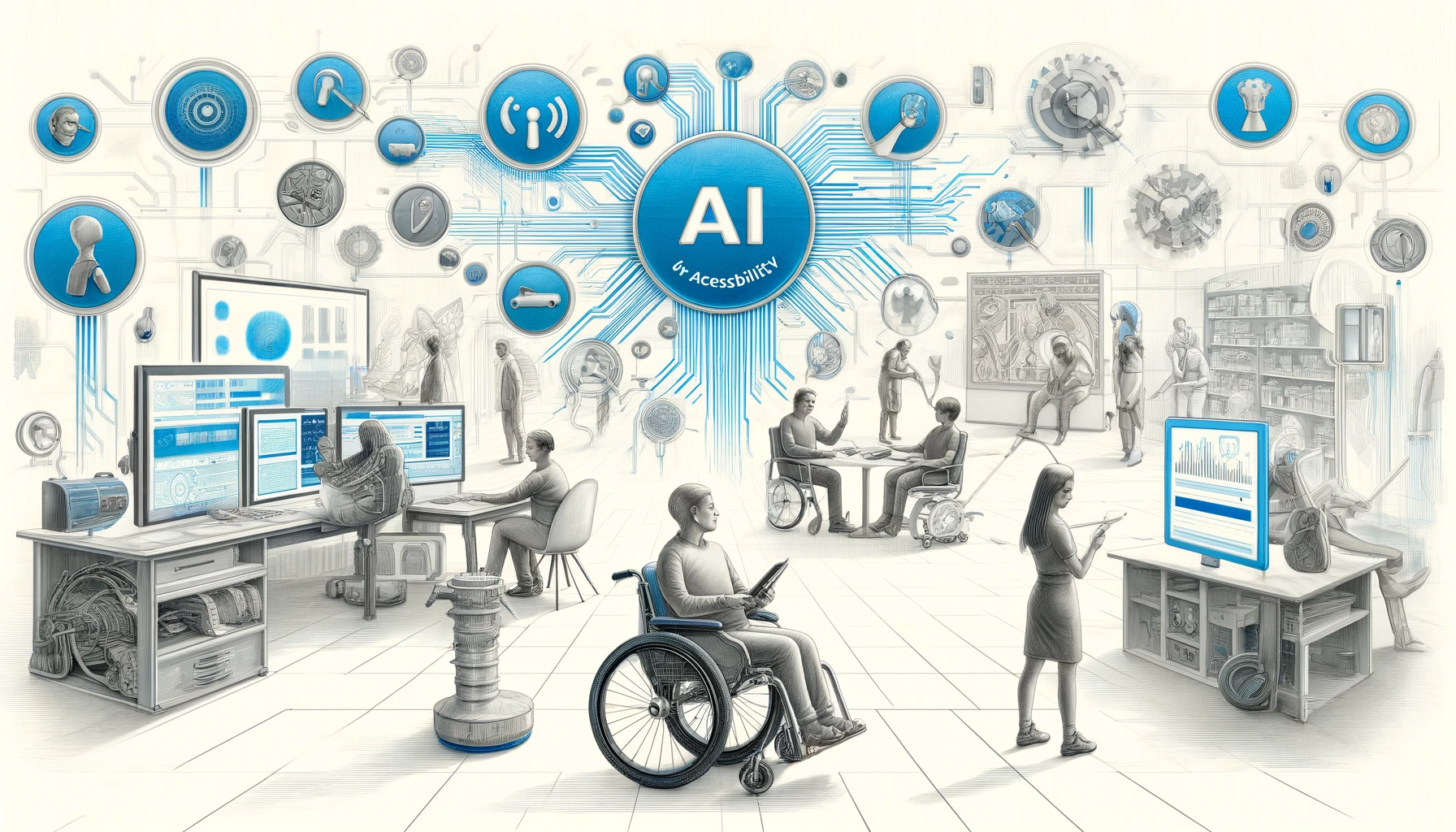
AI-powered assistive technologies enhance digital accessibility for people with disabilities. These include:
- Screen readers: Powered by NLP, they convert text to speech for visually impaired users.
- Automated captioning: Real-time speech-to-text systems for deaf and hard-of-hearing individuals.
- Gesture recognition: Computer vision systems that interpret sign language or physical gestures.
- Adaptive interfaces: AI-driven user interfaces that adjust layout, contrast, and navigation based on user behavior and preferences.
#Digital Literacy and Education
AI tutors and personalized learning platforms use reinforcement learning and adaptive learning algorithms to tailor educational content to individual learners. These systems identify knowledge gaps and provide targeted interventions, particularly beneficial in low-resource settings where access to human educators is limited.
#Bias Mitigation and Fairness
AI systems are trained on large datasets that may reflect historical biases. To promote inclusion, developers use fairness-aware algorithms, bias detection tools, and diverse training datasets. Techniques such as fairness through unawareness and counterfactual fairness are employed to ensure AI decisions do not discriminate against protected groups.
#Important Facts
- Over 2.7 billion people remain offline globally, with the majority in low- and middle-income countries (ITU, 2023).
- AI can reduce the cost of accessibility tools by up to 70% through automation and open-source development (World Bank, 2022).
- The global AI in education market is projected to reach $25.7 billion by 2030, driven by inclusive learning solutions (HolonIQ, 2023).
- In 2023, the European Union introduced the AI Act, one of the first comprehensive legal frameworks addressing AI risks, including bias and discrimination.
- AI-powered digital public infrastructure in countries like India and Estonia has improved service delivery for millions of citizens.
#Timeline
Year Event 2012 Launch of the Google Loon initiative to expand internet access via high-altitude balloons. 2015 UN adopts the Sustainable Development Goals, including SDG 9 and SDG 10, calling for inclusive innovation. 2017 UNESCO publishes Recommendation on the Ethics of Artificial Intelligence, emphasizing inclusion and human rights. 2019 Microsoft launches AI for Accessibility grant program to fund inclusive AI projects. 2020 COVID-19 pandemic accelerates adoption of AI in remote education and telemedicine, highlighting digital divides. 2021 UN Human Rights Council adopts resolution on human rights and AI, calling for non-discriminatory AI systems. 2022 India launches Digital India with AI-driven public service platforms. 2023 EU AI Act enters final negotiations; global coalition for AI inclusion formed at the AI Safety Summit in the UK.
#Related Terms
#FAQ
What does AI And Inclusion: Access For All cover?
Explores how artificial intelligence shapes inclusion and access for all, covering practical use cases, benefits, limitations, and risks.
Why is AI And Inclusion: Access For All important?
It helps readers understand key concepts, compare practical use cases, and evaluate how Security & Privacy decisions affect outcomes, risks, and implementation choices.
What should readers verify before applying this topic?
Readers should compare the benefits, limitations, data requirements, and related themes such as Inclusion, Acces, All before using the ideas in real projects.
#References
- AI And Inclusion: Access For All terminology and background research
- AI And Inclusion: Access For All use cases, implementation examples, and limitations
- Security & Privacy best practices, standards, and risk guidance
- Inclusion case studies, benchmarks, and current industry analysis


Comments
No comments yet. Start the discussion with a useful note.