

#Short Answer
Explores how artificial intelligence shapes hollywood and a love-hate relationship, covering practical use cases, benefits, limitations, and risks.
#Infobox
Artificial Intelligence in Hollywood Field Artificial intelligence Industry Film industry Key Figures Filmmakers, Tech executives, Screenwriters Notable Developments AI-generated scripts, deepfake technology, automated editing, virtual actors Controversies Ethical concerns, job displacement, copyright issues, misinformation risks First Introduced Early 2010s (experimental use), widespread adoption post-2020
Artificial intelligence in Hollywood refers to the integration of AI technologies into various aspects of the film and entertainment industry, including scriptwriting, casting, visual effects, post-production, and distribution. This relationship has evolved from initial skepticism to a complex interplay of innovation and resistance, shaping how content is created, consumed, and monetized in the modern entertainment landscape.
#Overview
The intersection of artificial intelligence and Hollywood represents a transformative shift in how films are produced, marketed, and experienced. AI systems are employed to analyze audience preferences, generate scripts, enhance visual effects, and even create synthetic actors. While these advancements promise efficiency and cost reduction, they also raise significant ethical and professional concerns regarding job security, creative authenticity, and the future role of human artists in the industry.
Major studios and independent filmmakers alike are experimenting with AI tools to streamline production processes. For instance, AI algorithms can predict box office success by analyzing script elements, casting choices, and marketing strategies. Deepfake technology enables the recreation of actors' likenesses decades after their prime, while machine learning models assist in real-time editing and color grading. However, the adoption of AI is not without controversy, as labor unions and creative professionals express fears of displacement and loss of artistic control.
#History / Background
The concept of artificial intelligence in entertainment dates back to the mid-20th century, with early experiments in computer-generated imagery (CGI) and algorithmic storytelling. However, the practical application of AI in Hollywood began gaining traction in the 2010s, as advancements in deep learning and neural networks made it possible to process vast amounts of data for creative purposes.
One of the earliest notable uses of AI in filmmaking was in Ex Machina (2014), where AI-driven dialogue and character behavior were central to the narrative. By the late 2010s, studios started using AI for predictive analytics, with companies like Netflix and Warner Bros. employing machine learning to recommend content and optimize release strategies. The breakthrough moment came in 2022 when an AI-generated short film, Sunstorm, won awards at film festivals, demonstrating the creative potential of autonomous storytelling.
The COVID-19 pandemic accelerated AI adoption as physical production faced restrictions. Virtual production techniques, powered by AI and real-time rendering engines like Unreal Engine, allowed filmmakers to create immersive sets digitally. Additionally, the rise of generative AI tools such as DALL-E and Midjourney enabled artists to produce concept art and storyboards with minimal effort, further blurring the lines between human and machine creativity.
#How It Works
AI's role in Hollywood is multifaceted, encompassing several key applications that leverage different branches of artificial intelligence:
#Predictive Analytics
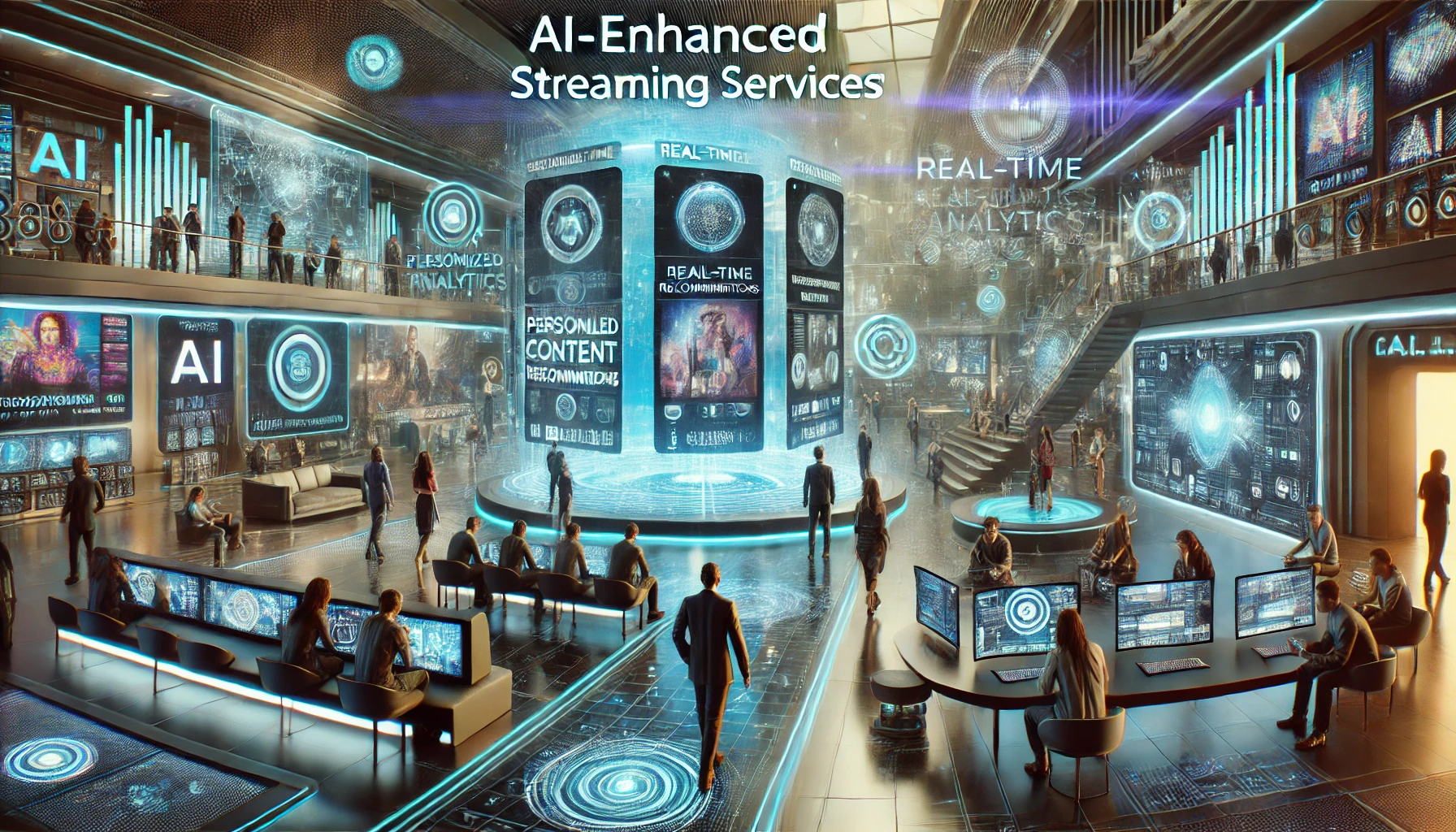
AI models trained on historical box office data, audience demographics, and social media trends can predict the commercial success of a film before production begins. These systems analyze variables such as genre, cast, director, release date, and marketing spend to generate probability scores. Studios use these insights to greenlight projects, allocate budgets, and tailor promotional campaigns.
#Scriptwriting and Storytelling
Natural language processing (NLP) algorithms can generate entire scripts or suggest dialogue improvements based on genre conventions and audience preferences. Tools like Jasper AI and Sudowrite assist screenwriters by offering plot twists, character arcs, and even full scene drafts. Some AI systems can also analyze existing scripts to identify patterns associated with award-winning films, helping writers refine their work.
#Visual Effects and Animation
AI enhances visual effects (VFX) by automating tasks such as rotoscoping, motion capture cleanup, and texture generation. Deep learning models like NVIDIA Canvas allow artists to create detailed environments from simple sketches. In animation, AI tools can interpolate between keyframes, reducing the time required for in-betweening—a traditionally labor-intensive process.
#Deepfake Technology
Deepfakes use generative adversarial networks (GANs) to superimpose one person's face onto another's body or recreate a person's voice with high accuracy. In Hollywood, this technology has been used to de-age actors (e.g., The Irishman), resurrect deceased stars (e.g., Fast & Furious franchise's Paul Walker), and even create entirely digital performers, such as the virtual influencer Lil Miquela.
#Virtual Production
Virtual production combines AI-driven real-time rendering with LED volume technology to create photorealistic digital sets. Cameras track actors' movements and adjust the virtual environment dynamically, allowing directors to visualize scenes without physical sets. This method was famously used in Disney+'s The Mandalorian, where AI-assisted systems generated expansive sci-fi landscapes in real time.
#Automated Editing
AI can analyze raw footage to suggest optimal cuts, pacing adjustments, and even color grading. Companies like Adobe and Runway ML offer tools that automatically detect the best takes, sync audio with video, and apply stylistic filters based on the film's genre. Some platforms can generate highlight reels or social media clips from longer footage, streamlining post-production workflows.
#Important Facts
- Cost Efficiency: AI can reduce production costs by up to 30% by automating repetitive tasks and optimizing resource allocation.
- Speed: AI-driven editing tools can cut post-production time by half, enabling faster turnaround for streaming platforms.
- Ethical Concerns: The use of AI to replicate actors' likenesses without consent has led to legal disputes, such as the lawsuit filed by the estate of Robin Williams against a deepfake recreation of his voice.
- Job Displacement: A 2023 report by the McKinsey & Company estimated that AI could automate 30% of tasks in the film industry by 2030, particularly in VFX and editing.
- Cultural Impact: AI-generated films like The Frost (2023), created entirely by an AI model, have sparked debates about the definition of art and authorship.
- Regulatory Challenges: The lack of clear guidelines on AI-generated content has prompted calls for legislation, such as the EU AI Act, which classifies AI systems used in creative industries as "high-risk."
#Timeline
Year Event 1968 Stanley Kubrick's 2001: A Space Odyssey features HAL 9000, one of the first AI characters in cinema. 1997 IBM's Deep Blue defeats world chess champion Garry Kasparov, demonstrating AI's potential in strategic decision-making. 2014 Ex Machina explores AI consciousness and human-machine interaction, winning an Academy Award for Best Visual Effects. 2016 Google's DeepMind creates an AI that can generate music, paving the way for AI in soundtrack composition. 2018 Warner Bros. partners with IBM Watson to analyze scripts and predict box office performance. 2020 The COVID-19 pandemic accelerates the adoption of virtual production techniques, with Unreal Engine becoming a standard tool. 2022 Sunstorm, an AI-generated short film, wins awards at film festivals, marking a milestone in autonomous filmmaking. 2023 Actors' unions, including SAG-AFTRA, negotiate AI clauses in contracts to protect performers' likenesses and voices. 2024 The first major studio film, Project X, is announced to be co-written by an AI, sparking industry-wide discussions on creative ownership.
#Related Terms
#FAQ
What does AI And Hollywood: A Love-Hate Relationship cover?
Explores how artificial intelligence shapes hollywood and a love-hate relationship, covering practical use cases, benefits, limitations, and risks.
Why is AI And Hollywood: A Love-Hate Relationship important?
It helps readers understand key concepts, compare practical use cases, and evaluate how Creative AI decisions affect outcomes, risks, and implementation choices.
What should readers verify before applying this topic?
Readers should compare the benefits, limitations, data requirements, and related themes such as Hollywood, Lovehate, Relationship before using the ideas in real projects.
#References
- AI And Hollywood: A Love-Hate Relationship terminology and background research
- AI And Hollywood: A Love-Hate Relationship use cases, implementation examples, and limitations
- Creative AI best practices, standards, and risk guidance
- Hollywood case studies, benchmarks, and current industry analysis

Comments
No comments yet. Start the discussion with a useful note.