

#Short Answer
AI And Design: Tools For Creatives - The role of ai in transforming creative industries – franesnpixels is a critical topic in Artificial Intelligence, bridging theory and practical application.
#Infobox
Exploration of artificial intelligence tools transforming design processes, workflows, and creative output for professionals and enthusiasts.
#This article is about AI applications in design. For broader AI concepts, see Artificial intelligence.Overview
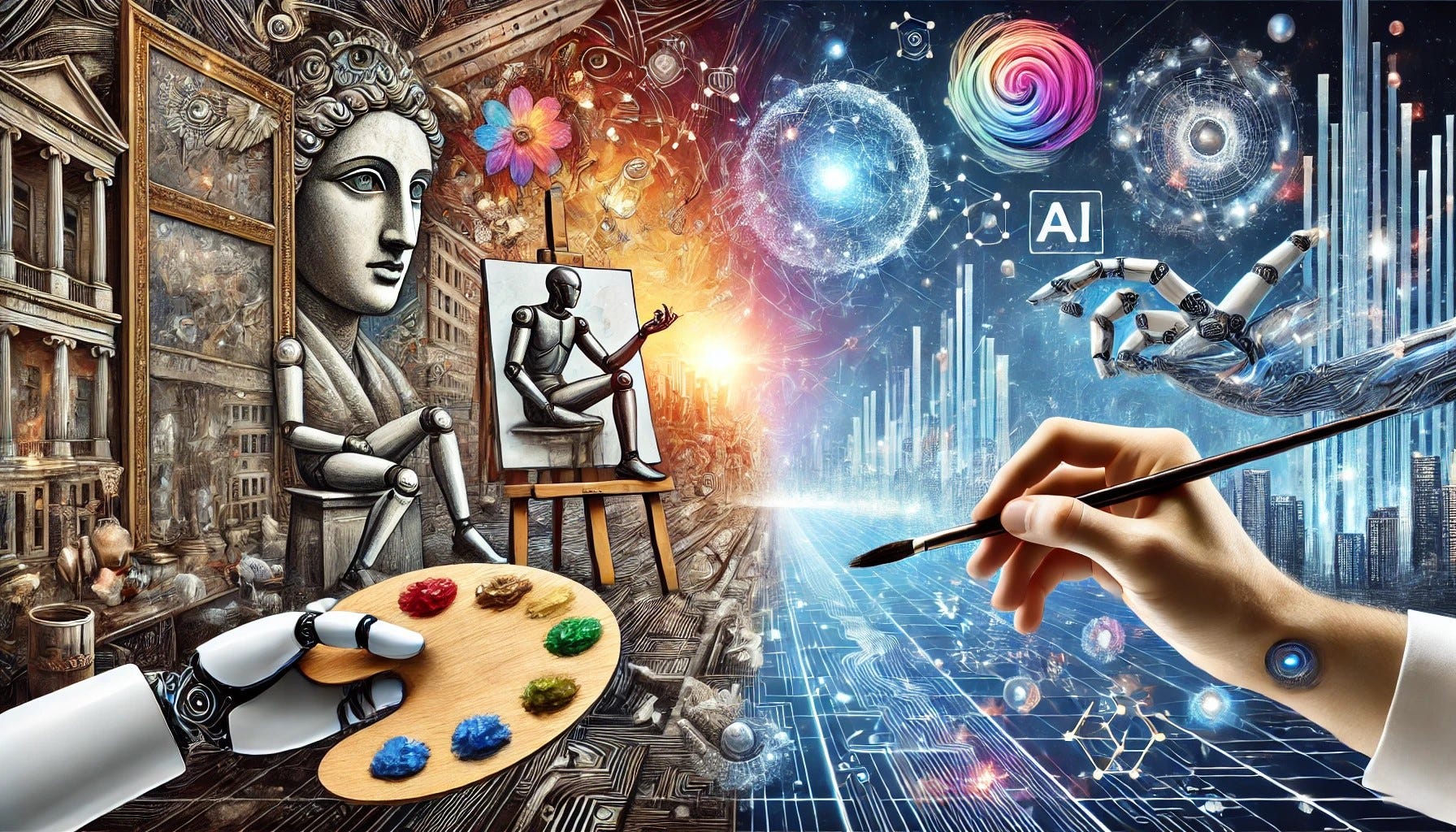
Artificial intelligence (AI) has revolutionized the field of design by introducing tools that automate repetitive tasks, generate novel ideas, and enhance creative workflows. These AI-powered solutions span multiple disciplines, including graphic design, user interface (UI) and user experience (UX) design, industrial design, and architectural visualization. By leveraging machine learning models such as generative adversarial networks (GANs), diffusion models, and natural language processing (NLP), AI systems can produce high-quality visual content, suggest design improvements, and even create entirely new concepts based on user prompts.
The integration of AI into design tools has democratized creativity, allowing professionals and amateurs alike to achieve sophisticated results with minimal technical expertise. Platforms like Adobe Firefly and Midjourney enable users to generate images, logos, and illustrations through text descriptions, while tools like Figma AI assist in prototyping and layout optimization. This shift not only accelerates the design process but also fosters innovation by providing designers with new avenues for experimentation.
#History / Background
The intersection of AI and design traces back to the 1960s, when early experiments in computer graphics and procedural generation laid the groundwork for automated design systems. One of the first notable applications was Sketchpad, developed by Ivan Sutherland in 1963, which allowed users to interact with a computer through a light pen to create geometric designs. This innovation demonstrated the potential for computers to assist in visual creation.
In the 1980s and 1990s, advancements in computational power and algorithms led to the development of expert systems and rule-based design tools. These systems could generate layouts, color schemes, and typography based on predefined parameters. However, their capabilities were limited by the rigidity of rule-based approaches and the lack of adaptability to complex creative tasks.
The breakthrough came in the 2010s with the rise of deep learning and neural networks. The introduction of generative adversarial networks (GANs) in 2014 by Ian Goodfellow revolutionized image generation, enabling AI to create realistic and diverse visual content. This was followed by the development of diffusion models, such as those used in DALL·E (2021) and Stable Diffusion (2022), which further refined the quality and control of AI-generated images. The launch of user-friendly platforms like Midjourney in 2022 brought these technologies to mainstream audiences, sparking widespread adoption among designers and artists.
#How It Works
#Generative AI Models
Most AI design tools rely on generative AI models, which are trained on vast datasets of images, text, and design elements. These models learn patterns and relationships within the data, allowing them to generate new content that aligns with user inputs. The two primary types of generative models used in design are:
- Generative Adversarial Networks (GANs): Comprising a generator and a discriminator, GANs compete against each other to produce increasingly realistic outputs. The generator creates images, while the discriminator evaluates their authenticity, leading to high-quality results over time.
- Diffusion Models: These models progressively add noise to an image and then learn to reverse the process, reconstructing the original image from noise. This approach, used in tools like DALL·E and Stable Diffusion, allows for precise control over the generated output through text prompts.
#Natural Language Processing
Natural language processing (NLP) enables AI systems to interpret and respond to human language. In design tools, NLP is used to convert text prompts into visual outputs. For example, a user might input a description like "a futuristic cityscape at sunset," and the AI model will generate an image that matches this description. Platforms like Midjourney and Adobe Firefly utilize NLP to bridge the gap between human intent and machine-generated design.
#Computer Vision
Computer vision allows AI to analyze and understand visual content. In design tools, computer vision is used for tasks such as image recognition, style transfer, and object detection. For instance, Canva AI can automatically remove backgrounds from images, while Figma AI can suggest layout improvements based on visual analysis of existing designs.
#Integration with Design Software
Modern AI design tools are often integrated into existing software ecosystems to enhance their functionality. For example, Adobe Firefly is embedded within Adobe Creative Cloud applications like Photoshop and Illustrator, allowing designers to generate assets directly within their workflow. Similarly, Figma AI integrates with Figma’s prototyping tools to provide real-time design suggestions and automated layout adjustments.
#Important Facts
- Speed and Efficiency: AI tools can generate design assets in seconds, reducing the time required for manual creation from hours to minutes.
- Accessibility: AI-powered design tools lower the barrier to entry for non-professionals, enabling individuals with limited design skills to create professional-quality work.
- Personalization: AI can tailor designs to individual preferences or target audiences by analyzing user data and generating customized content.
- Style Transfer: AI models can apply the artistic style of one image to another, allowing designers to experiment with different visual aesthetics quickly.
- Collaboration: AI tools facilitate real-time collaboration by automating repetitive tasks, such as resizing images or generating multiple design variations, freeing up time for creative decision-making.
#Timeline
Applications in Design
#Graphic Design
AI tools assist graphic designers in creating logos, posters, and branding materials. Platforms like Canva AI offer automated design suggestions, while tools like Adobe Firefly generate custom illustrations based on text prompts. AI can also analyze design trends and suggest color palettes or typography that align with current styles.
#UI/UX Design
In user interface and user experience design, AI tools like Figma AI automate tasks such as wireframing, prototyping, and usability testing. AI can generate multiple design variations, optimize layouts for accessibility, and even predict user behavior based on interaction data. This allows designers to focus on refining the user experience rather than spending time on repetitive tasks.
#Industrial Design
AI is used in industrial design to generate 3D models, simulate product aesthetics, and optimize designs for manufacturing. Tools like Autodesk Generative Design use AI to explore thousands of design possibilities based on specified constraints, such as material properties and structural requirements. This accelerates the prototyping process and leads to more innovative and efficient product designs.
#Architectural Visualization
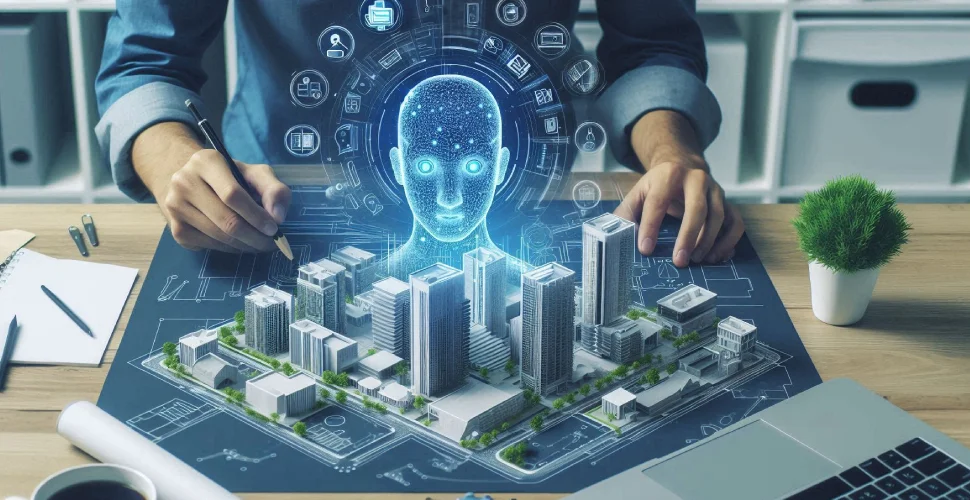
AI enhances architectural visualization by generating photorealistic renderings of buildings and interiors. Tools like Midjourney can create concept art for architectural projects, while AI-powered software like Enscape automates the rendering process, reducing the time required to produce high-quality visualizations. AI can also simulate environmental factors, such as lighting and shadows, to create more realistic representations.
#Ethical and Legal Considerations
#Copyright and Intellectual Property
The use of AI-generated content raises questions about ownership and copyright. Since AI models are trained on vast datasets that may include copyrighted material, the legality of AI-generated designs is often ambiguous. Some jurisdictions, such as the United States, have begun to address these issues, but a global consensus on AI-generated content ownership is still lacking.
#Bias and Fairness
AI models can perpetuate biases present in their training data, leading to skewed or inappropriate design outputs. For example, an AI tool trained predominantly on Western design styles may struggle to generate culturally diverse or inclusive designs. Addressing bias in AI requires diverse training datasets and ongoing evaluation of model outputs.
#Job Displacement
The automation of design tasks by AI has sparked concerns about job displacement in creative industries. While AI tools can handle repetitive tasks, they are not yet capable of replacing the nuanced creativity and strategic thinking of human designers. However, the role of designers is evolving, with a greater emphasis on curation, oversight, and ethical considerations in AI-assisted workflows.
#Timeline
- Foundational Milestones
Early research frameworks and methodologies establish initial standards.
- Global Scaling
Widespread public deployment and adoption across diverse global industries.
- Modern Protocols
Integration of structured compliance, advanced safety measures, and multi-modal standards.
#Related Terms
#FAQ
What does AI And Design: Tools For Creatives cover?
Explores how artificial intelligence shapes design and tools for creatives, covering practical use cases, benefits, limitations, and risks.
Why is AI And Design: Tools For Creatives important?
It helps readers understand key concepts, compare practical use cases, and evaluate how Artificial Intelligence decisions affect outcomes, risks, and implementation choices.
What should readers verify before applying this topic?
Readers should compare the benefits, limitations, data requirements, and related themes such as Design, Tool, Creative before using the ideas in real projects.
#References
- AI And Design: Tools For Creatives terminology and background research
- AI And Design: Tools For Creatives use cases, implementation examples, and limitations
- Artificial Intelligence best practices, standards, and risk guidance
- Design case studies, benchmarks, and current industry analysis
Comments
No comments yet. Start the discussion with a useful note.